
Forney Charities
Improving communities by helping residents, one person at a time.
Journey into the Unknown
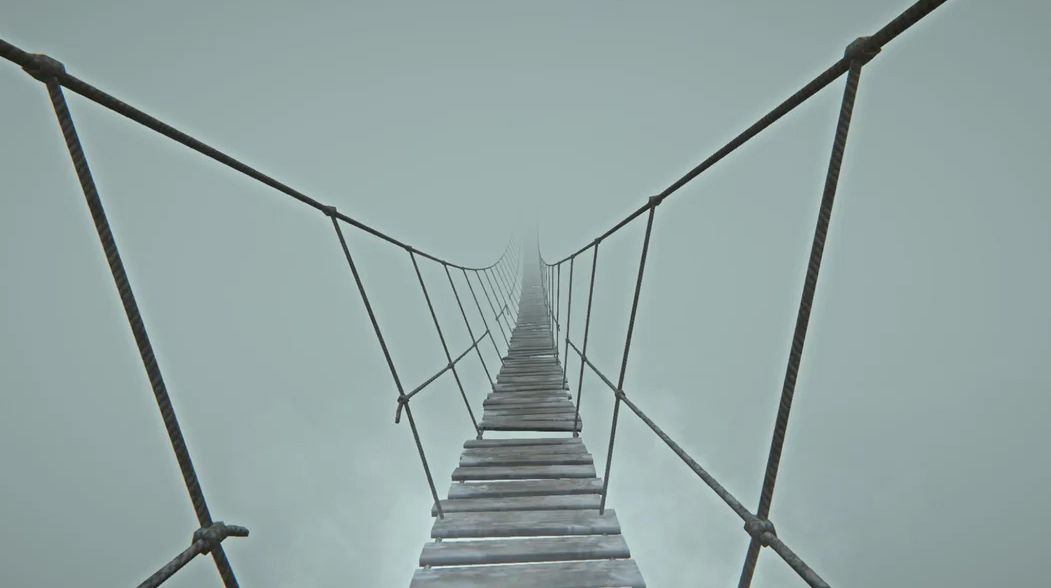
The beginnings of ambitious journeys are often beset by missteps and bad luck. Or sometimes splendid serendipity. Nothing certain here – that’s definitely the case with any Lenten journey taken in deep prayerful seriousness.
It was certainly the case for one man’s most ambitious journey to capture the presidency of the United States – a journey into the unknown.
It should have been a slam dunk. George H. W. Bush, a former pitcher in college, would be throwing out the first ball at Game One of the National Leage Championship Series. All he would have had to have done was to take a taxi to the game, buy his hot dog, walk out onto the pitcher’s mound and throw out the first ball at Game One on the National League Championship Series.
It would have been a friendly crowd of some 40,000 fans, many of whom would have been his fans as well. Seated with beers and hot dogs in hand at the Houston Astrodome – a solid GOP crowd of Bush’s hometown. Many more looking on through the magic of TV.[1]
BUT, NO!
Plans and arrangements are meticulous, byzantine even. Every moment scripted. A huge motorcade. A black, handsome book with the seal of the Vice President noted every event down to the minute with diagrams – from the seating on the plane, the order of cars in the motorcade, staffing, every division of the staffing party, their phone numbers, every word that Bush would speak. Everything. The whole enchilada – planned down to a T. Down to the minute. A cast of hundreds.
Everything accounted for. Except one thing.
It had been a loooong time since Bush had last thrown a ball. A long while – back when he had played for Yale.
In his windup he couldn’t get his arms over his head so they ended up in front of his face. “…he sort of swivels to his left, and his arm flies back—but it won’t go back, so he gets it back even with his shoulder, and starts forward while his right lace-up feels for the dirt on the downslope, and he can tell it’s short while the throw is still in his hand, and he’s trying to get that little extra with his hand, which ends up, fingers splayed, almost waving, as he lands on his right foot, and lists to the left, towards first-base line.”
The upshot? The ball bobbles, then lands in the dirt many feet from the catcher and slowly rolls into his mitt. All on nationwide TV.
One just never knows how it will turn out with such a shaky beginning. Definitely, nothing certain. Not in this case. Yet we all know how that race turned out.
This was the inauspicious beginning of the most improbable journey any man or woman might undertake – the journey to be elected president of the United States of America. For a man or woman to leap from the belief that he or she should be president to actually saying in the back of their mind, “I am going to be president,” is a most improbable journey, fraught with many chance moments of disaster, moments of glory, and moments of missed opportunity. A journey into a great unknown.
Abram and Sarai likewise embarked on a great, fraught adventure, a most improbable journey into an unknown future. No guarantee as to the outcome. Nothing certain, but by faith alone.
“Now the Lord said to Abram, ‘Go from your country and your kindred and your father’s house to the land that I will show you. I will make of you a great nation, and I will bless you, and make your name great, so that you will be a blessing…’ So, Abram went, as the Lord had told him.”
Went. Went to where? Literally, only God knows. Sarai must have been ready to institutionalize her husband. He and his little band could have easily perished following this phantom of his own mind. The wackadoodle voices of mental illness. Delusional promptings of an unwell mind. No one would have ever heard from him again – as tragic as the Donner Party that perished in 1846 in the Sierra Nevada Mountains of California.
And yet, most unlikely, three of the world’s great religions – Jewish, Muslim, Christian — look to Abraham as a forefather of their faiths. And don’t forget Sarah, though the men left her out. Biblical note: Abram’s and Sarai’s names were changed in Genesis 17 to signify their acceptance of a new covenant with God.
Lent is also a time of journey, embracing an unknown and uncertain future. It’s in our face, right there as ICE pulls terrified immigrants from their houses, workplaces and cars. People whose perilous journeys to the US in search of safety or fleeing hunger or opportunity have led them to travel on foot thousands of miles.
This time of Lent invites us also to embark on such a incredible journey with all its perils and promise. A journey without maps as Graham Greene called it in 1936 – a travelogue based on his journey into the heart of Africa.
Instead of passively listening to the lessons of this Lenten season – what my boys would label as blizz-blaz, floating over distracted minds at 10,000 feet as it is read on any given Sunday morning. In our book of Lenten readings, focus on one or two passages that grab your mind. Or a hymn. Ask yourself in prayer, how does my life and my spiritual journey relate to the inner truth of this reading, this song?
What might it be saying to me personally? What might it be saying to my faith community? Finally, what might it be saying to the world? Trust that if this really is the Word of God, it has hidden power to restore, to change your life. Yes, read, mark, learn and inwardly digest. It will feed your soul.
In open, unguarded prayer with that passage, you might discover some wonderful surprises. You might discover some needed correction. You might find opportunities to be part of something greater than yourself. All, an open door to eternity.
The unexamined, closed up and guarded life goes nowhere. I’ve been reading a new book on the life of Robert McNamara, McNamara at War.[2]
McNamara had been a whiz kid. He had a superior intellect that he believed could solve virtually anything he put his mind to, whether it was running the Ford Motor Company or the World Bank. And mostly, he had succeeded.
But when he served as Secretary of Defense under Presidents Kennedy and Johnson, he came upon a problem that utterly confounded him.
At first, he thought that if he could just produce a high enough enemy body count, the numbers would vindicate his efforts. In his hubris he vastly underestimated his foe and their willingness to sacrifice for their own country. He also underestimated their inventiveness and the assistance they were getting from the Soviet Union and China.
We all know how that ill-fated journey ended. The authors of McNamara at War dramatically portray how the folly of Vietnam consumed Robert McNamara in guilt and self-reproach. It ate him alive.
Though at his life’s end he could confess his role in the many mistakes that led to the final debacle, with fleeing citizens scrambling to board helicopters taking off from the US embassy roof — many falling to their deaths, losing their finger-holds on the sides of those crafts as they became airborne – He could accept responsibility for all this, in the end he could not answer the primary question – why were we there in the first place?
The tragic end of McNamara’s life is portrayed as that of a doddering, disheveled old man, wandering the well-worn trek from donated office space to his Watergate apartment in Washington, D.C. Though some folks recognized that old man, when they greeted him, he kept his head down and plodded on. He no longer had that youthful powerwalk. “Some thought he looked more like “’Ichabod Crane,’ hunched over, old and shaky, wearing a shabby trench coat with is belt hanging down” [3]
McNamara’s ill-fated journey into that war was one unexamined by any deeper spiritual values. A journey emotionally kept bottled up inside his depressed, tormented psyche.
In the end, his second wife would recall, “Throughout his life he had surmounted almost every challenge he and encountered. But not this one ‘It was the big heavy albatross around his neck…and he couldn’t get rid of it. It was suffocating him. It was killing him.’”[4]
Such are the dangers of any life’s journey when wrapped up in oneself.
Any journey into the unknown is chockablock full of dangers and opportunities. Discernment is critical. As well as trusted companions who will speak the truth to you as well as encouragement. Unexamined through a lens of any lasting values, disaster often waits.
We begin our Lenten journey with the eternal guidance of the Word of God, the traditions of our church, and the companionship of a gathered community. Fed and nurtured by the Body of Christ and the Cup of Salvation, we do not stumble into the darkness of unexamined imaginings and folly.
While we do not know what the future holds, we do know who holds the future. With the Lord as our guide, as we step into a Lenten journey we step smack dab into the need of the world. And into our own deep inner spiritual needs.
As Fleetwood Mac sang, “Don’t stop thinking about tomorrow. Don’t stop thinking about tomorrow. Yesterday’s gone. Yesterday’s gone. Don’t stop thinking about tomorrow. Don’t stop thinking about tomorrow.”
We boldly step out into that tomorrow in faith, not knowing the twists and turns, but confident in the Promise. Amen.
[1] Richard Ben Cramer, What it Takes: The Way to the White House (New York: Random House, 1992), 3-29.
[2] Philip Taubman and William Taubman, McNamara at War: A New History (New York: Norton, 1925).
[3] Op. cit., 1.
[4] Op. cit., 2.
March 1, 2026
Lent 2
“Journey into the Unknown” The Rev. Dr. John C. Forney
Genesis 12:1-4a; Psalm 121;
Romans 4:1-5, 13-17; John 3:1-17
 Forney Charities