
Forney Charities
Improving communities by helping residents, one person at a time.
In the Arena
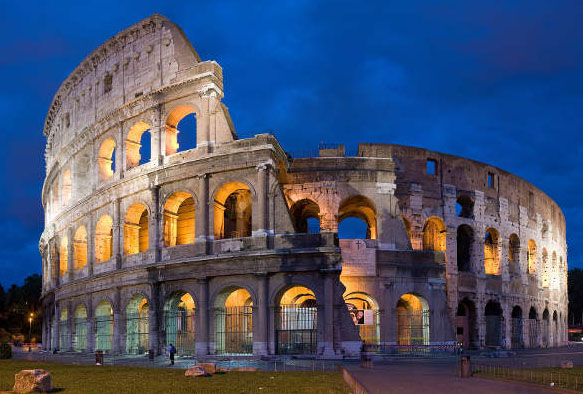
Many of our presidents have been bigger than life. I suppose that just putting oneself forth in such a contest requires a fairly strong ego. It requires the conviction that you can win and it requires the conviction that you can do the job, that you have something to offer. That you can meet the unknown challenges that will come during the four years of your presidency. A task not for the timid, the indecisive or the uninformed.
Though every now and then a ringer slips through the electoral system. Like now. I dare say that a bland personality like Calvin Cooledge or Warren G. Harding would never make it in this overheated media environment, in this era of blogs and internet barrage of conspiracy and lies. It is true that the Orange Voldemort at 1600 Pennsylvania Ave. is certainly a puffed-up personality uniquely suited to this cutthroat reality show media age.
Looking back, one of the presidents that has always captured my interest is Theodore Roosevelt. No saint he. He was an imperialist from the word go. Sorely misguided in his expansionist vision for America. Yet he brought a moral sense of duty and fairness to his life in the political arena. A sense sorely lacking today.
Here is that famous quote that has inspired resiliency and perseverance from his speech, “Citizenship in a Republic”, delivered at the Sorbonne, in Paris, France on 23 April, 1910. Often referred to “Man in the Arena.” [1]
“It is not the critic who counts; not the man who points out how the strong man stumbles, or where the doer of deeds could have done them better. The credit belongs to the man who is actually in the arena, whose face is marred by dust and sweat and blood; who strives valiantly; who errs, who comes short again and again, because there is no effort without error and shortcoming; but who does actually strive to do the deeds; who knows great enthusiasms, the great devotions; who spends himself in a worthy cause; who at the best knows in the end the triumph of high achievement, and who at the worst, if he fails, at least fails while daring greatly, so that his place shall never be with those cold and timid souls who neither know victory nor defeat.”
Roosevelt, for his many shortcomings on the international stage, was an intrepid leader of the Progressive movement. He was notorious for his late-night prowling through the streets of the City of New York when he was police commissioner. Often, late at night, a sleeping officer would be rudely awakened to find Commissioner Roosevelt in his face.
At the time Roosevelt cleaned up the force, which had been no better than a shake-down operation. When he went after those taking kickbacks from the brothel operators and their patrons, he got a huge amount of blowback. Yet he persisted. He joyfully took his place in the arena of duty and action.
TR was raised in a Presbyterian/Reformed faith. As a young man he taught Sunday school. This faith tradition inculcated in him the sense of purpose and duty. His was an active faith that joyfully engaged the world. He relished his role in whatever political office he held. He genially was “Deeeelighted!” This exclamation was no mere affectation. In his role as public servant, he was genuinely “Deeeelighted!” Whomever he met, he was “Deeelighted!”
Jesus instructs his followers in a similar path of discipleship. They are not to have warm, cozy spiritual feelings. Not to sing kumbaya praise songs. They are not to be an exclusive club. No, their path is into Jerusalem. In the arena. To bear one’s cross, where need meets one’s calling.
“Jesus began to show his disciples that he must go to Jerusalem and undergo great suffering at the hands of the elders and chief priests and scribes, and be killed…And Peter took him aside and began to rebuke him, saying, ‘God forbid it, Lord! This must never happen to you.’ But he turned and said to Peter, ‘Get behind me, Satan!’ You are a stumbling block to me…’” This is definitely a faith lived in the arena. Jesus’ entire ministry was in the arena.
If you wear a shiny cross around your neck or on your lapel, it had better stand for something – an active, sacramental faith grounded in today’s figurative Jerusalem. We should find you in the arena.
Martin Luther, the 16th century church reformer, instructed his followers on the duty of the laity of the church. Their duty was twofold: to their families and to their vocation. Today, I would add, also to the political life of their nation. In a republic, we are entrusted with its care that it provides for all its citizens. We have the stewardship responsibility to correct and reform it when it neglects the will and needs of its citizens. Especially when it gets wrapped up in its own self-aggrandizement.
Having subbed in some special ed classes, I understand the full commitment of those teachers who have chosen that specialty. They are totally in the arena.
This past week my son Christopher has been subbing in a special ed class. He tells this story of one of his first days on the job. Definitely in the arena of our contemporary Jerusalem. He shared this story.[2]
“It was my second day on the job, subbing for a Special Ed aide role. I
had my schedule printed out for the day, and the first class went by
without incident. That was the last normal thing that happened.
I walked into my second class to help a sweet third grader named Theo, but the moment I stepped into the room, the school psychologist, Ms. E, let out a sigh of relief and pulled me into a different problem: Brayden, a big kid, easily six inches and several dozen pounds bigger than his classmates, was refusing every instruction and rampaging around the room, kicking over chairs and flipping tables. Ms. E tried to physically restrain him, and he lost it completely, charging for the door, nearly bowling over several other kids on his way out. For his safety and theirs, we had to stop him. I dropped low into a power position (which I’d last used in high-school football and wrestling) braced for the impact, and wrapped Brayden up. That’s when he started bawling. Once he’d calmed down enough, Ms. E and a second teacher walked him out, one arm each, toward the office.
“I’d barely caught my breath when Roger, a first grader with a
full-time 1-to-1 aide, burst into the room mid-meltdown. His aide, Ms. B, quickly put him in a full-body hold and needed help. I grabbed his top half, she had his legs, and we carried him back to his classroom
together. Once there, the two of us tried to talk him down, and got
middle fingers and “F you” for our trouble, along with a smack across
the face that sent my glasses flying across the room.
“Before I could even find my glasses, the door flew open again. One of the office staff said they needed me back in the main office
immediately. Brayden was there, alternately crying, screaming, and
kicking Ms. E. Another male teacher and I held him while she worked to calm him down. Somewhere in the middle of trying to settle in for what I figured would be a long wait; Roger was brought into the same office, sobbing, and begging not to be sent home. He’d kicked his aide, Ms. B, in the throat hard enough to knock her off a climbing structure and send her to the hospital. Before too long, the police showed up to have a talk with him.
“So, there I was, in the middle of that — Roger facing a police visit
crying in one corner, Brayden still simmering in another — and I just
sat with Brayden and talked. WWE (that’s World Wrestling Entertainment for those not into such pugilistic delights). Knott’s Berry Farm. Michael Jackson.
“Whatever he wanted to talk about, for about forty minutes, until his
grandmother arrived. By the time she picked him up, we’d established a little bit of a rapport.
“And this was all before lunch.”
Definitely in the arena.
Down into Jerusalem with all its attendant problems and suffering we followers in the Jesus Movement are called to go. In that arena of strife and chaos we will discover who Jesus is for us today. Same with our political responsibilities. Today just voting is not enough. As our nation’s founders, Madison and Jefferson insisted, a democracy depends on an educated citizenry. And in the struggle and the exhausting effort, we will discover the blessing of a peace that passes all our poor understanding. A taste of eternity.
Those in the St. Francis Garden of Hope and serving at St. John’s food bank are definitely in the arena. Especially given these scorching summer days of weeks past.
I close with the wise spiritual counsel of Mother Teresa, a woman definitely in the arena. She writes on our call as Jesus followers when the arena is difficult and painful. When we are assaulted by nagging self-doubts:
Mother Teresa’s Anyway Poem
People are often unreasonable, illogical and self-centered;
Forgive them anyway.
If you are kind, people may accuse you of selfish, ulterior motives;
Be kind anyway.
If you are successful, you will win some false friends and some true enemies;
Succeed anyway.
If you are honest and frank, people may cheat you;
Be honest and frank anyway.
What you spend years building; someone could destroy overnight;
Build anyway.
If you find serenity and happiness, they may be jealous;
Be happy anyway.
The good you do today, people will often forget tomorrow;
Do good anyway.
Give the world the best you have, and it may never be enough;
Give the world the best you’ve got anyway.
You see, in the final analysis, it is between you and your God;
It was never between you and them anyway.
Mother Teresa gets the “Last Word.” She was most definitely in the arena.
Amen.
[1] Often better known as the “Man in the Arena” speech from the line, “It is not the critic who counts; not the man who points out how the strong man stumbles, or where the doer of deeds could have done them better. The credit belongs to the man who is actually in the arena.”
[2] Names of students changed to protect privacy.
August 30, 2026
Pentecost 14, Proper 17
“In the Arena”
The Rev. Dr. John C. Forney
Jeremiah 15:15-21; Psalm 26:1-8
Romans 12:9-21; Matthew 16:21-28
 Forney Charities