
Forney Charities
Improving communities by helping residents, one person at a time.
Journey into the Unknown

The beginnings of ambitious journeys are often beset by missteps and bad luck. Or sometimes splendid serendipity. Nothing certain here – that’s definitely the case with any Lenten journey taken in deep prayerful seriousness.
It was certainly the case for one man’s most ambitious journey to capture the presidency of the United States – a journey into the unknown.
It should have been a slam dunk. George H. W. Bush, a former pitcher in college, would be throwing out the first ball at Game One of the National Leage Championship Series. All he would have had to have done was to take a taxi to the game, buy his hot dog, walk out onto the pitcher’s mound and throw out the first ball at Game One on the National League Championship Series.
It would have been a friendly crowd of some 40,000 fans, many of whom would have been his fans as well. Seated with beers and hot dogs in hand at the Houston Astrodome – a solid GOP crowd of Bush’s hometown. Many more looking on through the magic of TV.[1]
BUT, NO!
Plans and arrangements are meticulous, byzantine even. Every moment scripted. A huge motorcade. A black, handsome book with the seal of the Vice President noted every event down to the minute with diagrams – from the seating on the plane, the order of cars in the motorcade, staffing, every division of the staffing party, their phone numbers, every word that Bush would speak. Everything. The whole enchilada – planned down to a T. Down to the minute. A cast of hundreds.
Everything accounted for. Except one thing.
It had been a loooong time since Bush had last thrown a ball. A long while – back when he had played for Yale.
In his windup he couldn’t get his arms over his head so they ended up in front of his face. “…he sort of swivels to his left, and his arm flies back—but it won’t go back, so he gets it back even with his shoulder, and starts forward while his right lace-up feels for the dirt on the downslope, and he can tell it’s short while the throw is still in his hand, and he’s trying to get that little extra with his hand, which ends up, fingers splayed, almost waving, as he lands on his right foot, and lists to the left, towards first-base line.”
The upshot? The ball bobbles, then lands in the dirt many feet from the catcher and slowly rolls into his mitt. All on nationwide TV.
One just never knows how it will turn out with such a shaky beginning. Definitely, nothing certain. Not in this case. Yet we all know how that race turned out.
This was the inauspicious beginning of the most improbable journey any man or woman might undertake – the journey to be elected president of the United States of America. For a man or woman to leap from the belief that he or she should be president to actually saying in the back of their mind, “I am going to be president,” is a most improbable journey, fraught with many chance moments of disaster, moments of glory, and moments of missed opportunity. A journey into a great unknown.
Abram and Sarai likewise embarked on a great, fraught adventure, a most improbable journey into an unknown future. No guarantee as to the outcome. Nothing certain, but by faith alone.
“Now the Lord said to Abram, ‘Go from your country and your kindred and your father’s house to the land that I will show you. I will make of you a great nation, and I will bless you, and make your name great, so that you will be a blessing…’ So, Abram went, as the Lord had told him.”
Went. Went to where? Literally, only God knows. Sarai must have been ready to institutionalize her husband. He and his little band could have easily perished following this phantom of his own mind. The wackadoodle voices of mental illness. Delusional promptings of an unwell mind. No one would have ever heard from him again – as tragic as the Donner Party that perished in 1846 in the Sierra Nevada Mountains of California.
And yet, most unlikely, three of the world’s great religions – Jewish, Muslim, Christian — look to Abraham as a forefather of their faiths. And don’t forget Sarah, though the men left her out. Biblical note: Abram’s and Sarai’s names were changed in Genesis 17 to signify their acceptance of a new covenant with God.
Lent is also a time of journey, embracing an unknown and uncertain future. It’s in our face, right there as ICE pulls terrified immigrants from their houses, workplaces and cars. People whose perilous journeys to the US in search of safety or fleeing hunger or opportunity have led them to travel on foot thousands of miles.
This time of Lent invites us also to embark on such a incredible journey with all its perils and promise. A journey without maps as Graham Greene called it in 1936 – a travelogue based on his journey into the heart of Africa.
Instead of passively listening to the lessons of this Lenten season – what my boys would label as blizz-blaz, floating over distracted minds at 10,000 feet as it is read on any given Sunday morning. In our book of Lenten readings, focus on one or two passages that grab your mind. Or a hymn. Ask yourself in prayer, how does my life and my spiritual journey relate to the inner truth of this reading, this song?
What might it be saying to me personally? What might it be saying to my faith community? Finally, what might it be saying to the world? Trust that if this really is the Word of God, it has hidden power to restore, to change your life. Yes, read, mark, learn and inwardly digest. It will feed your soul.
In open, unguarded prayer with that passage, you might discover some wonderful surprises. You might discover some needed correction. You might find opportunities to be part of something greater than yourself. All, an open door to eternity.
The unexamined, closed up and guarded life goes nowhere. I’ve been reading a new book on the life of Robert McNamara, McNamara at War.[2]
McNamara had been a whiz kid. He had a superior intellect that he believed could solve virtually anything he put his mind to, whether it was running the Ford Motor Company or the World Bank. And mostly, he had succeeded.
But when he served as Secretary of Defense under Presidents Kennedy and Johnson, he came upon a problem that utterly confounded him.
At first, he thought that if he could just produce a high enough enemy body count, the numbers would vindicate his efforts. In his hubris he vastly underestimated his foe and their willingness to sacrifice for their own country. He also underestimated their inventiveness and the assistance they were getting from the Soviet Union and China.
We all know how that ill-fated journey ended. The authors of McNamara at War dramatically portray how the folly of Vietnam consumed Robert McNamara in guilt and self-reproach. It ate him alive.
Though at his life’s end he could confess his role in the many mistakes that led to the final debacle, with fleeing citizens scrambling to board helicopters taking off from the US embassy roof — many falling to their deaths, losing their finger-holds on the sides of those crafts as they became airborne – He could accept responsibility for all this, in the end he could not answer the primary question – why were we there in the first place?
The tragic end of McNamara’s life is portrayed as that of a doddering, disheveled old man, wandering the well-worn trek from donated office space to his Watergate apartment in Washington, D.C. Though some folks recognized that old man, when they greeted him, he kept his head down and plodded on. He no longer had that youthful powerwalk. “Some thought he looked more like “’Ichabod Crane,’ hunched over, old and shaky, wearing a shabby trench coat with is belt hanging down” [3]
McNamara’s ill-fated journey into that war was one unexamined by any deeper spiritual values. A journey emotionally kept bottled up inside his depressed, tormented psyche.
In the end, his second wife would recall, “Throughout his life he had surmounted almost every challenge he and encountered. But not this one ‘It was the big heavy albatross around his neck…and he couldn’t get rid of it. It was suffocating him. It was killing him.’”[4]
Such are the dangers of any life’s journey when wrapped up in oneself.
Any journey into the unknown is chockablock full of dangers and opportunities. Discernment is critical. As well as trusted companions who will speak the truth to you as well as encouragement. Unexamined through a lens of any lasting values, disaster often waits.
We begin our Lenten journey with the eternal guidance of the Word of God, the traditions of our church, and the companionship of a gathered community. Fed and nurtured by the Body of Christ and the Cup of Salvation, we do not stumble into the darkness of unexamined imaginings and folly.
While we do not know what the future holds, we do know who holds the future. With the Lord as our guide, as we step into a Lenten journey we step smack dab into the need of the world. And into our own deep inner spiritual needs.
As Fleetwood Mac sang, “Don’t stop thinking about tomorrow. Don’t stop thinking about tomorrow. Yesterday’s gone. Yesterday’s gone. Don’t stop thinking about tomorrow. Don’t stop thinking about tomorrow.”
We boldly step out into that tomorrow in faith, not knowing the twists and turns, but confident in the Promise. Amen.
[1] Richard Ben Cramer, What it Takes: The Way to the White House (New York: Random House, 1992), 3-29.
[2] Philip Taubman and William Taubman, McNamara at War: A New History (New York: Norton, 1925).
[3] Op. cit., 1.
[4] Op. cit., 2.
March 1, 2026
Lent 2
“Journey into the Unknown” The Rev. Dr. John C. Forney
Genesis 12:1-4a; Psalm 121;
Romans 4:1-5, 13-17; John 3:1-17
How is it With Your Soul?
Philip Roth wrote a novel set in the 1990s, The Human Stain, being the last of a trilogy on American life. It looks at the messiness of human existence, and how, in finality, there are no complete remakes, no ultimate do-overs. The American myth of self-reinvention is just that – a myth. In many ways, we’re stuck with who we are. And this year we feel so stuck.
I’m reminded of a high school friend telling me the story of his first and last motorcycle ride. Several of us were standing around at my good friend Jerry Weisner’s house talking big bikes when he told us why he didn’t ride one anymore.
He had come to a friend’s house to admire his new Harley-Davison and the friend asked if he wanted to try it out. Of course, he knew how to ride it. What kind of sissy did his friend think he was, anyway? Of course, he knew! Though he did have some considerable trouble in getting it fired up.
As he listened to the deep bass of the muffler, revving the engine, he popped the clutch accidentally. The bike shot across the street at very high speed. Jumped the curb and roared across a neighbor’s front lawn on the opposite corner. When he came to, he was lying sprawled out on the remnants of a coffee table in the front room. Cut to ribbons. Shards of broken glass and lamps all around. Did I mention blood? Lots of it.
When a hysterical woman ran in screaming, my friend said that all he could mumble was, “Lady, I’ve really screwed myself up.” Although “screwed” was not the word he used.
My friend’s plight vividly describes our situation, personally and nationally.
As Ricky Ricardo, upon coming home to the latest domestic disaster, would, in exasperation upbraid Lucy, “Lucy, you’ve got a lot of ‘splaining to do”. We all do. And life is short. Eventually, ashes to ashes we all end up.
O Lord, teach us to number our days that we might get a heart of wisdom.
We’re cooking the planet. We in America are awash in a sea of guns. Poverty stalks the streets of our cities and rural countryside. You know the litany. Got a lot of ‘splaining to do. And then there are our personal failings: lethargy, our half-truths, pretended helplessness, frivolity, cowardice — pretending that the evil all about us is none of our concern.
What’s left? What’s left is an opportune time for some deep soul searching. Taking a moral inventory.
As we receive these ashes, let us remember that we are but a moment of sunlight fading on the grass. In the passages we read in these forty days, we are again presented with the opportunity to allow them to sink deeply into our being.
During these forty days we are presented with the opportunity to allow the Spirit to move us beyond ourselves, to move us to something greater, something of eternity.
Time to take stock.
What’s left is “in the meantime.” Only to come before our Maker with the words of that old gospel song: “It’s me, It’s me, It’s me, O lord. Standing in the need of prayer.”
Answered with another hymn: “There’s a Wideness in God’s Mercy like the wideness of the sea.”
In and through faith we find restoration. We are lifted beyond the muck and distracting voices that we might hear that “Still, Small Voice.” This is what a Holy Lent is all about.
As we pray every Sunday, “It’s in giving that we receive, and in dying that we’re born to eternal life.” In the Christ let loose in creation, we also shall rise. Amen.”
February 18, 2026
Ash Wednesday
“How is it With Your Soul?”
The Rev. Dr. John C. Forney
Isaiah 58:1-12; Psalm 103;
2 Corinthians 5:20b-6:10; Matthew 6:1-6, 16-21
Light Shining in ICE Darkness

We’ve all seen the sickening TV coverage. ICE agents bursting into people’s houses. No warrant. Hauling out suspected immigrants in their underwear, forced to lie facedown in the snow. No warrant necessary. Car windows smashed as a disabled woman is jerked out of her car and body slammed into its side. And smirking ICE agents ridiculing her as she struggles for breath.
All with no warrant.
And Trump’s cavalier attitude toward such Constitutional niceties? In an interview with NPR’s Luke Garrett, it was evident when he glibly answered the question, did he need to uphold the Constitution, “I don’t know,” he dodged.
ICE is now his private army. Might makes right. And the courts be damned. Where are Jefferson, Madison and Hamilton? Jane Adams?
The most venerable of us, immigrants are the prime victims of this lawlessness.
This Sunday, the Episcopal Church, nationally, is honoring our immigrant neighbors. It is Migration with Dignity Sunday 2026.
It is most fitting that the Old Testament selection from Isaiah falls on this Sunday.
The religious folk in Isaiah’s time gathered with great gusto. Processions in the finest vestments. Incense wafted to the ceiling. Praise hymns echoed from wall to wall. A sermon would challenge no one. Platitude piled on platitude. No one walked out in the middle of the homily. No one was offended. They got what their itching ears longed to hear. You are the people of Abraham and Sarah – what could ever be amiss?
And the congregation that Sabbath left self-satisfied that in their solemn assembly they had fulfilled their minimal duty. Now, off to the marketplace to lie, cheat and steal. And get filthy rich. To sell the poor for a farthing.
BUT WAIT…WAIT. Isaiah’s shout interrupts the saccharine proceedings.
Your assemblies of song and holy smoke are to no avail. They amount to less than nothing. They are a hypocrisy. They are a blasphemy… Utterly useless to the Lord of all Compassion. UNLESS…UNLESS…
UNLESS you have consummated this spectacle in deeds of justice and mercy. Actions are the completion of your worship. The final “Amen.”
As Jesus warned, “Don’t say we have Abraham as our father. That will get you nowhere. If God wanted children of Abraham, he could make them from the stones on the ground and the cigarette butts trashing our highways. Same for daughters of Sarah.
Your fast??? “Is not this the fast that I choose: to loose the bonds of injustice, to undo the thongs of the yoke, to let the oppressed go free, and to break every yoke? Is it not to share your bread with the hungry, and bring the homeless into your house; when you see the naked, to cover them, and not to hide yourself from your own kin? Then your light shall break forth like the dawn, and your healing shall spring up quickly…”
This is the completion of your worship, its fruition. And in the midst of this ICE darkness your light shall shine as the brightest supernova.
And do our immigrant neighbors ever more need our Light than in this day of ICE terror!?
Here their stories.
I spoke with one of our ICUC[1] organizers who recently returned from the Coachella Valley where ICE has run rampant through the agricultural fields rounding up anybody with brown skin, anybody speaking the wrong language. Anybody working at the wrong job.
One mother told of finding a note from her four-year-old girl when she returned from a day of drudgery in the fields. “Dear Mommy, I love you so but I am afraid everyday when I come home from school you will be gone. And I will never see you again. Love (daughter’s name).”
No child should be subjected to such anxiety and mental trauma. No child!
Minneapolis is under a state of siege. The city is virtually shut down. Local merchants have borne the brunt of the economic chaos. Restaurants closed. School and church attendance slashed from fear. And the horrifying pictures of neighbors being brutalized by this army of masked thugs, sadistic federal agents, smirking and laughing at the plight of their hapless victims – it’s beyond the pale.
Is this the fast, the worship, the Lord requires? It is a travesty of our American values. A travesty of any nation purporting to be a so called “Christian” nation. We mock God. Blasphemy!
Have a heart. Have a heart, cries the Lord of Hosts. Then your light shall rise in darkness. Even ICE darkness. “You shall be as a spring of water, whose waters never fail.” That very same light shall blaze forth in the hearts of those we welcome.
Hear Paul’s story.
“I asked for asylum at the border station in Tijuana. That is what the law tells you to do. I started to worry when border patrol put us on a bus with blackened windows. When they shackled our hands and feet, I was terrified.”
“They but us on a plane and would not remove the shackles to let us eat or go to the bathroom. Why this humiliation? Were we going to jump out of the plane?
That was just be beginning of a regime of fear and torment. Yes, with this beast, cruelty is the point. This policy has the mark of the beast written all over it, 666. The Antichrist, antithetical to the Christ-affirming values of care and dignity. 666 from start to finish.
Consider the case of Junita who was just one of the many who have died in ICE custody due to neglect or murder.
Juanita is an asthmatic and was held in an isolation cell. Given no mattress, food with worms in it. The light on day and night, depriving her of any beneficial sleep. When she began to have difficulty breathing and complained, three guards wrestled her to the floor and held her there while life and breath were slowly drained from her limp, unconscious body. This, folks, is your taxpayer dollars at work. 666 written all over it.
She is just one of the 30-some in recent months who have died from such cruel neglect and torture.
The racism of this administration knows no bounds. In public and private he refers to our Somali neighbors as “garbage.” This weekend the Orange Felon posted images of the Obamas as chimpanzees or orangutans. We have become the shameful laughingstock of the world. The brand of this loathsome racism is 666.
We affirm in our blessing every Sunday that in Christ we can make a difference. We are that illuminating light that brightens every corner – even the most putrefying, inhumane ICE corner.
Sojourners lists a number of ways we can help the citizens of Minneapolis, and by extension every community besieged by this army of terror. These are the asks of faith leaders of that city:
Donate! Even small amounts make a big difference. They add up and strengthen the souls of the activists on the front lines. They are solidarity, an excellent translation for the biblical term, “righteousness.”
Go to Stand With Minnesota. That website lists numerous organizations that have been vetted and will efficiently use your dollar.
Wear your ICE whistle. You may find yourselves on the front line. You in that moment are being Spirit-called to be Holy Resistance.
Call your elected officials. ICE defunded and out until proper constitutional protections are in place for our immigrant neighbors and the activists who stand with them. Such essentials as: judicial warrants for any search or apprehension. Body cameras. Remove the masks. Identifying information on every ICE agent. Unhindered inspections by congressional leaders of any and all ICE detention facilities.
Raise hell. Yes, raise hell because our immigrant neighbors are living in the lowest regions of hell.
Sign up for action alerts: Church World Service, Faith in Action, SojoAction. Access 5calls.org find sample scripts to use if you’re unsure what to say.
Folks, this is the time to leave it all on the Gospel-field of faith. How will you know you’re in the right Gospel-groove? You are feeling a bit uncomfortable, maybe a LOT uncomfortable.
Remember, if you are not ever being led outside your comfort and convenience zones, what you thought you thought was a long-distance call to your heart, was only the salve of local delusion and self-complacency. Not the worship response Isaiah and Jesus are summoning us to.
Remember, in Christ Jesus YOU are the Light. As that wonderful hymn puts it out there: “Shine, Jesus, Shine.” And your brightness in whatever deeds you can muster in His name will shine forth as the noonday sun. I guarantee it! Amen.
[1] ICUC – Inland Congregations United for Change.
February 8, 2026
Epiphany 5 – Migration With Dignity Sunday
Isaiah 58:1-12; Psalm 112:1-9
I Corinthians 2:1-16; Gospel: Matthew 5:13-20
“Light Shining in ICE Darkness”
What Does the Lord Require

In our basic training post at Fort Sam in San Antonio, all of us in Company D-3 were conscientious objectors to be trained as Army Medics. Before going on to our medic training, we went through an 8-week course.
Usually in the evening if we didn’t have much homework or Army busywork, we’d head over to the PX and have some beer and pizza. One of our fellows was a Buddhist named Holderbaum. One night someone asked him, how with a German name like that, was he a Buddhist.
He said that to be given conscientious objector status he had to be some religion. He knew he couldn’t be a Christian because they can’t drink or have sex. He knew he wasn’t a Catholic because he didn’t believe in the pope and all the saints mumbo jumbo. By elimination, that must have left Buddhist.
Yes, some of us starchy, legalistic Protestant types are a bit over the top in our understanding of Jesus’s basic message. We get caught up in the jots and tittles, neglecting the weightier part of the message: “to do justice, and to love kindness, and to walk humbly with your God.”
Today’s gospel passage also contains the basics of the Christian-Judeo faith.
It is eloquently summed up in Matthew’s Beatitudes. You know them — ”Blessed are those who” – fill in the blank
If these are used as a legalistic standard, imposed in a ridged way, who could possibly be saved? Holderbaum’s right. No mortal could live up to them in an exacting way. In some congregations they are “weaponized” to beat others over the head — doing incredible spiritual and psychic damage.
I decided to look in the Trump Bible to see how modern man has approached these injunctions. I wasn’t going to give him one red cent – he’s already monetized the presidency for some $1.4 billion[1] and counting — so I snuck a free peak.
The modern ethical version goes something like this.
Blessed are those who use the public trust of elected office to run a grift of hundreds of millions of dollars, for they shall have many friends.
Blessed are those who appoint the least qualified to office, for no one will confront you with embarrassing “alternative facts.”
Blessed are those who trash our immigrant neighbors by sending armies of undisciplined goons into the streets of our cities, for they will imagine themselves safer when might makes right.
Blessed are those who ignore the laws and statutes of their nation, for they shall not be inconvenienced by legal niceties and pesky lawyers.
These are Caesar’s beatitudes. And the spiritual warfare with Caeser yet rages full on in the Book of John’s Revelations. The mark of the beast, 666, is firmly stamped on this administration’s “banality of evil.”[2] It has become normalized, cavalierly dismissed.
Not quite the ethic of the Jesus Movement that I learned in Sunday school or seminary. Or you either. No, we as members of that saving movement are held to a higher standard. “To do justice, to love kindness, to walk humbly with your God.”
Blessed are the pure in heart, for they shall see God.
Blessed are the peacemakers, for they shall be called children of God.
These beatitudes are the goal for which we would strive. Yet, being far from perfect, we will mostly miss the mark. They are the hallmark of a mature spirituality.
This Easter, Luther James Forney will be baptized.
I was in a quandary as to how to assist Christopher and Alexis in fulfilling their baptismal vows made on Luther’s behalf.
One book that came immediately to mind was Bishop Budde’s book, How We Learn to be Brave.[3] It was occasioned by her interview on CNN after Trump and an entourage of cabinet officers and military generals proceeded to St. John’s to hold up a Bible upside down.
This was a desecration of our scriptures and a place of worship under Bishop Budde’s jurisdiction. “I had to say something,” was her stance. Later, came the blowback she received after she had had the temerity to ask the president for mercy for those being hurt by his policies.
Courage is the character of a mature person of faith, regardless the religion. Courage to change what can be changed. This I would hope for young Luther as he grows into his personhood.
I passed along also Dag Hammarskjöld’s book, Markings.[4] This volume of meditations reflects the mature spirituality of one of our most notable UN Secretaries General.
In Markings a most courageous Swedish diplomat wrestles with his purpose of existence as he enters some of the most harrowing sites of conflict on the planet. Secretary General Dag Hammarskjöld would be killed in a small aircraft crash while on a dangerous mission into the heart of Africa.
In the introduction by W.H. Auden, there is Hammarskjöld’s introduction for an interview on CNN.
“I found in the writings of hose medieval mystics for whom ‘self-surrender’ had been the way to self-realization, and who in ‘singleness of mind’ and ‘inwardness’ had found strength to say Yes to every demand which the needs of their neighbors made them face, and to say Yes also to every fate life had in store for them.”
“Love…for them meant simply an overflowing of the strength with which they felt themselves filled when living in true self-oblivion. …love found natural expression in an unhesitant fulfillment of duty and an unreserved acceptance of life, whatever it brought them personally of toil, suffering—or happiness.”[5]
I would hope for young Luther that he would have the spiritual strength and courage to wrestle with life in this same way. That he would realize that truly living would be found in a task greater than himself. That he would find where the needs of the world met his innate gifts and interests, there would be his vocation – his true calling as did Dag Hammarskjöld.
In Mitch Albom’s book, Tuesdays with Morrie,[6] I found a delightful and most poignant story of a former student spending time with his dying professor. It is graced with compassion and deep understanding. It is a master class in the Beatitudes.
Mitch had promised upon graduation to keep in touch with this favorite professor. But, of course, work and family and a hundred other things got in the way.
Flipping through the channels late one night he inadvertently comes across an interview with Ted Koppel on his program “Nightline.” There was his professor, Morrie Schwartz.
Koppel had been alerted earlier on by a friend to a headline in the Boston Globe: “A Professor’s Final Course: His Own Death.” The professor had recently received a diagnosis of ALS, Lou Gehrig’s Disease. A slow wasting disease inexorably leading to death, beginning with a wasting of the muscles of the legs and proceeding up the trunk of the body.
Cameramen and sound equipment were situated in Morrie’s living room. But before Morrie would let Koppel proceed, Morrie said he would first needed to “check him out.” One of Morrie’s friends quipped, “I hope Ted goes easy on Morrie.” Another replied, “I hope Morrie goes easy on Ted.”
The door closed and Ted and Morrie were left alone inside Morrie’s office. Morrie began, “Tell me something close to your heart.”
“‘My heart?’ Koppel studied the old man. ‘All right,’ he said cautiously, and he spoke about his children. They were close to his heart, weren’t they?”
“Good.” Morrie said. “Now tell me something about your faith.”
When Ted demurred, saying that he didn’t often talk about such things with strangers, Morrie interjected, “Ted, I’m dying,” peering over his glasses. “I don’t have a lot of time here.”
Once they were back in the living room with cameras rolling, towards the end of the interview, the reporter asked Morrie a question: what did Morrie dread most about his slow decay.
“Morrie paused. He asked if he could say this certain thing on television.”
“Koppel said go ahead.”
“Morrie looked straight into the eyes of the most famous interviewer in America. ‘Well, Ted, one day soon, someone’s gonna have to wipe my ass.’”
A thousand miles away Mitch, the professor’s old student. heard Koppel intone, “’Who is Morrie Schwartz…and why, by the end of the night, are so many of you going to care about him?’”
Mitch Alom’s precious book, which has sold in the millions, came into being out of that late night happenstance before his TV.
The compassion displayed by Mitch as week after week he sat with his dying professor is the entire summation of the Beatitudes.
These brief injunctions are the door to eternal life, yet a blessedness possible in some measure right now in this life. This is the gentle spirituality I also would hope for Luther James as we baptize him in April.
Such compassion is the most courageous act in these disjointed and inhumane times. It is the mark of our full humanity.
And like Morrie, we don’t have a lot of time here, so what we do have, let’s use to the Glory of God and for the love of our neighbor. Amen.
[1] The Editorial Board, “Trump’s Cash Grab Undermines our Republic, The New York Times, January 25, 2026.
[2] Hannah Arendt, Eichmann in Jerusalem: A Report on the Banality of Evil (New York: Viking Press, 1963). Arendt makes the point that the evil Eichman spawned seemed so benign that ordinary Germans would dismiss as well as participate in it. It became normalized in the culture of Hitler’s Nazi regime. Here, a matter of degree, not kind.
[3] Mariann Edgar Budde, How We Learn to Be Brave: Decisive Moments in Life and Faith (New York: Avery, Penguin Random House, 2023)
[4] Dag Hammarskjöld, Markings (New York: Alfred A. Knopf, 1964).
[5] Op. Cit., viii.
[6] Mitch Albom, Tuesdays with Morrie: An old man, a young man, and life’s greatest lesson (New York: Doubleday, 2007) 18-23.
February 1, 2026
Epiphany 4
Micah 6:1-8; Psalm 15
I Corinthians 1:18-31; Gospel: Matthew 5:1-12
“What Does the Lord Require?”
We’ve Been to the Mountain Top

It was a cold and rainy night in Memphis, Tennessee. As the sanitation workers were given no provision to get out of that weather, two Black workers had taken refuge in the bin at the back of their truck.
Inadvertently, they were crushed to death when the compactor mechanism was triggered.
It was that incident and the strike that followed that prompted Dr. King to head to that troubled city. Many of his followers had advised against the trip, but Dr. King resolutely set his face to Memphis. Why, for just a bunch of garbage collectors? Why? King set his face for Memphis in steely resolve despite their counsel.
That night, after his arrival, a congregation gathered at the Mason Temple. It was a hot, sweltering crowd that packed the sanctuary as Dr. King addressed the congregation. We should all remember that stirring line that came towards the end of his sermon. “I’ve been to the Mountaintop.” I’ve been to the Mountaintop.
This, it so happened. would be the culmination of that marvelous life, for in the morning a shot would ring out at the Lorraine Motel as Dr. King stood on a balcony for some fresh air and conversation with colleagues.
In his witness to the dignity of all people, he not only made it to the mountaintop, but he took this nation with him.
I had the experience of hearing him talk in person. It was in Lincoln Nebraska at a conference for some 5000 United Methodist students and pastors from all across the U.S. He was the keynote speaker for the last day of that event.
I didn’t know that much about him at the time. I did know he was famous and he had led a bus boycott in the south.
But when I heard him that evening, he took me to the mountaintop. I said to myself, if this is the church, INCLUDE ME IN.
It was a rebirth of my faith. It made all those lessons in my early Sunday school years come to life – cohere into a faith I could claim as a young college student. King opened up an entire new world for me.
I grew up in a very conservative, prejudiced family. Cloistered in an upper-middle class neighborhood of Long Beach, California. My parents made very clear to me who “our people” were and who they weren’t.
They weren’t blacks, though that’s not what my father called them. They weren’t Mexicans. They weren’t Jews. On my mother’s side, in addition to all these, they also weren’t Okies and Arkies.
These last two had come into the San Joaquin Valley in the 20s, fleeing the desperation of the Oklahoma Dust Bowl. They are the characters of Steinbeck’s The Grapes of Wrath, the Joad family, poor as dirt.
The struggle for economic and racial equality in Black theology is grounded in Moses’ experience in a wasteland when a burning bush catches his eye.
The message of God to him, “I have observed the misery of my people who are in Egypt; I have heard their cry on account of their taskmasters…So come, I will send you to Pharoah to bring my people, the Israelites, out of Egypt.’”
“Go down, Moses, way down in Egypt’s land,
tell old Pharaoh: Let my people go.”
The image of Dr. King’s mountaintop in his final sermon in Memphis comes out of the Book of Deuteronomy. God told Moses, “This is the land I promised… I have let you see it with your own eyes, but you will not cross into it” Moses from the top of Mount Nebo could overlook that Promised Land, but would not make it himself, but his people would.
Dr. King had been to the mountaintop. Though he was not sure if he would make it to that promised land of equality, opportunity and respect, he had absolute faith that God would lead his people, and by extension all people to that land.
Yes, the promises of our creeds and Constitution had not been fulfilled.
My dad, a dentist had a number of Black patients, but in the way he spoke of them, it was clear to me he didn’t respect them. Somewhere in the category of the Cadillac Welfare Queen.
BUT, BUT, BUT…the transformation King wrought over my lifetime was nothing I could have imagined. Our entire nation (or at least a lot of us) were taken to that mountaintop of brotherly and sisterly love – and something had happened in my dad’s heart.
Late in life, he began to realize that if this nation didn’t work for everybody, it wasn’t going to work for much of anybody. That included his former Black patients.
One morning when I showed up at the office when I was working with him to run our family construction company, he greeted me, “John, how’s Al Gore doing?”
“What do you care about him,” I responded. Puzzled that this life-long Republican cared a wit about this Democratic candidate.”
“I always thought, as a dentist running a small business that the Republicans were the party of small business. They don’t give a damn about small business, nor much of anyone else unless they have a ton of money. It’s all about the money. And Bush is an idiot – he’s destroying the country.”
An EPIPHANY!
He went for quite a bit more of a rant about how the Republicans were ruining the country and everybody was getting poorer and poorer.
My father had had an entire change of heart and mind about who counted in America. It was the “little people” – people like him and many of his patients on welfare. He was even now okay with unions. They’re the only ones standing up for the average worker.
Dr. King has indeed taken this entire nation to the mountaintop and we have seen a shining promised land of harmony and opportunity for all.
I also realized a moment of closure. In our “nice” – read “white” –neighborhood a Black dentist and his family had purchased a house down the street from us. I still remember moving day when I and some of my playmates went down to see what was happening as the van unloaded furniture and lots of boxes.
The mother served us up some cups of lemonade. Their boy seemed like he’d fit into our group.
Several weeks later, while they were on a vacation, one of their neighbors ran their garden hose through the second floor and turned on the water. It must have run for almost a week, completely ruining the house. Shortly afterward, they moved out.
There was only some hush-hush talk about what had happened. This to my young mind seemed so unfair. Completely contrary to what we had learned in Sunday school about Jesus. AND our church said absolutely NOTHING. NOTHING!
For me, Dr. King brought some resolution to the guilt and pain I had felt over that incident. Things would not be perfect, but I could now see a time coming when this hateful act would be condemned. Publically condemned. And some of our white neighbors would rally around this anguished family.
The memory of that incident was front and center in my first ministry out of seminary. I and another seminarian founded a fair housing organization in the San Gabriel Valley, a suburb of Los Angeles. We and our committee of volunteers would work against injustice in the housing and apartment market. And irony of ironies, our first client? He was an Italian man. This one landlady hated Italians.
Yeah, we got him his apartment once she knew the consequences of violating California’s fair housing law.
As we now have government ICE goons beating and shooting people in Minnesota, we must rise up against a new Pharoah. We must march together, sing together, pray together. It will be a long struggle against the most vindictive president this nation has ever had.
But, as in Memphis, we can see a way ahead. We will take care of one another. Ada Limón reminds us, “Caring for each other is a form of radical survival that we don’t always take into account.”
With Dr. King, we have all – America has been to the mountaintop and looked over. That evening at the conclusion of his sermon, this was Dr. King’s message:
“Well, I don’t know what will happen now. We’ve got some difficult days ahead. But it doesn’t matter with me now. Because I’ve been to the mountain top. And I don’t mind. Like anybody, I would like to ive a long life. Longevity has its place. But I’m not concerned about that now. I just want to do God’s will. And He’s allowed me to go up to the mountain. And I’ve looked over. And I’ve seen the promised land. I may not get there with you. But I want you to know tonight, that we, as a people, will get to the promised land. And I’m happy, tonight. I’m not worried about anything. I’m not fearing any man. Mine eyes have seen the glory of the coming of the Lord.”[1]
Amen.
[1] Martin Luther King, “I’ve Been to the Mountaintop,” delivered at Mason Temple in Memphis, Tennessee, April 3, 1968.
January 11, 2026
Epiphany 2
Martin Luther King Sunday
Exodus 3:7-12; Psalm 77:11-20
Letter from a Birmingham Jail; Gospel: Luke 6:27-36
“We’ve Been to the Mountain Top”
Our Baptismal Vows
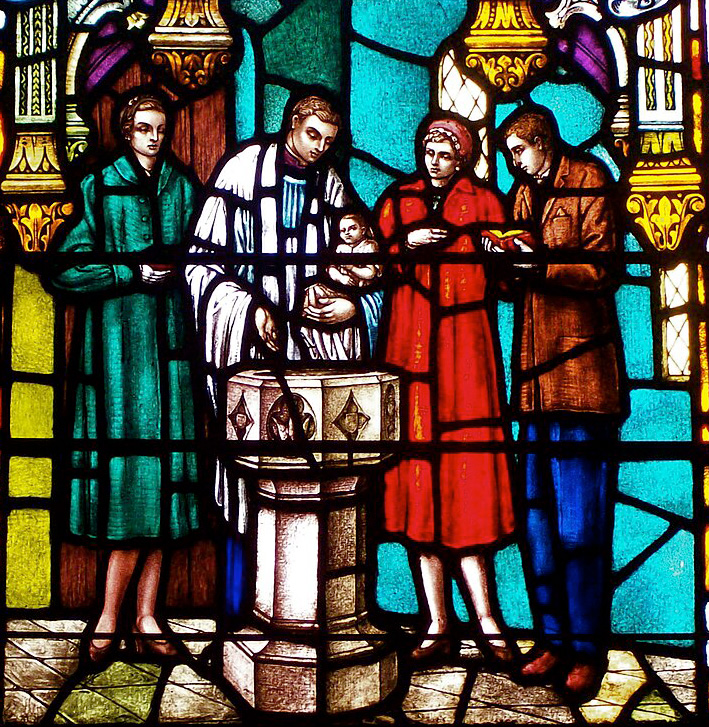
I vividly remember a critical moment in our confirmation class when I served a medium-sized United Methodist Church out in Ridgecrest. As in the Episcopal Church, confirmation is that ritual wherein one claims for oneself the baptismal vows they made, or were made on their behalf if they were infants
I had arrived a little late and Kay our secretary had already let the class of about 8 into my office. I made my apology for being a few minutes late and moved to get the class going. “Alright, guys, lets get our books out and get started,” I urged. At this point one of the girls corrected me, “Hey, we’re not all guys.” At that point, the wise guy in the room blurted out, “Well, you’re sure flat enough.”
Instant thermonuclear explosion. Alicia jumped up in tears and stormed out of the room. I rushed out after her as she ran into the arms of Pete, our associate pastor, who just happened to be coming to my office to drop something off. I asked him to deal with distraught Alicia while I went back to the class.
Absolute quiet. The silence was an acknowledgement that a social rule had been violated to devastating effect.
I realized that the lesson for that day was out the window. Instead, I told them we were going to talk about community, what makes it and what rips it apart. I asked them to share what they were feeling at the moment. Of course, all comments were directed to the boy, Warren.
When they had had a while to share their thoughts and feelings, I asked them, what would it take to restore community of our class. Sheepishly, Warren quietly mumbled, “I guess I have to say I’m sorry.” At which point the entire class as a chorus erupted, “Yeah, Warren!”
Later that day, Warren did in fact apologize and the next week the class was able to resume according to schedule. As devastating as that incident was, in a strange way working through it as a group, we developed a much closer bond. And no one will ever forget that lesson of sin, repentance, making amends and grace.
I could have never devised such a powerful and lasting lesson on my own.
After confirmation, a good number of the kids drifted away from the church. For them and their families, confirmation was the end of the faith journey. So, it is with many of our mainline churches. Confirmation is the graduation ceremony right out the back door.
We might see them again at a few significant moments, the baptism of a child, marriage or when six strong men have carried them through the door at the end of their journey. As one wit put it, the church is significant if at all on three occasions: hatched, matched and dispatched.
If we look at Jesus baptism and commissioning, it is not a culmination, but a beginning.
Personally, I compare it to my induction into the U.S. Army. I had registered as a conscientious objector willing to go into the medics. I wasn’t willing to shoot anyone over what I considered an illegal and immoral war but I was willing to patch up anyone who got shot or worse.
I remember reporting at the induction station in downtown Los Angeles early on a dreary, overcast morning. My mood matched the weather.
A primary thing I learned about the Army would repeat itself throughout my two-year stint. After the first minutes of going through that door it was hurry up and wait. And wait. And wait.
Finally, someone assembled us in a loose formation and we were herded off to a battery of tests. We were tested, inspected and injected. And yelled at a whole lot as we went through this process.
Finally, in groups we were lined up before a white line on the floor. We were given the oath to “protect and defend the Constitution of the United States, so help me God.” One step over that white line and we belonged to Uncle Sam for the next two years.
Flawed as it is, our Constitution is the covenant that unites us together. The defense of it is what each of us, in our own specialty would be doing. I was trained as an electroencephalograph technician. I stuck pins in peoples’ heads for the next two years.
The other lesson I learned, take care of the colonel and he’ll take care of you. After my two years I was discharged as an E5, the equivalent of sergeant.
Likewise, we in our baptism are also commissioned. We are called, through word and action to respect the dignity and worth of all persons. How we each do that will vary over the course of our life’s journey.
From Matthew’s telling of Jesus’ baptism:
“And when Jesus had been baptized, just as he came up from the water, suddenly the heavens were opened to him and he saw the Spirit of God descending like a dove and alighting on him. And a voice from heaven said, ‘This is my Son, the Beloved, with whom I am well pleased.’”
And for all who follow, God’s honest truth holds: You are beloved, in you I am well pleased. You are commissioned. Go forth and be of good courage.
Bishop Mariann Budde lives out this commission in Washington, D.C. where she serves as the bishop of that diocese. She has written a wonderful book; How We Learn to be Brave: Decisive Moments in Life and Faith.[1] In it she explores what bravery means in light of our baptismal vow. In part this pledge is: “to strive for justice and peace, and to respect the dignity of every human being.”
“The decisive moments in life are those pivot points when we’re called to push past our fears and act with strength.”[2] And I would add, push past our lethargy.
Through several life choices, like the decision to leave friends and move across the country at the age of 17 when her family fell apart – to leave an alcoholic and clinically depressed father and a step-mother who resented her, Mariann had displayed moments of bravery.
Bishop Budde had begun receiving phone calls about President Trump having assembled a group of top cabinet members and top military brass at Lafyette Park, across the street from the White House which then the whole entourage marched the short distance where Trump stood in front of St. John’s Episcopal church. There he held up a Bible upside down for a photo op and mentioned what a great country this is.
On CNN the Bishop was moved to say:
“Let me be clear: the president just used a Bible, the most sacred text of the Judeo-Christian tradition, and one of the churches in my diocese, without permission, as a backdrop for a message antithetical to the teachings of Jesus. Everything he has said and done is to inflame violence. We need moral leadership, and he’s done everything to divide us.”[3]
Her words, after the massive nation-wide protests over the George Floyd murder, captured the moment and spread throughout the airwaves.
Leading up to that point, the bishop’s essential work had been with clergy and congregations in her diocese. Definitely not on the national stage. But as phone calls flooded in after the incident, she arrived at that decisive moment where she knew she had to say something. This is what bravery looks like.
Many new beginnings are fraught with the call for bravery, for leaving our comfort zone. A new job can be quite a baptism into the unknown.
My friend Kep, having a Stanford masters degree in engineering, tells me of his first job with an oil company in Texas. Before he knew it, he was in a small boat being tossed about by a choppy sea. They were headed for an oil rig hundreds of miles out in the middle of the ocean. Everyone was getting seasick and Kep was wondering what he had gotten himself into.
But even the terror of getting on that flimsy contraption to hoist them up some nine stories, swinging over open ocean water to the living quarters of that rig. Even this was better than staying in that small boat retching over the rail feeding the fish.
Out of his comfort zone? You bet! A heart-in-his-throat moment for a city boy to be sure. No small degree of bravery is involved in some new beginnings. For Kep, a baptism by water, a lot of salt water.
I opened the paper on Friday to the headline: “Trump Asserts His Global Power Has One Limit: Himself.” Further: “My own morality. My own mind, It’s the only thing that stop me.”[4] This from one who has all the impulse control of a two-year-old.
The royal pronouncement of Louis XIV: L’État, c’est moi (I am the state) was given to his parliament in the assertion of complete and absolute authority. Well, Mr. Trump, we have no need of such royal rubbish. The last time we had a king, we had to kill an awful lot of British soldiers to get rid of him, and we aren’t about to go back now to any such subjugation. We’re not going back!
In his interview with the New York Times, Trump has abrogated the entire international order crafted following WWII. Tossed it all aside. It’s now Darwin’s rule, the law of the strongest. The United Nations may as well as fold up shop if it’s okay for any powerful nation to gobble up a weaker neighbor. A clear signal to Putin that Ukraine is up for grabs – along with any NATO country he might want — Lithuania or Latvia, or, maybe even, Poland. Yours for the taking.
Such sentiments are a reckless dismissal of the constitutional order that has guided our nation, for good or ill, for over two hundred fifty years. Lawless it is! The day after November 3rd must be Impeachment Day.
As our own Bishop Taylor urged in a recent Facebook post, we need all of us out in the streets on January 20 for the next No Kings Day.
I know some brave souls who have confessed that this was something they never thought they’d do. Be out in the streets with a sign protesting.
Their bravery is what our baptismal vows look like. The forthright statements of our religious leaders – that is what our baptismal vows look like.
Unfortunately, like some in my first confirmation class, too many Christians have come up from the baptismal waters stillborn. A lot of to-do to no noticeable effect.
That’s why our church believes that baptism is a public event wherein the community of faith pledges over the long haul to nurture the baptized in a life of faith that is courageous.
When we step up, screw up our courage to stand for the right thing, it is contagious. Our singular example gives others to follow the impulse to bravery, to join us. Yes, it will take not only a village but an entire nation risen up to rid ourselves of this tyranny. As someone said, they can’t kill us all.
As the nationally known gardener Paul Avellino asserts: “The point of standing together isn’t to change something overnight. It’s to become the lighthouse that reminds others there’s still a way through the storm.[5]
Remember your baptism and be thankful. Thankful for the most expansive journey opening up your days and years to come. And through that door lies eternity. Be thankful. Amen.
[1] Mariann Edgar Budde, How We Learn to Be Brave: Decisive Moments in Life and Faith (New York: Avery, 2023.
[2] Op cit., book jacket.
[3] Op cit., xviii.
[4] Katie Rogers, “Trump Asserts His Global Power Has One Limit: Himself,” New York Times, January 9, 2026.
[5] Paul Avellino, quoted in Bits and Pieces, January, 2025.
January 11, 2026
Epiphany 1
The Baptism of Our Lord
Isaiah 42:1-9; Psalm 29
Acts 10:34-43; Gospel: Matthew 3:13-17
“Our Baptismal Vows”
Let Your Love-Light Shine

The story goes in Matthew that there was an anomaly in the sky, something ajar. More than a shooting star caught their attention. In a world beset by a great malaise, a wonder to behold.
In that “bleak midwinter frosty wind made moan.” And moans yet today in the souls of the dispossessed. A very bleak midwinter for those on the streets or sleeping in their cars.
Let me tell you of one such woman, a woman who works at a tough, thankless job and yet found herself and her family homeless. Priced out of her apartment in Atlanta, Georgia.
Cokethia Goodman and her children have been homeless for several months when the author of Working and Homeless in America[1], Brian Goldstone, came upon her.
The road to ruin began when she noticed a letter from the landlord in her mailbox on the afternoon of August 2018. The terse letter informed her that the property had been sold and that she would have to move out.
She and her children had lived in that quiet Atlanta neighborhood over the past year. The apartment was near her kids’ schools and a nice playground.
That was it. The property had been sold and her lease would not be renewed. Time to cash out in this gentrifying neighborhood.
After frantically looking for anything nearby, she settled in a dilapidated dump in Forest Park, on the city’s outskirts. A dump, and for $50 more a month.
After two weeks in the place, she heard a scream from her twelve-year-old son. Running the water, he had received a bad electrical shock. She called code enforcement and the place was condemned. The family was without housing again. Nowhere left to go. For a while they holed up in a squalid hotel, but soon couldn’t afford that.
All the time she was working fulltime as a home health aide. She was working, doing everything she was supposed to do and they were out on the streets. How could this be? She thought homelessness and a job were mutually exclusive. This didn’t add up.
In her job she had been taking care of men and women in her city of Atlanta, and now she and her kids were homeless? There she was in her blue scrubs checking to see if any of the shelters had room for her and her children.[2]
This is America, for God’s sake! The wealthiest nation in the world and this is how we reward people who play by the rules and do everything in their power to support themselves?
Jesus, let your love light shine down on this humbled family. Let the Epiphany Star of Promise shine down on Cokethia and her children.
It is a bleary, depressing landscape over which the Epiphany Star will shine in many of our cities and in our rural areas.
The citizens of Willows, California, are in a state of shock as the only medical center for miles and miles around is being forced to close. Yes, that “One Big Beautiful Bill” has done them in.
Like countless other small rural communities, Willows has lost its only medical care facility. Glenn Medical Center in Willows closed Oct. 21 after losing “critical access” status for being 3 miles closer to the nearest hospital than rules require.
This rural outpost has treated residents wounded in accidents along with countless victims of car crashes on nearby Interstate 5 and a surprising number of crop-duster pilots — all done on Oct. 21
As hospital staff carted away medical equipment from emptied patient rooms, Theresa McNabb, 74, roused herself and painstakingly applied make-up for the first time in weeks.
“’I feel a little anxiety,’ McNabb said. She was still taking multiple intravenous antibiotics for the massive infection that had almost killed her, was unsteady on her feet and was unsure how she was going to manage shopping and cooking food for herself once she returned to her apartment after six weeks in the hospital.”[3]
This was in a county that voted over 60% for Trump. What did they expect when Johnson and his marauders cut over $900 billion out of Medicare. That’s Billion with a capital B. And slashed Medicaid payments to the states by hundreds of millions?
Oh, that the Light of Epiphany might brighten our wits to understand that elections have consequences. The Orange Felon has done exactly what he said he would do – slash government to the bone. Except for his rich buddies and fellow grifters. And your New Year’s present? Exploding health premiums. But no sweat for Congress – they’re on extended vacation and have wonderful taxpayer-supported, gold-plated health care.
Jesus, let your Love Light shine on those abandoned folks in Willows, California. Let your Light of Compassion and Enlightenment shine on their choices this coming November. Let it shine!
Dr. King reminds us that we’re all part of an “inescapable network of mutuality” where one person’s fate is tied to that of everyone. As American citizens we have a shared destiny.
We learned this in our churches, our mosques, our temples and in our synagogues. Now, let’s vote like it. Take your concern, prayers and thoughts right into the polling place. Be the Light!
Jesus, Let your Love-Light shine in our politics, the darkest of places right now.
Marjorie Taylor Green (MTG) has had an epiphany. A Damascus Road Moment. Maybe so the residents of Willows, California. Rugged individualism is a lie, not the ethic of the Jesus Movement.[4]
MTG had gone so far as to accuse Democrats, including Speaker Nancy Pelosi, of treasonous conduct, adding that treason was punishable by imprisonment or death.
After the death of Charlie Kirk, she has now suddenly lost all appetite for vengeance. She later told a friend, who confirmed the exchange: “After Charlie died, I realized that I’m part of this toxic culture. I really started looking at my faith. I wanted to be more like Christ.”[5]
Jesus, let your Love-Light shine on Marjorie Taylor Green and her spiritual awakening.
Sister Simone Campbell, the lead Nun on the Bus of several years ago has a new book out on the spirituality that undergirds her work and helps her be fit for human consumption.
Sister Helen Prejean, author of Dead Man Walking, notes in her Forward, “If there’s one governing mantra of Simone’s life, it is this: get in there close with people on the margins of society and allow your heart to be broken open. It’s in the breaking open to raw human need of real people that is for Simone the fire at the heart of her passion for justice.”[6]
Sister Simone is a splinter of this Epiphany Love-Light. Her recent book will be our Lenten study if I can find enough copies.
The Epiphany Star reveals reality to us. As it revealed the Christ Child to the traveling sages, it also revealed through a dream the wicked intent of Herod.
The Love-Light of that star also reveals bitter reality, past and present, but also reveals those merciful souls who acknowledge the wrongs of their people and in some small way make amends.
Timothy Snyder, in his book, On Freedom,[7] tells the story of taking his children to school in Vienna, Austria. While they waited for the bus for kindergarten, his son became fascinated by the construction machines operating across the street.
As the workers spread new asphalt for the sidewalk, they were preparing to install Stolpersteine, “stumbling stones.” These are markers denoting the houses where Jews once lived before the Holocaust.
“The information they carry – names, addresses, sites of death – give us a chance to rehumanize, to restore, at least in imagination, what they lost”[8]
“Before the Jews were killed, they were stripped of everything: first their property, then their clothes.”[9]
Jesus, let your Love-Light enfold those repentant souls willing to acknowledge the past. Let it gently shine and embolden. Embolden historians like Timothy Snider who are willing to write the truth that it may warn us of what we are capable of in the future.
May we in America have the same courage to acknowledge the dark moments of our past where we have inflicted incredible suffering.
Let your Love-Light shine on our willingness to make amends and move forward in to this eternal Light of Promise, the Light of a New Day.
If you have a chance, catch Rachel Maddow’s new podcast, “Burn Order.” It’s about our roundup and incarceration of thousands of American citizens solely because of race – our Japanese-Americans. Folks who had absolutely nothing to do with Pearl Harbor. These citizens lost virtually everything. New evidence shows the underlying avarice of those wanting their farms that was behind the racist accusations of treason.
On her recent program introducing this podcast, Rachel had three Japanese-American scholars, some who had been incarcerated in these camps. This truth-telling is Love-Light brightly shining. Jesus, let your Love-Light shine on Rachel and all intrepid reporters who would inform us on what is really going down in 2026.
Jesus, keep your Love-Light shining that we learn from our past, the good and the bad. Keep your Love-Light shining on those stalwart souls who continue to forge a better way forward. And warn of dangerous curves ahead.
Jesus, keep you Love-Light shining on those who would be victimized by the worst of us – for our Somali immigrants, for the Haitians — for the destitute immigrants seeking work at Home Depot stores, for those who can no longer afford the steep, new premium increases for their health care — or even groceries or rent, for God’s sake.
Jesus, keep your Love=Light shining today, tomorrow and all through 2026, for renewed days of promise and for the Love of God. Keep it shining. This we urgently pray. Amen.
[1] Brian Goldstone, There’s No Place for Us: Working and Homeless in America (New York: Crown, 2025).
[2] Ibid, xv-xvii.
[3] Jessica Garrison, “This rural hospital closed, putting lives at risk. Is it the start of a ‘tidal wave’?” Los Angeles Times, November 26, 2025.
[4] Robert Draper, “‘I Was Just So Naïve’: Inside Marjorie Taylor Greene’s Break With Trump,” New York Times Magazine, December 29, 2025.
[5] Op.cit.
[6] Sr. Simone Campbell, Hunger for Hope (New York: Orbis Books, 2020), Forward by Sr. Helen Prejean, ix.
[7]Timothy Snyder, On Freedom (New York, Crown, 2024), 24.
[8] Ibid.
[9] Ibid.
January 4, 2026
Epiphany Sunday
Isaiah 60:1-6; Psalm 72:1-7, 10-14
Ephesians 3:1-12; Gospel: Matthew 2:1-12
“Let Your Love-Light Shine”
Do Not be Afraid

We live in a fearful age. “Precarious” describes the situation of many folk these days. Many of us think the country is headed in the wrong direction, with a sociopathological narcisist at the helm. Heroid incarnate.
Destitution is everywhere. On the streets you can smell it, the oder of urine and feces wafts from the sidewalk encampments of the dispossed. This season many families are food insecure.
Pregnant immigrant women are held in detention even though it’s against federal policy. ICE dosen’t care. “Screw the courts,” Stephen Miller and his crew retort, or words to that effect which are inappropriate from the pulpit. The present day Madonna now pregnant in a holding facility, lies shackled to her bed. Terrified, she remained tied to her bed as she miscarried.[1] Outrageous!
Undocumented mothers are separated from their children – the descending gloom of our national disgrace. A palpable fear seeps in through such misery and torture. A fear not of one but of many. The fear of those judged only to have the wrong skin color. How dark the night in today’s Bethelhem.
And on Christmas Day someone will win a Powerball jackpot of $1.7 billion. In the midst of so much want, that amount of money for just one person is obscene. Who needs $1.7 BILLION? That’s right, folks billion with a capital B. How dark this night!
Heroid’s raging – his campaign of retribution and vengeance ever presses against this season of expectation and hope. Yet it is precisely into such a bleak winter that an unexpected Gloria in Excelsis breaks through. “Be ye not afraid.”
“Unto you. Unto you.” That is the ever present joy that yet seeps into this night. “Be ye not afraid.”
This is the world of those shepherds tending their flocks on that pitch dark and chilly night. They, like ninetynine percent their fellow inhabitants, lived on the margins. Cold, malnourished, at the whim of robbers, wolves and greedy taxmen.
As Luke tells the story of that wretched, freezing evening, how a most astounding, disrupting event burst through the skies above. And for this, we’ve just gotta have the King James version.
“And there were in the same country shepherds abiding in the field, keeping watch over their flock by night. And, lo, the angel of the Lord came upon them, and the glory of the Lord shone round about them: and they were sore afraid. And the angel said unto them, Fear not: for, behold, I bring you good tidings of great joy, which shall be to all people. For unto you is born this day in the city of David a Saviour, which is Christ the Lord. And this shall be a sign unto you; Ye shall find the babe wrapped in swaddling clothes, lying in a manger. And suddenly there was with the angel a multitude of the heavenly host praising God, and saying,
Glory to God in the highest,
And on earth peace, good will toward all.”[2]
What joyous words – “Fear not.“ Do Not Be Afraid
Calm, soothing words. The sort of comfort a parent would give a child who has been awakened by a terrifying nightmare. “It’s okay. It’s just a bad dream. Don’t be afraid. The same comfort our brused world seeks today.
Mary’s child is Good News to a fearful planet. Do not be afraid. In the birth of this tiny baby is the Good News of Salvation. Hope restored, In this message we are gently held. Yes, in a tiny, squalling baby born in ICE detention is also the promise of ages. His mother shackled to a bed without pain relief. Unseen, the multitude of the heavenly host attend that lowly birth. Gloria in Excelsis Deo the chorus.
On Christmas Day our Luther James will be exactly three months old. A sign of God’s favor. Best present ever! My Christmas prayer is a supplication for the other precious children of this world that they might have the same care, the same promise of our little Luther. I know this presently is not the case. Yet each newborn is a miraculus blessing, no matter how rude and impoverished the circumstances of their birth.
For this prayer to become sacramental reality — our political action, our open wallets, our ready credit cards, our raised voices, our gumption will be the tangible expression: In Gaza, in Sudan. In the Congo and in Ukraine – where wealthy nations make real their concern and care. Where we make real and visible our concern, our hope — our supplication becomes sacramental reality. Actual care delivered on the ground. Follow the money derect to Doctors Without Borders, to UNICEF, to Episcopal Relief and Development. Follow the money. Gloria in Excelsis. Yes, we are cooperators with the Spirit of Christmas for these others. Santa — if his visage means anything at all in our commercialized day.
As God brought forth Blessing and Salvation by way of an illiterate, impoverished pesant woman in Bethlehem, who knows that miracle lies hidden in any of the millions of children born in these war-torn lands, in impoverished America. With God, this Christmas, all is possible, for we of the Jesus Movement, God willing — we are the hands and feet of this Christmas promise. Gloria in Excelsis.
I close with a poem by John Core, “This Night the Music.”
“This night the music of the spheres is somehow disarranged;
with dissonant surprise one star un-tunes the sky, set heaven ajar;
the universe is changed.
…
“The shepherd’s narrow world grows vast as glorias begin;
while God’s own voice, wide as the sky, consricts itself into a cry
behind a crowded inn. Gloria. Gloria. Gloria – Goria in excelsis Deo. And with Tiny Tim I say, “God bless us everyone.” And a Merry Christmas to all. Amen.
[1] Karla Gachet, “Pregnant immigrants held for months in detention despite rules against it,” Los Angeles Times, December 3, 2025.
[2] Luke 1:8-14, KJV.
December 24, 2025
Christmas Eve
Isaiah 9:2-7; Psalm 96
Titus 2:11-14; Gospel: Luke 2:1-14
“Do Not be Afraid”
All Changed into Blessing

What’s in a name? As parents about to be at the rather advanced age of 40 and 41 we felt especially blessed that a first child was on the way. We had been married 17 years when we found out we were expecting. I’m sure by then our parents had long given up hope of being grandparents.
Of course, the question of names began to surface. After all the years of waiting, we felt like Abraham and Sarah, startled by that outrageous prophecy at their tent. So, outraged, Sarah laughed. They named the boy Yitzhak, laughter in Hebrew.
Feeling especially blessed, like Abraham and Sarah, Jonathan seemed appropriate. In Hebrew, Gift of God. Jai also had a favorite student in her class, Jonathan. That was also the name of my grandfather on my father’s side, though I never knew him because he had died when my father was 12 or so. He was the last of some 13 children, his first sibling being born during the Civil War.
Christopher came along in a year-and-a-half. I remember asking Jai if she thought Jonathan should have a brother or sister. “Oh, I’ve been meaning to tell you,” was her reply. Christopher in Greek means Christ bearer. I had suggested Wren as a middle name, after Christopher Wren the architect of St. Paul’s in London. “I’m not having my child named after a bird,” Jai protested. So, he became Chrisopher James after some favorite folks bearing that name, including his godfather. Yes, in him on the day of his arrival was the spark of Christ. I still remember our pediatrician Clint slapping him on his back as he held him by the heel, shouting, “Breathe, damn it, breathe.” With relief I heard the first loud squall.
Names in biblical times were considered significant for they indicated a person’s inner disposition. In Genesis one of the first tasks of Adam is to name the animals -each name reflecting their quality of usefulness to humans. Names indicated the life trajectory, the quality of one’s contribution to the greater good. Or a disastrous and bad outcome of one’s end.
And Jesus? Here is the story from Matthew’s gospel that told of his name.
When Mary was found to be with child, “Her husband joseph, being a righteous man and unwilling to expose her to public disgrace (actually she probably would have been stoned to death by the villagers) planned to dismiss her quietly. But just when he had resolved to do this, an angel of the Lord appeared to him to in a dream and said, ‘Joseph, son of David, do not be afraid to take Mary as your wife, for the child conceived in her is from the Holy Spirit. She will bear a son and you are to name him Jesus (Yashua in Aramac) for he will save his people from their sins.’”
He will save his people. And do we ever need help. But this word, “salvation,” seems so remote and obscure, so out of date to us moderns. Yet, there is today a great longing for purpose, for meaning, for connection, for wholeness. Our kids are experiencing their life crisis in their teen years, not in their forties. Suicide among our youth is at an all-time high. It is “blessing” we yearn for, to know that our lives amidst the toil and tedium that they are significant, that we are beloved, that there is a purpose to it all. And some joy in the mix.
Jesus will go about the countryside; his healing and message are all to pronounce a kin-dom in which all are blessed. All are loved by Abba, his father. His parables and stories, his daily actions are an affirmation of blessedness. A blessedness that includes all. Includes that women of ill repute at the well in Samaria. The woman of ill repute who washed Jesus’ feet with her tears and hair. Beloved and blessed. Includes tax collectors. You remember the story of the hated tax collector Zacchaeus? Beloved! Jesus yearned to include that rich young man with many possessions who cannot bear the cost of discipleship. As he walks away, sorrowful, and Jesus is also sorrowful for he also loved that young man. Yes, beloved! All these exchanges are transforming events, transcendent events of blessing. All are beloved.
And this Salvation includes all, down through the ages, in whose hearts he has taken up residence – the hearts where he has been born anew in members of the Jesus Movement. Stalwart members of the Jesus Movement, who, down the ages have been agents of wholeness and blessedness. Bringing in word and deed the Good News that all are beloved by God. Sometimes at the cost of their own lives.
These are the saints of God; yes, the ones you can meet at tea time, on trains or even in committee meetings. Let me tell you of one of these I have known. As she could no longer drive, I would come by and pick her up for our endowment committee meetings. Her name is Phyllis Colclough. A blessing incarnate.
One evening when I stopped by to pick her up, Phyllis shared this story shortly after the events of 9-11. She had noticed that for several weeks after those horrific scenes of September that she hadn’t seen her Iranian neighbor who lived a couple of houses down the street. Finally, under the prompting of the Spirit, Phyllis gathered together her courage and walked down to her neighbor’s house and rang the bell.
After some period of time the woman finally showed up at the door. It opened just a crack. About all Phyllis could see was an eye. Finally, the woman related to Phyllis that she had been afraid to go out after the two planes had destroyed the World Trade Towers. People might blame her. Phyllis was the first person she had actually seen for several weeks, as fear of her neighbors had kept her locked in her house. She was now running our of food but was afraid to go to the market.
Phyllis told the woman, “Honey, let’s go over to my house and let’s have lunch.” Timidly, her neighbor took her hand and they had lunch. Over lunch, the woman softened and they enjoyed a wonderful afternoon together. A moment of transcendent companionship. Blessed neighbor to blessed neighbor. Salvation!
This simple act of hospitality allowed a terribly frightened woman to understand her Christian neighbor was a friend, not an enemy, or someone indifferent to her plight. As Phyllis’s neighbor gave voice to her fears over lunch, they began to subside. This elementary act of kindness was blessedness incarnate. Release from fear and estrangement. Blessedness. Salvation!
Often it is in such small acts of kindness, of service to others that Salvation is manifested. St. Augustine long ago put it this way about these small deeds of love. “Faithfulness in the little things is a big thing.” This was a “big thing.” As Phyllis related the story, I could see in her retelling of this incident that she had been blessed as well. I was certainly blessed by Phyllis’s story as a tear welled up in my eye.
Salvation in that brief moment of compassion. Phylls affirmed the blessedness of her Iranian neighbor. The Spirit which prompts to such active compassion is the Salvation Jesus sends to his followers in conjunction with his Resurrection in John’s gospel – known as John’s Pentecost. Active Salvation let loose in creation.
This week at St. Francis, we had our fall pruning workshop led by Tom Spellman, master gardener, who has been at this for years. Unfortunately, the Aquinas students who work in St. Francis Garden of Hope couldn’t come this week. Pesky finals and then Christmas vacation.
But we had a fantastic turnout of St. Francis folks. Yes, many old, somewhat decrepit and tired, but we were there. With persimmon pudding with lemon sauce as a lure, we had a good showing of our congregation, some 10 of us.
All this to ensure that the pruned trees will in the spring produce an abundant crop of peaches, plumbs, nectarines, apples for the food bank we do with St. John’s.
Folks, this is what Salvation looks like. This is what Blessedness looks like. It’s allowing Christ into our date books plus a bit of hard work on behalf of our neighbors in need. In need, indeed. Today, nationally, some fifty percent of us live paycheck to paycheck. Forty percent of us live in poverty or near poverty. A $500 unexpected expense could cause family financial disaster. These, “the least of these,” are precious in God’s sight. Our Food Bank makes real the Gospel claim of Blessedness. A sacrament – an outward sign of an inner spiritual reality.
It’s going out of one’s way to be in service to others. It’s sweat and aching muscles, some thirst in the hot sun. But this crew of some 13 folks got most of the trees prunned; with the remaining five left for Miguel to finish. That is a living picture of Salvation. In his name we bring that Blessedness.
Most of the time it’s hot, boring, grubby work, not glamorous for sure – all to affirm that the people who come on Wednesdays to St. John’s Food Bank truly understand that they are blessed. Even out in our orchard, loppers in hand – we in turn also experience transcendent moments of Blessedness. Salvation!
I believe that when anyone new shows up on our doorstep here at church, it is because of a prompting of the Spirit in their life. Something is missing. Something is askew. Something is hurting. There is an inner longing. They come to the one place that their heart tells them where there ought to be an understanding, a listening compassionate ear. And however maimed they are, they come as a blessing to us. As I’m wont to say, “We do church with whoever shows up.” Our task is to affirm that in our welcome newcomers know they are beloved, that they are a blessing to us. On any given Sunday morning.
O Come, O come to Bethlehem and see, see what awaits. The Mystery of ages. He shall be called Yashua, Jesus, for he will save his people. That Blessedness, that Salvation, is passed down through eons by all who have signed up for the Jesus Movement. It’s in our DNA. This is the Good News that you and I are beloved and precious in the sight of God and so is all creation. Treasure in earthen vessels – each of us. Our lives are grounded in something greater than ourselves – Blessedness. And this is the gift that awaits in the manger of your heart, in the manger of my heart. O Come, O Come to Bethlehem and see. Amen.

December 21, 2025
Fourth Sunday in Advent
Isaiah 7:10-18; Psalm 80:1-7, 16-18
Romans 1:1-7; Gospel: Matthew 1:18-25
“All Changed into Blessing”
Holy Resilience

It is ever into a world torn asunder that faith is birthed. Isaiah speaks to a desolate people, brutally slaughtered, hauled off to exile. Sing us a song of Zion their captors taunted. “How can we sing the Lord’s song in this God-forsaken place,” they sobbed.” No, they sat down by the waters of Babylon and wept.
We, like them live in a time of exile. Death and destruction reign. You know the places: Gaza and the West Bank, Somalia, Sudan, Ukraine, the Congo, Russia, off the shores of Venezuela. Gazing upon the ruination of our nation, its laws, its customs, its civility. It has all been turned to an ash heap – reduced to a garish ballroom that dwarfs the People’s House – reduced to the lawless murder of hapless folks in small boats on the high seas in the Caribbean – reduced to our complicity in settler murder of Palestinians in Gaza and on the West Bank — reduced to a pastiche of our former constitutional order. All by the most ignorant man to have ever held the office of president, a doddering old fool who can barely stay awake during his own meetings. Attended by a corrupt, greedy and imbecilic cabal that is the laughing stock of much of the civilized world. Yes! Exile from all we have known and revered. Exile from the America of youthful ideal. Exile – strangers in our own land.
It Is into such distraught and barren times that Magnificat, the Song of Mary breaks through. As I’ve mentioned, in Luke’s telling of the episode Mary is not some coddled, mild young thing who meekly accepts this angelic outrageous greeting. It’s as if she takes one step back and tells that rude interloper, if this is the way it’s gonna be, hold my beer and watch this. She then cuts loose with one of the most radical prophecies in all of scripture.
Those on the top will soon find themselves on the bottom. Those who have grabbed up all the goodies, will walk away with empty hands. The powerful are confronted and confounded. No garish, monster ballroom for them. It will be the lame and the halt who will joyfully do-si-do to fiddle, banjo and mandolin out in the Rose Garden – the People’s Garden.
Yes, “He has showed with his arm;
he hath scattered the proud in the imagination of their hearts.
He hath put down the mighty from their seat,
and hath exalted the humble and meek.”
I just love the language of the King James version for this canticle.
And finally…
“He remembering his mercy hath holpen his servant Israel,
as he promised to our forefathers, Abraham and his seed for ever.”
Mary, maybe a 12 or 14-year-old girl, the property of a father with the prerogative to marry her off to whomever and whatever age. Yet, in Luke’s, telling no shrinking violet she. No! Brimful with prophetic righteousness.
And she will persevere through the worst that life can deal out, eventually weeping at the foot of a tree of torture as her son succumbs to a most agonizing death. Holy Resilience, indeed.
Christmas each year is killed not by those radical liberals who want to banish it, but by saccharine sentimentality. Its message of Good News is NOT for the timid or the lazy, the willfully ignorant.
It’s about God feeding the people with the nourishment that builds the soul, true manna. Much more about manna than Macy’s. Yeah, manna like the veggies of St. Francis Garden of Hope. The sort of stuff that takes hard work.
It is into the desolate and rough places the actuality of hope breaks through. That’s the Baptizer’s, that’s Mary’s message. Hope, perceived through Holy Resilience. Yes, Lord, we stand ready to be “holpened.” NOW!
“Remarking on the occasion of Christmas, Thomas Merton once said, ‘Into this world, this demented inn, in which there is absolutely no room for him, Christ comes uninvited.’ So it is with the true message of Advent. The very life of God takes flesh among us. It is a scandal, an offense, a disruption to this world.”[1]
Mary is a part of that story of disruption to the very end, from the Annunciation, the Visitation, the Wedding at Cana, the Crucifixion and Resurrection appearances. It is difficult to imagine a mother bearing more sorrow than Mary, yet she is a most resilient of women. In the end, the disciple John is entrusted with Mary’s care, Jesus’ last wish from the cross.
Holy Resilience is a gift of the Spirit. It is what keeps the community of Faith true to it’s calling. It is our North Star. It’s easy for good intentions to dissipate under the pressures of modern tedium and annoyance. Let me tell you how.
The other day at Cardenas Market, I completely lost it in the checkout line. Some woman ahead of me was cashing in vouchers or something. She must have 20 or 30 or so of them, and for each one the clerk had to go through a big rigmarole with the register.
It was taking forever. We waited minutes and more minutes. Customers behind me began moving to the adjacent line. It seemed so inconsiderate that this woman should be wasting some 20 minutes of everybody’s time – no, change that – of MY time. I said a few snide things, huffed and puffed. Finally, we were checked out. I felt rather sheepish when, afterward, my home health aide Ileen told me that all those receipts and whatever were for a homeless project.
How long, O Lord, must we wait for peace to settle into our hearts, into MY heart? My resilience had completely evaporated in those few moments behind this woman doing a righteous deed for some destitute homeless folks.
Pastor Heidi Neumark, one of my favorites, tells of a girl’s birthday party around the time of Advent in New York City.[2]
By the time she arrived with her two children the festivities were already under way. When they entered the house, they were confronted by Tweety Birds, scores of them everywhere. On the napkins, on balloons, plates, the cake, and center stage, a big Tweety Bird piñata. Heidi had taken her children because the mother, Marta, was their favorite baby-sitter. It was the first birthday party for Marta’s baby and it was to be the baby’s baptism.
The children were crowding around the piñata, eager to take a whack at it. Eager to bash it to pieces and grab as much candy as they could hold in their small hands.
Marta’s one brother was absent, serving time in jail and no one had seen her other brother, 16-year-old Christian. Va y viene, he comes and goes.
In the middle of the chaos, Christian walks in, baggy red pants and a red sweatshirt. Hanging out of a back pocket was a red bandana. Christian had joined the Bloods and he was flashing their colors.
This family had for some time teetered on the edge. Their mother was strung out on drugs, and the three children had been raised by an elderly grandmother who could barely keep up with them.
When Christian’s own mother died of AIDS, he was 15. “He sat slouched with his face in his hands, crying uncontrollably through the entire funeral, Heidi recalls.” It was after that he had joined the Bloods.
Seeing Pastor Heidi, he comes over, gives her a hug and a kiss. In her arms he, always a slender boy, seemed so frail. That is why, now, he is most likely armed. “Young, dangerous and endangered,” she remembers thinking.[3]
It is soon time to leave. On the way home, Heidi and her children pass two groups of teenagers. They are walking towards a fight that’s about to explode between the two. She pulls her children in tighter and quickly walks around the kids. She doesn’t know the neighborhood and these are not kids she knows. Heidi and her children hurry to their car.
She notes, once they are safely home and the children in their beds, that tomorrow will be the first Sunday of Advent. After putting out the Advent decorations – calendars, the wreath of candles, the lion and lamb and a bowl of stars – each one bearing a prayer for the person named on it (Yes, Marta and her family are inscribed on one of those stars) – Heidi takes a few minutes to herself to reflect on the reading for that Sunday from Isaiah 40.
“Every valley shall be exalted, and every mountain and hill shall be made low; the uneven ground shall become level, and the rough places plain.”
In the stillness of the night, she wonders when this might be. In the daily grind of violence of her large city, God seems so absent. For people like Marta and her family, where are the signs of that promise?
Yet, in the resilience of Mary, in the resilience of all mothers like Marta, that the promise finds fulfillment. The testimony of the Mothers of the Desaparecidos in Chile and Argentine, their resilience each week in the central squares of those nations – their silent resilience is the sacramental sign of this hidden God’s presence. Their sorrow is the manger in which the Christ Child is born. Holy Resilience his swaddling. Where is this Christ born? His birth is in those places where we are weak and vulnerable. Those places where we are not so full of ourselves — those places, where in the silence of the night, unbidden prayer breaks through: O Come, O Come Emannuel. Enter into our brokenness. Come, O Advent Promise, and shine forth, burning brightly as once did that Epiphany Star, pointing the way. Enlightening our coming days, Marta’s coming days, and the coming days of a world that has sorely lost its way. Come quickly. Come, quickly, Lord Jesus. This we pray. Amen
[1] Jim Wallis, “The Low Estate of His Handmaiden,” Sojourners, December, 1976.
[2] Heidi Neumark, God’s Absence in Advent, Christian Century December 5, 2001.
[3] Ibid.
December 14, 2025
Third Sunday in Advent
Isaiah 35:1-10 Psalm 146:4-9
The Magnificat (Luke 1:46-55); Gospel: Matthew 11:2-11
 Forney Charities