
Forney Charities
Improving communities by helping residents, one person at a time.
Do Not Conform – Be transformed
On Sunday morning I woke up with a racing heart and a sense of dread. I had just come back to consciousness from a terrible dream – a nightmare, really.
In this dream I was seated in my vestments ready to take the pulpit as a visiting preacher in this huge downtown Presbyterian church. Reflecting back, it looked like the huge sanctuary of Immanuel Presbyterian Church on Wilshire Blvd. in Los Angeles. When I got to the pulpit, looking over the rows of pews, mostly filled, I realized that I didn’t have my sermon.
I looked around the surface of the pulpit desk but it was nowhere to be seen. Not even on the floor. Well, I thought to myself, I ought to be able to remember enough of it to get by. After all, I had labored over it all week. But, nothing. I couldn’t remember what the scripture passage was. I couldn’t even remember a single story.
I began with a little patter about how honored I was to have been invited and told a lame joke (the kind my boys say I usually tell), hoping that something might come back to mind as I vamped. The next thing I knew, there was a woman standing next to me with an offering plate. This was the signal that I was done. Yeah, really DONE. At the same moment, the entire sermon came back to mind. But it was too late. Done. Really Done, as in Toast.
At that moment another thing occurred. I woke up.
I wonder if it is just Presbyterians that cause so much anxiety. Starchy Calvinism can mess with the mind. Or was something deeper going on?
The basic undercurrent of this dream is: Forney, you don’t measure up. You’re a fraud. Isn’t that the message we get from so much of society? You’ve got to measure up. We’ve got standards and, well…you’re out of your league.
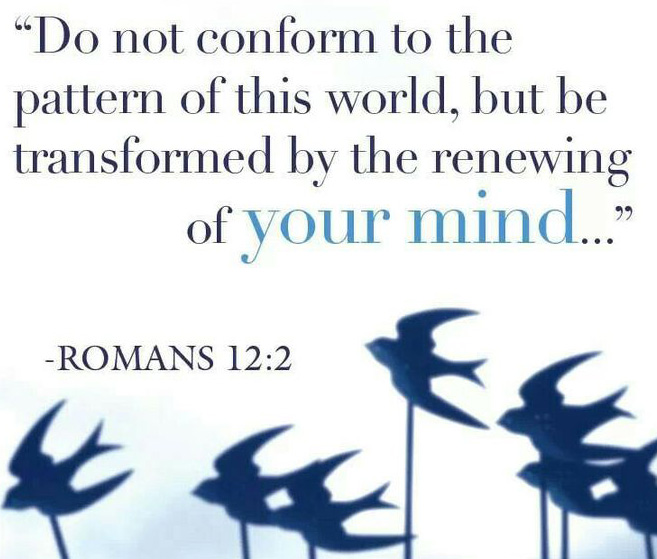
Paul tells the church at Rome that the standards the world beats us over the head with are bogus hogwash. “Do not conform yourselves to the standards of the world, but let God transform you inwardly by a complete change of your heart.” Then you’ll be in alignment with God, the power that set the planets in their courses and also cares for even the tiny sparrow.
The world said that, as a teenage boy, if I ever hoped to attract a girlfriend, I needed to have a souped up, chopped and customized Chevy. Chrome exhaust pipes, metallic paint job with pin striping that gave off a deep throated VAROOOOM when I stomped on it. I had a hand-me-down 1950 Studebaker.
I never measured up. The problem with the “standards of this world” is that none of us can ever measure up. And in just trying to do so, many of us will be ground to dust. Trying to earn your self-worth is futile. There’s never enough. You’ll never be good enough. That’s just how it is with the world’s standards.
The world’s standards are spiritual death. Sometimes actual, real, dead death.
Look at the COVID-19 wards across the country. They’re full of so many of society’s discards.
You want to see the flotsam of the standards of this world? Look at the recent economic indicators.
In the June business section, when the pandemic in the U.S. was just beginning to kick into high gear, I spied an article on bankruptcy. Many companies, reeling from massive losses were heading to the courts for relief.
I read that, while bankruptcy is usually devastating for workers and investors, it often works out just fine for CEOs.
Here is the true skinny on corporate bankruptcy. Companies get rid of debt; they stiff their investors and get relieved of burdensome union contracts and healthcare obligations to their workers. They leave their suppliers and subcontractors high and dry. AND, AND. The CEO’s walk away with full wallets.
Whiting Petroleum sought protection from the courts, it’s CEO walked away with $6.4 million in bonuses and perks. In closing 154 stores across the country, J.C. Penny managed to find enough pocket change to pay their outgoing CEO Jill Soltau $4.5 million. I wonder how all the store clerks and the cleaning crew made out. The standards of the world work out pretty well for some.
Chesapeake Energy paid out a raft of bonuses to senior employees right before filing for bankruptcy. The same with Hertz. These are the standards of the world.[1] Do not conform yourselves to them. They are the path of dehumanization and death.
Tuesday the S&P Dow Jones hit record highs. And more and more wound up living on the streets. Our friend in Charleston, WV, told me that city parks are overrun with the homeless and drug addicted. But the top five percent are doing very well, thank you. One analyst, looking at the disparity can’t believe the numbers, “This market is nuts,” said Howard Silverblatt.[2] The “standards of this world,” they’re nuts.
This is the judgement of the world. These standards are death to the aspirations and dreams of many. Most of us can never measure up to them. We will never be rich enough, thin enough, educated enough. Most of us will not have the right car, the right trophy spouse, the right house or the right attitudes. So, don’t conform yourself to these standards. They are death.
But be transformed. Inwardly, by a complete change of your mind.
Transformation begins with opening our eyes, opening our hearts and minds to what is really real within ourselves and the world around us. It begins with a real assessment. That’s the beginning of the 12-step journey to recovery. A moral inventory of who you are.
It’s like the mess I make in the kitchen. I look at it and ask myself, now why should I expect someone else to clean this up? Then I hunt for the sponge and soap. Why would they have more fun doing it than I?
That’s the beginning of the journey of healing for our nation. Transformation is listening — listening to those we have harmed and neglected. Like a formerly enslaved woman, Isabella Gibbons, working as a cook at the University of Virginia. This is the campus designed by Thomas Jefferson, author of those inspiring words in the Declaration of Independence, “all men equal.”
From this woman, who would later by 1867 become a teacher of a Black elementary school, “Can we forget the crack of the whip, cowhide, whipping-post, the auction block, the handcuffs, the spaniels, the iron collar, the negro-trader tearing the young child from its mother’s breast as a whelp from the lioness? Have we forgotten that by these horrible cruelties, hundreds of our race have been killed? No, we have not, or will.”[3]
God begins that inward transformation in the moment we acknowledge our brokenness. As with an individual, so also with a nation or institution. In acknowledging untold pain and suffering, in acknowledging the black lives taken advantage of and shamefully used, the University of Virginia has embarked on the journey of inward transformation as an institution. They are listening to the pain echoing down the centuries of broken black bodies and spirits.
Those who never feel the need for contrition, those who never experience the need to apologize – they will not be healed. They will remain stuck in frozen attitudes. All joy sucked out of life.
Transformation is real, but painful. Like my friend Ed Bacon is fond of saying, “The TRUTH will set you free. But first it will hurt like hell.” In the fellowship of God’s Beloved Community, none of us has to take that journey alone. Transformation is about having a heart big enough for others than just oneself, as a security guard said this week of Joe Biden. Let “God transform you inwardly by a complete change of your mind.”. It will enlarge your heart.
Transformed by God – these are the healthy, life-giving people. Folks you want to be around because they bring out the best in you. They cheer you on rather than drag you down. Don Thomas is one of those people.
I recently received an e-mail from my friend Dr. Don Thomas who works in Malawi providing medical services and raising funds for schools and community organization. He’s as old as I and yet still makes it back and forth from Pasadena to Africa.
He shares the most marvelous, life-affirming stories of a village and it’s people. One young African woman, Ida Puliwa, the founder of Othakarhaka Foundation, was the first female from her village to graduate college. Her transformed soul has transformed her village.[4]
Even with COVID-19 shutting the school in her village, Ida has organized the older girls to tutor the younger students so their progress is not lost. “The girls are fulfilling their commitment to “pass on the kindness”, carrying forth Ida’s unique, original goal for Othakarhaka. Each village volunteer of every age gives of their time each week to ‘pass on the kindness.’”
My friend, Fr. Doug, had a dream one night – no not about forgetting his sermon. This night visitation was surely an encounter with the divine. The voice he heard said, “Go help my people in Africa.” Over the years, he has done that indeed. He even roped me into the effort.
His work funded through United Charity Endowment for Africa, has developed clean drinking water projects in coastal villages of Ghana and in the interior rain forest at the St. Anselm’s Anglican cathedral at Sunyani. He, as of late has worked with Ghanaians to rescue young boys sold into slavery for the fishing industry. Upon rescue the boys are provided social services and education.
From Doug’s transformed heart and mind has come transformation for many others. That’s how it is with Spirit Transformation. Can’t help itself.
This work is the spiritual fruit of one whose life is evidence of inward transformation. Out of it flows, peace, patience, kindness, forbearance, freedom, sobriety, generosity – all the rest of it.
The world doesn’t understand such. By the standards of the powerful, such is “weakness, foolishness.” Such things are beneath them. The world shouts back, “Loser!”
“But let God transform you, inwardly by a complete change of your mind. Then you will be able to do the will of God.” And that will be your delight.
Mother Teresa’s poem, “Anyway,” makes it all so clear – what gives life and what reeks of death. Her poem speaks to the depth of the transformed heart and mind. And the freedom of being inner directed “Let God transform you inwardly by a complete change of your mind.”
Mother Teresa’s Anyway Poem
People are often unreasonable, illogical and self-centered;
Forgive them anyway.If you are kind, people may accuse you of selfish, ulterior motives;
Be kind anyway.If you are successful, you will win some false friends and some true enemies;
Succeed anyway.If you are honest and frank, people may cheat you;
Be honest and frank anyway.What you spend years building, someone could destroy overnight;
Build anyway.If you find serenity and happiness, they may be jealous;
Be happy anyway.The good you do today, people will often forget tomorrow;
Do good anyway.Give the world the best you have, and it may never be enough;
Give the world the best you’ve got anyway.You see, in the final analysis, it is between you and your God;
It was never between you and them anyway.
Sister gets the “Last Word.” Amen.
[1] Peter Eavis, “Bankruptcy? For the C.E.O.s, It’s a Bonus,” New York Times, Business Section, June 24, 2020.
[2] Matt Phillips, “’This Market is Nuts’: Stocks Defy a Recession,” New York Times, August 19, 2020
[3] Quoted in Holland Cotter, “Where ‘Horrible Cruelties’ Can No Longer Hide,” New York Times, August 17, 2020.
[4] https://www.idemandaccess.org/
August 23, 2020, Pentecost 12, Proper 16
The Rev. John C. Forney
Isaiah 51:1-6; Romans 12:1-8; Matthew 16:13-20
“Do Not Conform – Be Transformed”
The Cool Kids’ Table

We moved to a new neighborhood when I was in my second year of high school. Now, I must confess that pretty much all through junior high and into my first year of high school, school was a social disaster. And an academic disaster. But moving to Lakewood didn’t help matters one bit.
Exclusion was no more apparent than when lunch hour rolled around. I took my lunch and over by the walkway was a group of tables at the edge of one wing of classrooms where the popular kids ate. There were the football players and their girlfriends. The cheerleaders and some popular band kids – an inner circle of popularity all ate there. To think that any of us mere mortals might sit at one of those tables was to risk abject scorn. This was the Cool Kids table. They had the right clothes, the right cars, the right girlfriends and boyfriends. I was definitely not in the class of the “Cool Kids,” nor were any of the few friends I had. We sort of hung around on the edges of school. We definitely did not have the “right stuff.”
I’m not sure when I first heard the story of the unwanted Canaanite woman. But I had no difficulty in identifying with her. Matthew tells of this woman who begins following Jesus and his disciples on the road in the district of Tyre and Sidon. Definitely, the people of this district were outsiders, certainly “not cool.” These outsiders were excluded from the God’s Covenant with the House of Israel. She implores Jesus for her daughter’s sake. “Have mercy on me, Lord, Son of David; my daughter is tormented by a demon.”
It’s like that stray dog which began following me home from school one day. No matter how much I tried to shoo it away into a vacant lot, it wouldn’t leave. It would back up a few feet and again resume following me as soon as I took a few steps.
That’s how Jesus and his little band regarded this woman. The disciples kept urging Jesus to shoo her away. She was not their kind. They refused to recognize her humanity. She was a nuisance, a pest.
She was like that telemarketing phone call. The caller first asks your name and how are you like they’re juiced on six cups of coffee. Before you can get a word in edgewise, this marketing monster is off on their sales pitch. Just a big bother and waste of time. I’m thinking, “If I really needed this as much as you say, I would have already purchased it.” Get out of here! Most often, only rudeness will get them get them out of your hair.
“Send her away,” the disciples urge, keeping her all the time at arm’s length. She smells. She talks funny. They had no time for this ragged, unkempt woman. “Send her away.” She definitely does not belong at the Cool Kids table.
But she persists.
I remember another woman who more recently persisted. When Elizabeth Warren insisted on interjecting a letter from Coretta Scott King into the proceedings on the Senate floor, Mitch McConnell would have none of it. In explaining the Senate’s censure of her on the floor, “She was warned. It was explained to her. Nevertheless, she persisted.” Another “Nasty Woman” not knowing her place. And this ragged woman yelling and carrying on about her daughter does not know her place.
Finally, Jesus, exasperated, wheels on the woman right there in the middle of the road and explains it to her. “I was sent only to the lost sheep of the house of Israel.” But again, she persists, “Lord help me.” Finally, he snaps, “It is not fair to take the children’s food and throw it to the dogs.”
For most women, for most of us who do not belong at the “Cool Kids” table, the matter would have been dropped. Embarrassed and dejected, we would have retreated into silence and slunk away.
That is what happens to too many of those marginalized in our society. These were the immigrants and foreigners then living in Israel in Jesus’ day. Presently, these are the families seeking asylum from drug gangs in Mexico and Central America – fleeing ruthless dictators in Honduras and Guatemala (tyrants we quietly prop up with American dollars and troops). These are the children yanked from their parents and locked in cages at our southern border. They’re just a nuisance. So what if they all get COVID-19 and die. Not our responsibility. No sign here about the “huddled masses,” or “tempest-tossed.” “GO AWAY,” the sign reads.
Not many years ago, that is what the “Chinese Exclusion Act was about – what the restrictive covenants in property deeds were about, what “red-lining” was about. You don’t belong here at the Cool Kids table.
Recently, in the Science section of the Times, I read how much more subtly we communicate the same message in so-called “polite” society. It was about the not-so-subtle indignities that minorities in science and medicine daily endure, especially women of color.
The new term for such pernicious and not-so-subtle putdowns is “micro-aggressions.” These are comments, many unthinking, which communicate to another that they don’t belong. They are not welcome at the Cool Kids table – any more than was that desperate woman. She was not suitable material for the Jesus Movement.
Oh yes, we sing “In Christ there is no East of West, in him no North or South.” But c’mon. That’s nice in theory. But not when a black dentist moves in down the street as happened in my neighborhood when I was a kid.
Definitely not cool. So not cool that some of their neighbors gave that family the message loud and clear when the ran a garden hose through their second-floor window and set it to running while the family was on vacation. That song’s a nice sentiment, but not when property values are at stake.
This is the exclusion that especially women of color face in medicine. Dr. Onyeka Otugo shares of her experiences when training in emergency medicine in Chicago and Detroit. As she would enter a patient’s room, the comment was sometimes, “When is the doctor coming in?” This after she had already introduced herself as a doctor. None of her white male colleagues ever had to face such indignity.
Patients would let her know where the trash was so she could take it out, or that the sink needed attending to. These “put downs” were often “subtle, stunning, often automatic, and non-vocalized exchanges.” Dr. Chester Pierce, a psychiatrist refers to them as “micro aggressions.” Not “micro” because of their corrosive impact on the other, but because of their routine frequency.
Many doctors of color, especially women though, report the high frequency of such derogatory comments. Or having been addressed as “sweetie” or “honey.”[1] Even by their male colleagues on the hospital staff.
I can understand the racism behind such behavior. If you grew up in a largely white society as I did, You may have never encountered any professionals who were not white. I remember the first time I took our oldest to Kaiser to have his asthma checked out. We had sat in a small office sometime before the doctor finally appeared.
When Dr. Pham entered, I had to check my racial stereotypes right there and then. I wondered, “What kind of training did this doctor from Cambodia have?” Is he licensed? Would he be as qualified as another, as a real doctor – read “white” doctor? As this thought raced through my head, a sense of shame filled me. Of course, he’s qualified. He’s had to pass the same exams that all doctors pass – again, read “white” doctors. Kaiser wouldn’t have hired him otherwise. Now I’m thinking, “Forney, you jerk. Get a grip.”
Of course, Dr. Pham was excellent. He thoroughly explained where our son was with his asthma and which course of treatment would be best. His manner with Jonathan was kind and thoughtful. He explained to him in language he could understand what was happening and how they were going to make him well.
Right then and there, I received a master class in race relations. I left the doctor’s office with some new insights about myself and how easily I, an educated, “enlightened” white liberal, could pigeonhole and dismiss that man. Dismiss him as Other. I consoled myself with the thought that, at least, I didn’t think he was the janitor!
Dr. Sheryl Heron, a black professor of emergency medicine at Emory, says that these microaggressions can take a terrible toll. “After the twelve-thousandth time, it starts to impede your ability to be successful…”[2] The burn-out rate among emergency medical personnel is already extraordinarily high without this crap. Self-doubt eats at one’s sense of worth and one’s sense of vocation.
Back to the region around Tyre and Sidon. After having been told that one doesn’t take the children’s food and fling it to the dogs, we pick up the story. And, yes, we know the term for a female dog – that is what he called her indirectly. That’s the sort of word that gets your mouth washed out with soap. So, let’s pick up the story.
This Syro-Phoenician woman — this most original of “nasty women” — had the hutzpah to retort, “Even the dogs gather up the scraps from under the master’s table.” EVEN THE DOGS! Say what?
Silence. Crickets. More silence. Shuffling of feet in the dust.
Instantaneously, in a heartbeat, Jesus’ heart grew one size larger. “Woman, great is your faith! Let it be done for you as you wish.” And there was healing. Not only for the daughter but for Jesus and all those around. Healing reaching down through the ages, in hearts of all touched by the retelling of that exchange. Surely, on that day another was welcomed into that marvelous, Spirit-filled band, the Jesus Movement.
Nothing is set in stone. Even the most hardened hearts can be softened like butter in the microwave.
I realize that, not all those considered unfit for the Cool Kids table, will be able to speak up for themselves as did this bedraggled women Jesus encountered. So many have been beat down for so long that all persistence has wrung out of them. It is up to those of privilege, especially white male privilege, to hold wide the doors of inclusion, of success. It’s always about a “hand up.”
That’s what we, the Church, are called to be. A glorious welcome home party.
I can still remember that cartoon in one of our Anglican magazines depicting folks exiting a church after the service. One snooty woman with blue hair piled high on her head, dressed in furs and bling, indignantly demanded of the priest as she glared at the church sign board proclaiming “Decade of Evangelism.” “What is this Decade of Evangelism?” she demanded with haughty distain. “I thought everyone who was supposed to be an Episcopalian already was one!”
What is evangelism? It’s simply the good news that there’s a place for all at the Cool Kids Table — for, in the end, it is the Lord’s table. That’s what we proclaim each and every Sunday. At least back in the old days when we were still able to gather in person for worship.
In Christ we are still learning what it means that all are invited to the Cool Kids table. And such a feast that is spread. Taste and see that the Lord is good.
That is the message of the House of Hope. In God’s Kindom there are do-overs. Redemption is our business, God willing. ALL means ALL. We may lose the patience, We may lack the strength to persist. But God doesn’t!
O Lord, give us, your Church, a heart many sizes larger than it would have had if left to our own devices. Make of us a joyful welcome party for all to the Cool Kids table. For all are TOTALLY COOL in your sight. Amen.
[1] Emma Goldbert, “It can Cause You to Shrink,” New York Times, Science Section, August 11, 2020
[2] Ibid.
August 16, 2020, Pentecost 11
The Rev. John C. Forney
Isaiah 56:1, 6-8; Romans 11:1-2a, 29-32; Matthew 15:21-28
“The Cool Kids’ Table”
Demon Seed and Alien DNA
As July rolls into August, high seas and ferocious winds threaten to swamp the Ship of State. Huge surges of new waves of coronavirus inundate hospital emergency rooms. This week one of our own at St. Francis has been hospitalized with COVID-19 (she is slowly recuperating). Nationally, we are experiencing over one thousand deaths daily. California, Florida and Arizona have surpassed previous records for their daily death rates.
Then comes the presidential retweet promoting a doctor who claims that wearing face masks is of no help, hydroxychloroquine is a potential cure for COVID’19, AND gynecological problems are the result of sex with demons and witches in dreams — oh, did I mention that she asserts there’s a medicine in the works that incorporates alien DNA? This is about as wackadoodle crazy as it can get. The republic is sinking in ignorance and folly. What’s worse, whole bunches of people believe this nonsense.
Is it any wonder that much of Europe has contained the virus while in America it continues to surge out of control? We are floundering. It’s time for an SOS.
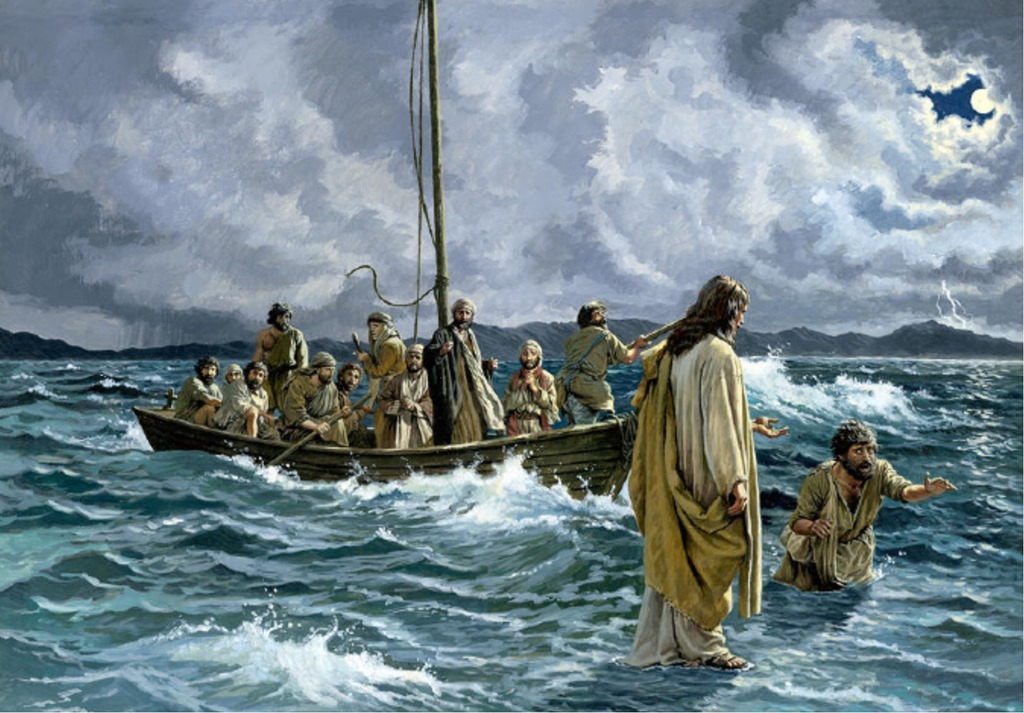
The account from Matthew of Jesus on the storm-tossed sea brings perspective. In the images from this story, the church drew guidance for the turbulent age in which it came into being. This was an era of tyrants, privation and disease.
In this account, Jesus’ disciples are headed for the opposite shore of the Sea of Galilee. This lake was notorious for the fearsome storms that could arise at a moment’s notice. Evening came – we all know that fearsome things and enlightening spiritual moments always happen at night. So, don’t you know it. Their little boat is soon battered by towering waves. They are far from land and the wind is against them. If that were not terrifying in itself, they see a spectral form coming towards them. “It’s a ghost,” they shriek. But as the apparition becomes clearer, they recognize their teacher, Jesus, walking over the waves. Impetuous Peter is beside himself. “If it is you, command me to come to you on the water.” And so, Jesus obliged, giving the command. But as Peter stepped out of the boar, he looked down and noticed the fearsome sea, the howling wind. And he began to sink. His courage shrank and he began to go under. Peter, is an original Lone Ranger. He’s the American ethic – I’ll do this myself. Don’t need your help, thank you.
Now we can understand Churchill’s not-so-gentle chiding to Americans when the country was faced with the onslaught of Hitler’s Wehrmacht in the late 30s. “Americans always do the right thing. After they’ve tried everything else.” Same with Peter. At last, in desperation, he calls out to the one who is their Rock, “Lord, save me!”
As the tempestuous sea of COVID-19, a pandemic out of control – an economy in collapse – and our citizens trust in their government in the basement. With systemic racism and age-old racial disparities in housing, education and in our economic life, threatening national unity, we cry out in despair. Chaos is winning. Fear seizes hearts and minds.
We blame our health professionals. Recently, state and county health epidemiologists and doctors have been assaulted by mobs of the irrational and fearful. For many, the stress has led to resignations. We would rather trust our luck to politicians who preach happy talk and willful ignorance. Yeah, if you’d rather trust some pol who’s got no more than a mail-order M.D. from the School of his own Imagining – if you’d rather trust your children to this abysmal ignorance than a Dr. Fauci, or your accredited county health official – well, good luck with that. No wonder the daily death rate in the U.S. is averaging over one thousand per day, while the daily death rate in places like Germany and Taiwan is zero! So many are sore afraid that they vent their anger on those who might lead us out of this thicket.
Our stormy heritage of racial intolerance has come back to confront the brutality of our society with the unassailable demand for justice. Reports on systemic racism and misconduct in our nation’s police departments come as huge waves crashing down upon our frail race relations. Trust evaporates.
The Los Angeles Times reports the costs of misdeeds by secret gangs of sheriff’s deputies. They have cost the County of Los Angeles twenty-one million dollars over the past ten years alone.
These rogue bands go by such names as “Vikings,” “Regulators, “3000 Boys” and “The Banditos,” operating with impunity for decades. In the County Jail sheriff guards forced inmates into the most brutal fights. On the streets law abiding citizens are abused and humiliated. Tell me what part of “protect and serve” these outrages cover. The ocean of criminality here seems without limit.
Out of the brutality of a fatal shooting in Ferguson, Missouri, comes the national moment of reckoning – #blacklives matter. With the loss of so many, it’s enough to cause one to lose heart. But it is the agonizing eight minutes and forty-six seconds of slow death of George Floyd we all witnessed, live and in vivid color, that galvanizes a nation. Finally, white folks experience some of the same reality that our citizens of color have endured for generations. White America is finally WOKE. At least, enough are. Many of us begin to experience in our gut the waves of injustice that crash over too many of our precious brothers and sisters of color. Finally! Some of white America are being pulled under with them. Trayvon Martin is now our son, our brother. Breonna Taylor is now our daughter, our sister.
“Say the names,” the sign demanded. “Say the names.’’ George Floyd is only one of the latest. Breonna Taylor. Atatiana Jefferson. Freddie Gray. And the list goes on. And on. Far too many gone.
We make the theological connection. These heretofore unknown faces are the very face of the Christ in our midst. We behold the wounds, know the anguish. Until George Floyd was family to us, we just didn’t get it.
Something indeed has changed in America. Something fundamental. You catch sight of it out in the streets all across this nation. What I see is the sacramental presence of Christ in these young and old, black, brown and white together. Right up from Torah ethics personified in the prophets – Isaiah, Amos, Hosea.
Running straight as an arrow right to and through the heart of Jesus of Nazareth was this one and same Spirit. It was embodied in the One who bent down to include a small child. And it rose up in righteous anger, lambasting the holier-than-thou crowd with stones in their hands and murder in their eyes as they encircled a cowering woman. This is the same spiritual heritage flowing through Peter and Paul, through the Reformers Luther and Wesley, and, in our later day resting on the shoulders of those who integrated lunch counters and joined the sanitation workers in Memphis, Tennessee. It tenderly cradled our brother Martin as that shot rang out and he slumped to the floor of that balcony of the Lorraine Hotel amidst shrieks of horror.
This very, this one and same Lord was in the midst of those who on Bloody Sunday crossed the Edmund Pettis Bridge with our brother John Lewis, our sister Diane Nash — with all those unnamed souls who fell beneath the nightstick and bled that day. This weeping Spirit stood watch as James Lawson and others simply asking for service at a Woolworths lunch counter suffered the indignities of racial slurs and the blows of fists – their food dumped over their heads. This heritage of martyrs and prophets, gentle servants, mothers, students and glorious trouble makers – this is our Rock. These are the vanguard, the sacramental courage, that summons us forth from our storm-tossed bark. “Fear not,” they cry.
Amidst the tear gas, pepper spray and rubber bullets, we recognize this Christ in the faces of those who stand for the ones who can no longer stand for themselves. There is our Lord, crossing the storm-tossed, the blood-soaked story of this nation. Right up to our time. These are the ones who now surround us a great cloud of witnesses. The “balcony people” who cheer us on.
They now call us to venture forth from our tiny boat, to step out like Peter. If we but keep our eyes on this true and steady vision, this Gospel Truth, we find that we walk. If we but steady our gaze on our companions in the struggle, we perceive not a ghost in the swirling chaos, but the very Rock of Salvation, the Lord of all Creation. We are steadied. Though the wind howl and the waves breach ancient certainties, we find strength. We persist and we persevere. We hear that far off voice which whispers in the lull of din and strife, “Be still and know that I am God.”
Closer to home, I rejoice even in this time of pestilence and upheaval my shipmates on another voyage, the voyage of hope for those addicted. We are the ones who, God willing, will bring birth to a House of Hope.
In these days of August, we approach some critical funding benchmarks for the House of Hope, both in the Ohio Valley and in San Bernardino. Our hopes are high. May our small craft be guided safely to the shores of full funding of this vision. I sense the Spirit of Christ in my companions on this mutual journey. No, there aren’t crashing waves or shrieking winds. That’s not what I fear. It’s the tedium of one Zoom meeting after another. It’s tired eyes that glaze over, perusing an endless stream of forms and attached instructions. It’s chasing down one lead after another. It’s the distraction of a hundred and one other things. It’s the mild depression that creeps up unawares when others don’t see our vision, don’t catch the dream.
I used to think that the biggest obstacle to the mission of the church was our culture of disbelief. Perhaps ambivalence, or possibly the L.A. Dodgers losing streak. No, none of these. We would not succumb to any of this. No, It’s death by mimeograph machine. It’s the mind-numbing daily routine of stuff that kills the dream, dilutes the vision. That’s what I felt running off the Sunday bulletin when the mimeograph machine just chewed up the last five or six of them. Now it’s people who don’t return phone calls. It’s trying to spy out the few important e-mails among the hundreds that came in during day. In the midst of all this, true saints are found.
Yet our little band of House of Hope visionaries, through disappointment and tedium – we make that one more call. We earnestly pitch another potential funder. We write that letter and scan that grant application. We pump up our joy as we explain to one more shopper in the checkout line at Stater Brothers what we are about. All the while, knowing that the dream is sound and that God is faithful.
This is the divine presence. It is sacramental in the flesh of the faces and voices of those who labor with us. It is redemptive in their laughter and encouragement. It is the substance of Hope in those who answer, “How can I help?”
There’s an old Sunday school song I sang with those gathered in a circle when we actually had children in the church. “With Christ in the Boat We can Smile at the Storm.” Now, as those young people have grown to adults, I’m sure that they’ve found that it’s a bit more complicated than that delightful song. Life is messy. Yet, the message still holds. With a Centering Presence, with a Rock to cling to – we do endure. We claim the blessing as surely as did Jacob who wrestled with God in the desert waste. “Hearts are brave again and arms are strong.”
I used to poo-poo what I considered simplistic, feel-good environmental actions. Like changing lightbulbs or turning down the heat. I derisively called it eco-pietism. Actions that made us feel good, but were negligible when compared to the frightening scale of global warming.
Then someone wised me up. They explained that such small, symbolic actions often lead to real commitment. That lightbulb changed is transformed to involvement in significant, sustained climate action. It mutates into political action to actually make a difference. One ends up starting a new chapter of Citizens Climate Lobby (yeah, Google it).
Maybe such is the case with discipleship. St. Augustine put it this way: “Faithfulness in the little things is a big thing.” Kindness counts. Make your bed. Respect is key. It all can draw one into something far deeper. Draw you into trouble, good trouble, necessary trouble – John Lewis sort of trouble. Every parent knows the truth of example.
Start small, if necessary.
Tip your server. Return your shopping cart. Pick up a piece of trash. Hold the door for the person behind you. Let someone into your lane. Talk about “we” instead of “I.” Small acts can have a ripple effect. That’s how change begins.
If you’re fortunate, you may find your heart opened to the ache of the world, to the hope of the world. The waves won’t seem so high or the wind so strong. You might possibly find yourself on the threshold of life eternal as you meet One coming towards you out of the tempest. Blessing beyond measure.
Now…could I get another chorus of “With Christ in the Boat?”
Amen
August 9, 2020, Pentecost 10
The Rev. John C. Forney
Romans 10:5-15; Matthew 14:22-33
“Demon Seed and Alien DNA”
“With Sighs Too Deep for Words – Seeds of Hope”
I must be doing something wrong. But I am perplexed as to what it could be. This spring, as last spring, I went to my garden and scattered some seeds. Sweet Alyssum, Nasturtium, California Poppy. And what came up? Nothing. Just like last year. Even with lots of rain.
We scattered packets of seeds of California Poppies around the statue of St. Francis at church. And what came up? Nothing. Just like last year. Even with lots of rain.
Actually, there might have been a few new sweet alyssum plants among the leftovers from previous seasons. Hard to tell. Lots of weeds, but that was last week’s parable.
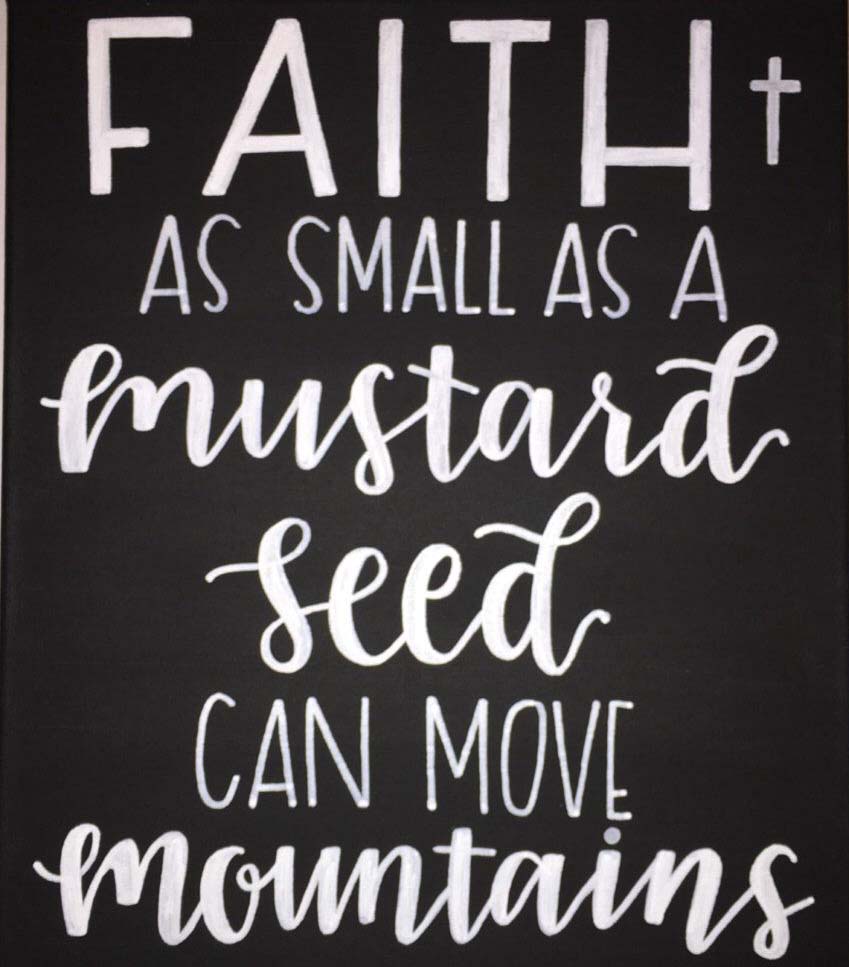
Needless to say, I’ve become a bit skeptical when it comes to biblical stories about seeds. Even that fabled mustard seed. No birds are going to nest in anything I’ve planted. Oh, there was one exception. One year I was so late in purchasing a Christmas tree that I had to settle for a small living tree in a pot. The boys never let me live that down.
After Christmas, I took it outside and planted it in the place where before had been a plum tree. It had died and the yards-men came, cut it down, and hauled away the stump. So, I figured that our little pine would be a suitable replacement. That tree is now over fifteen feet high. Yes, there are birds in its branches.
That little tiny tree five years ago I so lovingly planted, I wouldn’t have given you a nickel for its chances. Surely the lawnmower guys or something else would have gotten it. This luxurious pine tree by the garage is my substitute mustard seed. And nasturtium seed. And poppy seed. And alyssum seed.
“Another parable Jesus put before the crowds, saying “The kingdom of heaven is like a grain of mustard seed which a man took and sowed in his fields; it is the smallest of all seeds, but when it has grown it is the greatest of shrubs and becomes a tree, so that the birds of the air come and make nests in its branches.”[1]
This week we have witnessed a beautiful flowering of the Tree of Liberty in the life of Representative John Lewis. Several years ago, he had written a graphic novel March, in three volumes covering the civil rights struggle he so deeply was involved in.
To watch that historic footage of the march across the Edmund Pettis Bridge on Bloody Sunday when John was almost killed by rampaging sheriff deputies is still heart wrenching. Regardless of how many times I view it.
Marchers were trampled by mounted horsemen. They were bloodied by deputies’ batons. They were arrested. Most anyone else would have quit after such a rout. But not John Lewis. Not the women and men who led that contingent of marchers. They were not quitters. For them, the promises of this nation were on the line. This was existential survival for them.
“We do not k now how to pray as we ought, but the Spirit intercedes for us with sighs too deep for words.” These are the sighs and groans of those left injured on the side of the road that horrific morning.[2]
After the TV footage hit the 6:00 o’clock news and phones began ringing at the White House and in newsrooms across the country. And a call went out across America. Come march with us. Stand with us. President Johnson had told those leaders that he didn’t have the power to get the necessary civil rights legislation passed. Martin Luther and Jessie Jackson said that they would “just have to get him that power.” That led to the March to Montgomery. King, Jackson and Lewis decided they would have to drop the problem of white racism right on Governor George Wallace’s doorstep at the capitol.
Pastors, nuns, rabbis, priests – Christians, lay and ordained, came to heed the call. Johnson realized he would have to send federal troops to protect the marchers. The nation had been outraged by the brutality of the response by sheriffs. As a result of those heroic marchers, Johnson now had the power.
Mighty seeds and marvelous stories have been passed down to us out of those struggles. Another story, this a sports story is for you fans of the Clippers.
In the Sports section of the Sunday paper there was an item on the Clippers coach, Doc Rivers. Coach Rivers told of a campaign trip with Andrew Young and John Lewis. At the time Young was running for governor of Georgia. Doc was then playing for the Atlanta Hawks.
On this campaign trip, Andrew had given a speech at an all-white congregation. Afterwards, as the party was boarding the plane for home, Andrew asked how they had thought speech went.
It was a great speech. The crowd went wild. Andrew asked Doc, “And I jokingly said, ‘Well, Mr. Young, I thought the speech was great, but I don’t think you’re gonna get one vote from that church.’ And everybody started laughing.
“And John Lewis, he says, ‘Well, we’re not trying to get all of them. We’re just trying to get one at a time. And, eventually, it will be all of them.’ I thought that was just one powerful statement.”
John Lewis knew that politics was a game of addition. About continuing to build on what was possible.[3] It is as a seedling patiently unfolding at first two leaves. And that’s how resistance would melt away. “Nearer and nearer draws the time…”
That little Seed of Hope, the Kindom of God, had its birth with John Lewis organizing sit-ins at lunch counters – that little seed grew into a great tree of accomplishment. It was watered by Gospel values and Gospel hope. At the Capital, John Lewis will rest in state, the “Conscience of the House.” A man who was the offspring of share croppers. He was a man noted by friend and foe as a Christian gentleman — a strong man who never compromised his values, and in the process did not demean others.
John Lewis’s well-lived life has become a mighty oak under whose shade we all, black and white, can briefly find refreshment, until it is time to pick up and resume that march towards Freedom Land. Always processing toward a greater equality, a greater freedom and a greater compassion. God has surely nurtured the seed that was John’s being and life, and inspires today. That is the Kindom of God – as my friend, the Rev. Mike Kinman, aptly terms it. It’s about the birth of a community in the Spirit where all are kin.
Recently, featured on “Morning Joe,” was Jennifer Palmieri, introducing her new book, She Proclaims: Our Declaration of Independence from a Man’s World.
She begins the prologue by recounting the small beginning of the Women’s Movement. A seed planted, if you will that would eventually grow into such a mighty plant. The Vote. The right of independently owning property, Title IX, careers in science, politics and mathematics. And to think that a previous presiding bishop in the Episcopal Church was a woman. Not just any woman, Catherine Jefferts Shori is a PhD marine biologist. It’s marvelous we have had such women’s leadership. Through the struggle for full personhood, God has given life and breath to this movement. The flourishing of these women is the Kindom of God,
It’s about Alexandria Ocasio-Cortez standing up for herself and all women as she called out the despicable behavior, the piggish sexism of Republican Congressman Ted Yoho. The vulgarities he spat at her on the steps of the House, she read into the Congressional Record. Her assertion of her God-given dignity and the dignity of all women members of the body was a cultural earthquake. These women are going to take no more…stuff…from the lewd and crude crowd. And the stars in heaven rejoiced. This is an astounding moment in God’s unfolding Kindom. And from Ted’s fellow Republicans, silence. Crickets. The Kindom is grounded in RESPECT.[4] My God, are we ever at a new day, and it is glorious to behold! For women and men alike. Fathers, take care in how you raise your sons. And for the Ted Yohos of the world – women and their supporters will remember your behavior on November 3rd. Just sayin…
Look at those amazing women mathematicians, those unrecognized women who calculated the trajectories of the first trips to the Moon. Only recently have they received the accolades due their accomplishments. We’re talking of the dark ages back in the time of slide rules. I bet many reading this haven’t a clue as to what a slide rule or a log table is, let alone what to do with them. They’re now in the Museum of Science and Industry.
In Alaska I knew a woman who had been part of the corps of female pilots who transported military aircraft from factories to air bases. The flew the largest aircraft for delivery, maintenance and modification. They flew them across the Atlantic to bases in England. They trained the men who would become fighter pilots. These were the members of W.A.S.P. – Women’s Airforce Service Pilots. Sometimes, flippantly called the “Fly Girls,” these women pilots quickly proved their mettle.
“In 1944, during the graduation ceremony for the last WASP training class, the commanding general of the U.S. Army Air Forces, Henry “Hap” Arnold, said that when the program started, he wasn’t sure “whether a slip of a girl could fight the controls of a B-17 in heavy weather.”
“Now in 1944, it is on the record that women can fly as well as men,” Arnold said.[5]
I believe what those first ordained women in my denomination asserted early on, “If a woman was fit to bear our Lord’s body at birth and to receive his body from the cross, she is certainly fit to bear his body at the altar.” Of course, I didn’t start out with such a view. I believe I was the stupid jerk who said, “I’m all in favor of women’s liberation – as long as I don’t have to change.” Fortunately, some kind, and some not-so-kind, women quickly disabused me of that notion. I’m still a work in progress. Ask my wife.
Ms. Palmieri tells of the very early beginnings of the women’s movement.Early on, a small innocuous beginning, a very small seedling sprang forth on July 1848 when “four women sat at Mary Ann M’Clintock’s kitchen table in upstate New York to draft the Declaration of Sentiments and accompanying resolutions that were to be presented at the Women’s Rights Convention at Seneca Falls later that month.” In that august group were Elizabeth Cady Stanton and Mary Ann’s two grown daughters Elizabeth and Mary Ann.[6]
This dream was put to paper in a time when women had absolutely no legal or political power. Women’s suffrage was even considered by many women as perhaps a step too far.
God gave force and power to that seedling, for with in each human breast is the movement toward fulfilment. This was a force that could not be squelched. This drive to fulfillment is God’s mighty power moving towards completion of what each person, each woman, each man is meant to become. It is what Paul means by “perfection.” The unfolding and renewing of God’s Kindom. “Nearer and nearer…”
This incipient movement is a seed that has become the largest coterie of women ever to serve in congress. It has blossomed into the many who offered their candidacy for the presidency on our nation. These women let loose in our world are like that song, “I Sing a Song of the Saints of God.” You can find them in labs pulpits, and in cockpits. You can find them in congressional offices – yes find them elected. You can find them in class rooms and find them with stethoscopes. You can find them most any place you’d care to look And, we are all the better for it.
God’s power budding forth in each, brings forth a miracle. To paraphrase a line from a favorite hymn, “nearer and nearer draws the time, the time that shall surely be, when the earth shall be filled with the glory of God as the waters cover the sea.”[7]
Every evening I look forward to the PBS News Hour with Judy Woodruff. (Did I mention that she is a national treasure? But that’s another sermon). At the end of the newscast she has a segment devoted to those we have lost as a result of COVID-19.
I find Judy’s stories are precious seeds in my soul packing a wallop. They are motivation I need to get up and do whatever I can do to stop this pandemic where I live.
Here are a couple of their stories:
“Postal worker Jesus Collazos was known for taking the time to greet every neighbor along his mail route in Arlington, Virginia. The 67-year-old spent over two decades with the U.S. Postal Service, after immigrating from Colombia in 1978. Jesus and his wife raised his two children in a home he first discovered along his route.
“The proud grandfather loved posting family photos on social media always with the simple caption: “Life is good.”[8]
“Lynika Strozier never gave up on her dream to become a biologist. As a child, she was diagnosed with a severe learning disability, but went on to earn two master’s degrees in biology and science education. She became a researcher of plant DNA at the world-renowned Field Museum in Chicago, and a science professor at Malcolm X College.
“Fun-loving and friendly, Lynika was at home in the lab as she was out with friends, or watching horror movies with her grandmother, Sharon, who raised her. Lynika was 35 years old.[9]
As I allow these stories, these seeds budding forth with abounding Grace, to rest in my heart, watered by prayers of gratitude, they blossom into the desire to do my part, to be a faithful citizen ot this grand Republic. Wear my mask. Remind others gently to wear their masks. Social distance. Stay home as possible.
I lift up in my Facebook posts – diatribes and urgent pleas — the urgency of combatting the COVID-19 scourge that has taken so many precious lives. And simply give thanks for the lives that those they have touched. And their memory is a reminder to give thanks for each morning that I still have an opportunity to sally forth into the struggle. Always a happy warrior.
I now close, giving Rep. John Lewis the “Last Word.” It’s called “Necessary Trouble.” Our Lord would have known all about “Necessary Trouble,” as would his followers down through the ages. John Lewis has been a marvelous scion sprung from the Tree of Liberty. For his life and sacrifice our nation is greatly indebted. Never, never discount the power of God welling up in the human breast. Look at the mighty miracle that was, and that lives on, in John Lewis’s testimony. And what a mighty tree it continues to be. We all, black and white, first nations folk and those who have come lately – we all can rest in those branches. The glorious Kindom of God.”HH JJJJKK
Necessary Trouble
This is the way another generation did it, and you too can follow that path, studying the way of peace, love and nonviolence, and finding a way to get in the way. Finding a way to get in trouble, good trouble, necessary trouble. With all sainted troublemakers down through the ages, let us say, AMEN.
[1] Matthew 13:31, Revised Standard Version.
[2] Romans 8:26, Revised Standard Version.
[3] Mirjam Swanson, “Rivers reflects on civil rights icon, politician Rep. Lewis,” The Inland Valley Daily News, Sports Section, p. 2.
[4] Luke Broadwater and Catie Edmondson, “Ocasio-Cortez Defies Sexism by Shaming It on House Floor,” New York Times, July 24, 2020.
[5] Susan Stamberg, “Female WWII Pilots: The Original Fly Girls,” Morning Edition, NPR, March 9, 2010.
[6] Jennifer Palmieri, She Proclaims: our Declaration of Independence from a Man’s World (New York: Grand Central Publishing, 2020) 2.
[7] Arthur Cambell Ainger, The Hymnal 1982, “God is Working His Purpose Out” (New York: Church Hymnal Corp.) 534.
[8] https://www.pbs.org/newshour/show/in-memory-of-5-more-u-s-victims-of-the-coronavirus.
[9] Ibid.
July 26, 2020
Pentecost 8, Proper 12
“With Sighs Too Deep for Words – Seeds of Hope” The Rev. John C. Forney
“As in Travail”

The congregation was dumbstruck that Sunday morning as Jai and I stood before the altar during the time of announcements to announce that we were expecting. Yes, Abraham and Sarah, in our old age, expecting our first.
I still remember one of the congregation busybodies taking me aside after the service to express her relief. “I’m so glad to hear your announcement. I just thought Jai was letting herself go.”
Having come from a family with not the best example of fatherhood, I was pretty insecure about my nurturing ability. As the day drew near, waiting over two days of contractions, my nerves didn’t settle down. After the third trip to the hospital, the midwife suggested we call in medical expertise.
In came two people, I remember the names exactly – they were classic – Emerson and Newton. No. I’m not kidding. And they both looked like they were only a year or two out of high school. By this time, we were looking at a caesarian section. I thought to myself, “These two kids are going to cut up my wife?”
Was Jai in travail? No, she was pumped full of happy juice. Not feeling any pain, or much else. As the hospital had a policy that fathers could be present for the birth, there I was as Dr. Newton made the incision. Biting my fingernails. Though I had been an Army Medic and had seen lots of blood, I was never related to any of these patients. You might say, I was the one in travail.
When a boy was delivered, it didn’t help my anxiety to hear several loud slaps and our pediatrician, Dr. Clint, yelling, “Breathe, damnit. Breathe!” Finally, there was a reassuring piercing cry and I knew the worst was over. Talk about “high anxiety!”
Paul, in his letter to the Christians at Rome speaks to such times as “high anxiety.”
“We know that the whole creation has been groaning in travail together until now; and not only creation, but we ourselves, who have the first fruits of the spirit, groan inwardly as we wait for adoption as sons and daughters, the redemption of our bodies.”
“But if we hope for what we do not see, we wait for it with patience.”
Remember the old TV show, “Kung Fu?” “Patience, young grasshopper.” As the old master would seek to settle his young novice.
We are in the midst of a contagion unlike anything our generation has ever seen. We have suffered more death than twice the casualty rate of the Vietnam War. We are sick and tired of being shut in. We are even sicker when we come across people not wearing masks in public – those, who through their carelessness, through just not giving a rip, who through their dismissive attitude, continue to put the rest of us at risk. And prolong the shutdown we all are sick and tired of. As Fanny Lou Hamer was fond of saying, “I’m sick and tired of being sick and tired.”
And that goes double if we have young children at home.
With COVID-19, we’re all in travail.
We wonder how much education our children will lose. This week the Claremont Unified School Board went back into emergency session to reverse its decision of a week previous. Now, there will be no face-to-face school in session. All teaching will be by internet. I’m sure parents are groaning in great travail. And patience for grasshoppers, or much of any other creature, is in short supply. The only hopes parents had for respite have been dashed.
Paul can talk about hope. Well and good for him. He didn’t have a cooped-up seven-year-old and a junior higher to deal with! Yeah, “…we wait for it with patience!” Right.
All creation groans in COVID-19 travail.
For people of faith, our usual support is lacking or somewhat anemic. We at St. Francis miss each other terribly. We long for a hug. We long for that familiar face. With the reoccurrence of massive infections, our bishop John counselled patience and forbearance. It may not be until September or later before we can safely resume worship on site.
One wit remarked, “When this is all over one half of us will be excellent cooks and the other half alcoholics.”
Uncertainty and deprivation bring out the worst AND the best in many. The parable of the seeds explained in Matthew 13 indicates, amongst the church folk, there is some variation. Some look like followers of Jesus, and some – we’re not quite sure WHO they are following. But it sure doesn’t look like Jesus. In such situations, folks were tempted to judge. Divide the congregation up into First Class Christians and Second (or Fifth or Tenth) Class Christians.
I remember as a young child our family attended a Presbyterian Church. Faithfully. I knew my father must have had a large pledge because one Sunday morning my teacher whispered into my hear that she so appreciated the large financial support our family gave the church.” I wasn’t old enough to know that such a comment was out of place. But I did feel a bit embarrassed for having been singled out.
Well the day came when our old pastor retired and we got a new fellow. A number of weeks afterward we stopped attending. When I finally had the nerve to ask my dad what was wrong, he told me the issue. This new pastor believed in the Calvinist doctrine of Predestination. He, in sermon after sermon, let those sitting in the pews know where they were predestined to end up. And where he was predestined to go. And they weren’t the same place. Eventually, my parents, and a number of others, got tired of hearing that they were unalterably bound for perdition. Hellfire is not a very good selling strategy for the love of Christ.
Such is the situation in Jesus parable of the seeds. Don’t condemn. Don’t shun or cast out. Let God sort ‘em out in the end. It’s beyond our pay grade.
And if we are honest, brutally honest, with ourselves, each of us is a mix of good wheat and weeds. Some of us filled with a lot of devil grass and puncture vines
You look how this pandemic has brought out the best and the worst.
Sometimes it is just a little act of kindness that makes my day. Like the image of a young fellow helping an elderly woman get her shopping cart of groceries out of the bus as she was exiting the door. A priceless, simple act of kindness.
Yes, there are inconsiderate, narcissistic people who will not wear a mask, but there are so many who do. It was such a climate of common consideration that enabled Taiwan, which has a little over one tenth the population of the United States to get through their experience with COVID-19 with only seven deaths. Seven deaths in the whole country! Just imagine. If we had been as proportionally successful as Taiwan, we would by now only have about 97 deaths – instead of 138,000. And counting. It’s all about leadership and consideration.
We might also note, incidentally, that the countries that have come through this pandemic intact — Taiwan, New Zealand, Denmark, Germany, Iceland – they all have one thing in common. They’re all lead by women. Causes one to ponder. Could it be that too much testosterone is an impediment to doing the right thing, the bright thing? Just sayin’…
As our bishop John says, WWJD? “Wear a mask.”
Yes, in spite of the travail and struggle, there is yet much joy to be had. The people I meet on my walk, almost all are wearing masks.
I turned on my Facebook site and came across the most post someone had left me, an orchestra playing on the streets of Havana, Cuba. Rondo alla Mambo’ by Sarah Willis and the Havana Lyceum Orchestra. Rhythm. Bodies swaying. Smiles on the old faces of folks peering out of second floor windows. Check it out. It will delight your heart and warm your soul.
Travail, yes. But in solidarity we move through COVID-19. Bowed but not broken. Knowing discouragement, yet immersed in the joy of solidarity from common support. Surrounded ever by that glorious company of saints, those living and those having gone on before – in them I rejoice.
Travail, yes. BUT, JOY IN THE MORNING!
I also rejoice in this Spirit-filled meditation by a Lutheran pastor serving an Episcopal congregation, Grace Memorial Episcopal Church in Darlington, Maryland. The Rev/ Nadia Bolz-Weber:
I do not know when we can gather together again in worship, Lord.
So, for now I just ask that:
When I sing along in my kitchen to each song on Stevie Wonder’s Songs in The Key of Life Album, that it be counted as praise.
And that when I read the news and my heart tightens in my chest, may it be counted as a Kyrie.
And that when my eyes brighten in a smile behind my mask as I thank the cashier may it be counted as passing the peace.
And that when I water my plants and wash my dishes and take a shower may it be counted as remembering my baptism.
And that when the tears come and my shoulders shake and my breathing falters, may it be counted as prayer.
And that when I stumble upon a Tabitha Brown video and hear her grace and love of you may it be counted as a hearing a homily.
And that as I sit at that table in my apartment, and eat one more homemade meal, slowly, joyfully, with nothing else demanding my time or attention, may it be counted as communion.
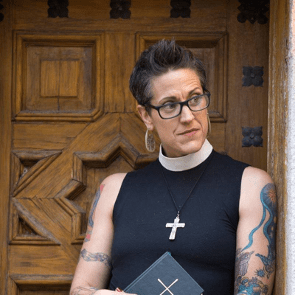
The Rev. Nadia Bolz-Weber
She gets the “Last Word.”
Amen.
July 19, 2020
Pentecost 7, Proper 11
“As in Travail”
The Rev. John C. Forney
Isaiah 44:6-8, Romans 8:18-25, Matthew 13:24-30, 36-43
We’re Coming to America

Some will remember that “Hot August Night” when Neil Diamond stepped out onto the stage. The orchestra began with a winsome prelude that slowly crescendoed to a pulsing beat. Then began the first strains of that ballad that so aptly celebrates the promise of this nation for millions around the world, “We’re coming to America.” Neil Diamond in an iridescent blue shirt with flashing blue lights spangled about it, and the joyous crowd responding, “Today. Today. Today.” The camera does a slow pan across the audience and comes to rest on the face of an old guy about my age with tears streaming down his face. “Today. Today. Today.”
This is the America I grew up with as a young boy. In school we made Pilgrim hats and the white shoulder coverings those early pioneers wore. We read of that almost deified, mythical Thanksgiving feast. We learned of the colonists rising up and throwing British tea into Boston harbor made up as Indians. And watching over all, Divine Providence.
Yes, actually, historically, some of those things happened. There were a few heroes in all this. But the reality is much more complicated. And not quite as divine.
“By faith Abraham obeyed when he was called to go out to a place which he was to receive as an inheritance; and he went out, not knowing where he was to go. By faith he sojourned in the land of promise.”
Unfortunately, that so-called Promised Land has been too much promised. So, with America. Other than the first inhabitants, all the rest of us arrived to find it already taken. And, don’t forget, even those first inhabitants drove much of the original wildlife into extinction. All of us have blood on our hands.
Yet by faith, generation after generation, we persevere. The original promise continues to unfold, but we all stand in the need of Grace.
To put it into the passive exonerative voice, “Mistakes were made.” Many. You know them. We’re still making them. I wouldn’t have been sad at all to see the statue of Andrew Jackson toppled in Lafayette Park in D.C. the other night. You remember that president, “The only good Indian is a dead Indian.” His expulsion of some sixty thousand Native Americans from the Southeastern United States today would have been considered a war crime. If this bit of our history escapes you mind – maybe you weren’t paying attention in your eighth-grade history class. Oh, you say it wasn’t in your history book. Well, that’s not a surprise. The victors write the history. Don’t remember? The Cherokee, Seminole and Choctaw – they remember. Ask one of their people. If you’re ready to listen respectively, with a heart ready to be wounded – maybe one of them will share the story of the “Trail of Tears.” Mistakes were made. In abundance.
So here we are. With the exception of those original inhabitants – and while we all came in different boats – we’re all in the same boat now. America is adrift and pestilence stalks the land.
And yet, and yet…by Faith… “They’re Coming to America.”
The first came to escape tyranny and the oppression of kings and Church. We didn’t believe in the freedom of religion in these scattered colonies much more than the king believed in it in Mother England. Here, we ended up with so many different religious traditions on these shores, we were forced to come to an accommodation. People leaving Europe were exhausted by religious wars. If you can find that in your old, musty history book. These stories are there. Start under, “Thirty Years War.” It left some eight million dead. All over whether Jesus was actually in the piece of bread at the altar, or whether he was present in our celebration of his presence in the reality of those who gathered in the memory of his name. Eight million souls gone to wherever over a theological disputation – and a few other things. For sure, politics and nationalism and other stuff were mixed in. As they say, it’s complicated.
The genius of this new land is that we have found a better way (not that we always heed it). As Winston Churchill noted about us, “Americans always do the right thing. After they’ve tried everything else.” Eventually, we made progress. A Catholic could be president. Recently, a Jew did almost win the Democratic nomination twice. Jews, Catholics, Protestants serve on the Supreme Court and in Congress with their Muslim brothers and sisters. Don’t forget our first black president, EVER. In the twenty-first century, gay, straight and trans, we elect them. And not a few atheists. Yes, God loves atheists, too. Or what part of “ALL” didn’t you understand?
By faith we till the soil of this Promised Land. We hold an expansive vision for all.
For those who might be a little squeamish or put off about this last assertion, I refer you to Calvin (also in your history book). Think Presbyterian, Reformed, Congregationalist. “Man does not have the authority to decide whom God will save.” Nor does woman. Any of us, flawed as we are, can be an instrument for Good under the power of the One who created the heavens and earth.
“We’re Coming to America.” Today. Today. “By Faith…”
What is that ineffable quality about this land that others find so compelling? Listen to the stories of those Jews fleeing the shtetls of Russia and Poland in the eighteen-hundreds. Those Orthodox village communities that had known stable communal life for hundreds of years were beset by famine and pogroms. Thousands were killed by czarist mobs and driven off their lands.
“We’re Coming to America.” Today. Today. “By Faith…”
The Forneys, originally French Huguenots fleeing papist mobs in France, first settled in Switzerland and then in Germany. Looking for a better life, we landed in the Port of Philadelphia in 1767 or there abouts. Between my father’s and mother’s families we are a mix of French, German and English. Throw in a Jewish peddler who married into the family in Iowa and gave my mother’s side the surname, Gross. Her mother was a Howe. Yes, in our lineage Julia Ward Howe – think the first Mother’s Day Proclamation. Also General Howe, the British general who proved so inept as to let George Washington slip through his fingers three times. He was finally sent home back to England. But, apparently, not all the Howes.
We’re coming to America. Sweet Land of Liberty. Today. Today. Today. “By Faith…”
We all came in separate boats, but now we’re all in the same boat. Today, virtually every one reading this — your family — came from somewhere. By boat, on foot or, lately, by plane.
As immigrants, our ethic should be formed by Torah values, as explicated in the book of Deuteronomy.
“The Lord your God is God of gods and Lord of lords, the great the mighty, and terrible God, who is not partial and takes no bribe. He executes justice for the fatherless and the widow, and loves the sojourner, giving him food and clothing. Love the sojourner therefore; for you were sojourners in the land of Egypt.”
You should love and cleave to God, “…who has done for you these great and terrible things which your eyes have seen.”
This ethic, passed down from Abraham in the Torah to the Prophets, and enshrined in the teachings of Jesus is the heart of who we are created to be as an immigrant nation. This ethic is the cornerstone of the Declaration and Constitution. It was in the mind of Lincoln when he wrote the Emancipation Proclamation. This ethic tore at the hearts of Congress when, shamefacedly, they issued a formal apology to Japanese-Americans interned in concentration camps during WWII.
And what amends will we make to generations of African-Americans who built much of this place? Built the very White House itself and laid out the boundaries of our nation’s capital. Look up Benjamin Banneker, surveyor, astronomer, and farmer. He calculated the solar eclipse of 1789 well before other, more famous astronomers. He worked to set those boundary markers.
What reparations will we make to the people of Greenwood? Who built the section of Tulsa, Oklahoma, stormed by white mobs in some of the worst violence our nation has known? What reparations? “Black Wall Street” burnt to the ground, the pride of generations of Tulsa’s Black citizens? They’re still waiting for an answer.
What amends will we make to the First Nations people from whom we stole Mt. Rushmore and so much more? Impoverished on neglected reservations.
Th e miracle is that we have survived thus far and somehow managed to keep the country together after some fashion.
This ethic reverberates in the agonized plea of Rodney King, “…can we all JUST get along? Can we get along?”
So, listen up, Sweet Land of Liberty, we’re at a new beginning. As M.L. King wrote, “…tomorrow is today.”
“By Faith…”
Read the opinion section by Caroline Randall Williams, “You want a Confederate Monument? My body is a Confederate Monument. The black people I came from were raped by the white people I came from. Who dares to tell me to celebrate them?” [1]
Yes, read it. The mere fact that such a searing story could be printed at all is evidence that God has graced this land. True greatness begins with truth-telling, repentance. And at some point, hopefully, absolution. Absolution, not ours to demand, but a mark of God’s grace that grows out of honest, heartfelt conversation with those harmed. Freely offered, not ours to demand. Ultimately, a gift of God’s Grace.
“Among the apologists for the Southern cause and for its monuments, there are those who dismiss the hardships of the past. They imagine a world of benevolent masters, and speak with misty eyes of gentility and honor and the land. They deny plantation rape, or explain it away, or question the degree of frequency with which it occurred.”
“To those people it is my privilege to say, I am the proof. I am proof that whatever else the South might have been, or might believe itself to be, it was and is a space whose prosperity and sense of romance and nostalgia were built upon the grievous exploitation of black life.”[2]
The fact that Ms. Williams’s story could even be told — and read — and hopefully absorbed with empathy by a white audience, is a mark of God’s grace. Freedom begins with truthful story telling. She, and all who have survived such a shameful legacy – they are the true heroes of the South. They are its righteous legacy. So, also with those of the southern branch of the Forney family.”
If America is ever to be Great Again,” it would only be when we disenthrall ourselves of our made-up, high school sanitized history. With the Rev. Al Sharpton, we must acknowledge that any greatness will only begin when we honestly ask, “Great for whom?” Great for whom? And prayfully listen for an answer. The Spirit will speak to an open and contrite heart.
Any greatness will begin with an honest assessment of who we are and from where we have traveled. As my mother always said, “Handsome is as handsome does.” I think I now know what she meant.
“By Faith Abraham…” By Faith, each one of us embarks on a new journey, sojourners in a land every bit as strange and as foreign as it was to those first people who crossed the Bearing Strait eons ago. Every bit as foreign as it was to those first Pilgrims. As it was to those who disembarked from fetid slave ships. Every bit as foreign as were the streets of New York that opened to hundreds of Suffragette women marching for their personhood to be acknowledged at the ballot box. Every bit as foreign as to those who on Bloody Sunday crossed the Edmund Pettis Bridge — named after a Grand Dragon of the KKK. Every bit as foreign as America now is to all of us in this new era of #BlackLivesMatter, COVID-19 lockdown, and the beginning of an economic collapse unlike any since the Great Depression. “By Faith…”
“By Faith…” Might we be receptive on this July 4th to the stirring of God’s Holy Spirit. Indeed, “The times, they are a changing.” Might this nation embrace this fresh opportunity to live out its creeds and promises. A new birth of common purpose.
“By Faith….” let each take hold of the opportunity to begin anew. Then, and only then, do we embark on a journey towards greatness – a destination never reached, but approached from afar with starry eyes.
“By Faith…” We’re still Coming to America. Today. Today. Today.
Amen.
[1] Caroline Randall Williams, New York Times, “Sunday Review,” June 28, 2020., p. 4.
[2] Ibid.
Dear friends in Christ
July 5, 2020
Independence Day Weekend
“We’re Coming to America”
The Rev. John C. Forney
Deuteronomy 10:17-21; Hebrews 11:8-16; Matthew 5:43-48
If This Stuff was Easy…

My first parish assignment at a little town in the upper Mojave Dessert. There I met a number of wonderful, faithful Christians. Yes, the town was little. My wife would have said infinitesimal. When we first arrived to be interviewed, in all of about one minute we had passed through the entire downtown section and crossed the railroad tracks back into open desert. My tearful wife said with a quaver in her voice, “Is this all there is?” Later she would tell friends that we were centrally located, “One hundred fifty miles from nowhere.” She was certain that the End of the Earth was only four blocks past the local schoolhouse. Or was it two?
One of the wonderful members of that church was Bill, our Lay Leader. Bill’s father had been a Methodist pastor, and it was his father’s example that led Bill to strongly insist that the church should be involved in its community.
One day Bill told me the story of his father’s involvement in the early Civil Rights struggles in Florida. Tensions had been building and Bill’s father had an idea of how the church might bridge the gap and promote understanding. He went across town to see an acquaintance who was pastor of a Black Baptist church. He proposed a plan whereby the two children’s choirs might do an exchange on an upcoming Sunday. The two pastors agreed on a date. The Baptist kids would spend Saturday night over at Bill’s father’s church, getting to know their kids. Then, on Sunday morning they would preform a couple of numbers for the eleven o’clock service. Bill’s father had decided that since race relations were so raw, he ought to spend the night at his church with the kids and their chaperones.
Around 9:00 p.m. there was a banging on the church door, and when the pastor opened it, he was confronted by an armed mob of fifty or sixty. A man with a shotgun stepped forward, “Preacher, you best send those kids out here now.” Bill’s father told the man in no uncertain terms, “They aren’t coming out. And if you want them, you’re only get to them over my dead body.”
Everybody got really quiet. After what seemed like an hour, Bill’s dad being silhouetted by the light of the open doorway and the belligerent armed men facing him, there was the faint sound of shuffling feet. A few around the edges began to peel away, then others. Sounds of some more car doors closing and engines starting up. After a few more minutes most had gotten back in their cars. The mob had quietly dispersed. They’d gone home.
That is an indelible story Bill would take to his grave. It is a story of Christian courage and discipleship when it was all on the line. The Baptist kids remained unaware of what had happened that evening as they sang to the delight of that Methodist congregation Sunday morning. Given the emotionally charged experience, so fraught with potential for tragedy, the Methodist kids never made their reciprocal visit to the Baptist church across town.
In our passage from John’s gospel, we are given fair notice that this Jesus Movement stuff will not be a walk in the park. Most everybody will hate and despise you. Your ways are foolishness. Un American. Communist! Jesus’ way will tear up families. If daughters-in-law were not be getting along all that well with the in-laws, Gospel values will make things exponentially worse. This is going to go way beyond kitchen turf conflicts and how to raise the grandkids. And who makes the best meatloaf.
One’s not going to need to heed Civil Rights leader, Congressman John Lewis’s call to get into, “good trouble, necessary trouble.” It’s going to come knocking at your doorstep. In spades! Neighbors will shun you. You will be beaten in city streets by hostile policing authorities. Some of your neighbors will burn down your church. Tear gas, pepper spray. It’s all coming at you. I can testify from personal experience. You are about a most inconvenient truth THEY don’t want to hear. You will be fired and sidelined if you work for a government agency. Your career’s toast. Nobody wants to hear it. Go away.
During the recent mass rallies, the Los Angeles Times has reported on the ugliness peaceful demonstrators have encountered in rural, mostly white, California. Protestors encountered pure ugliness. They were beset upon by threats of violence and malicious rumors. Two teenagers from Angels Camp spoke of horrible abuse. Angels Camp – remember the home of the “The Celebrated Jumping Frog of Calaveras County” by Mark Twain.[1] That Angels Camp.
One seventeen-year-old Black student in rural Quincy has been spat on by white students at her school and called the N-word. The torment got so bad, she finally had to transfer to another school — a move that would cost her a scholarship and the captain position of the cheer squad. God may love all, but not so much some of the residents of Quincy.
In Tuolumne County some angry folks threatened to bring guns and dogs into town. Large dogs.
In Shasta County an unauthorized “militia” of armed men in tactical gear threatened to show up at the protest at Oakdale. Not at all what local law authorities wanted. The word the sheriff used? “Counterproductive.”
One mixed race citizen, Camereon Medico, began a one-man protest with a sign board in Susanville. He was assaulted with racial slurs and curses, “We don’t like your kind around here.” And “Black lives don’t matter.” Some on Facebook denizens threatened to bring guns and “run over” protesters. In spite of the hate and threats, a white neighbor and then others soon joined the man’s protest. Yes, there’s going to be “trouble, good trouble, necessary trouble.”
Standing for justice and equity – standing for the ideals Jesus preached is not easy. “If this stuff was easy, we’d have already done it a long time ago,” President Obama is fond of saying. It this stuff was easy, Jesus would have had it wrapped up during his earthly ministry.
My first work while in seminary was in community organizing. Trained seminary interns in teams of two were sent to clusters of churches who had invited them in to help them work on white racism. Vic and I ended up at Temple City, California, hosted by a cluster of five congregations. We called it Project Understanding, though there often wasn’t an abundance of understanding.
Our work there took shape as an ecumenical fair housing council. Temple City was a bedroom community for Los Angeles and it was in housing patterns that racism was expressed. Talk about lack of understanding! I remember our first meeting with the city manager. His opening words, “This is a nice, peaceful (read white) community and I intend to keep it that way.” Our first client was Italian. For some reason, the owner of this rental property hated Italians. Why? Go figure.
Members of our project were sent out to investigate, or check out complaints, to confront hostile apartment managers and owners. To secure the just rights of minority clients, they were often castigated as “trouble makers” and worse. Called all sorts of names. Jesus was right. His message of love put into action would not be popular. Justice is the public form of love, and it’s not often popular because it means giving up power.
The last time I visited the church that had hosted our office, was on the occasion of a memorial service for the woman who had followed me as director of Project Understanding, Now, Temple City was overwhelmingly Asian. Communities change. But it was “nice and peaceful.”
“They will deliver you up to councils, and flog you in their synagogues, and you will be dragged before governors and kings for my sake…” Tough stuff. Not easy, indeed!
“Brother will deliver up brother to death, and the father his child, and children will rise against parents and have them put to death; and you will be hated by all for my name’s sake.” Yes, indeed if this stuff was easy, we’d have done it a long time ago. And, if you try — yes, you too, will end up in deep doo-doo.
“What I tell you in the dark, utter in the light; and what you hear whispered, proclaim upon the housetops. Do not fear those who kill the body but cannot kill the soul…”
Cinch up your belt. Get your game face on. There’s work to do if we’re going to build a Promised Land. It’s about the risk to love.
Dante Stewart alerts us to risk as the costly expression of faith. “Sympathy feels bad about a situation. Solidarity joins in as a co-laborer to change the situation. Sympathy calls for love without risk. Solidarity calls for risk as love. Sympathy centers the comfort and timetable of those who benefit from a system of difference. Solidarity calls for a revolution of value in a system in which we build a loving and just common life together.”[2]
Solidarity, as corporate love, is costly. It demands something. It demands risk. It is easy to march with thousands of like-minded people in Los Angeles or in any other large, mostly progressive city. To make that witness in a small, rural setting is costly. One will quickly reach the “unrepentant heart.” Fearful and damaged persons will react out of that fear and reject you and your message. The challenge then, is how might one creatively engage and disarm that fear. Move beyond it. I can’t say we interns in Temple City were often that successful. Too green, most of the time.
But understanding is possible. Or maybe just tolerance. We did have some small victories. We did host a number of community symposiums on the fair housing laws and how to follow them. When managers and owners heard that if a Black family would rent a unit, the rest of the tenants would not move out. Why? Because people hate to move. If the new family could afford the same rent the others were paying, they would keep up their unit in pretty much the same fashion. And this was the case. Most people want to do the right thing. Soon neighbors got to know one another and the neighborhood’s heart grew one size bigger. In the years I ran the project, we never actually had to sue anyone.
For those brave Catholics, Methodists, Quakers, Presbyterians and Disciples of Christ members of Project Understanding, this was costly love. Faith, being put to the test, grew beyond measure. In the work, Jesus became real like he had never been for many of our investigators. They tasted a smidgen of Life Eternal.
Our nation, we sense, is at a crossroads. The Rev. William Barber calls our time a Third Reconstruction. Lately I have been moved to pick up a book of Martin Luther King, Jr., Where do we Go from Here: Chaos or Community?[3]
In one of his last works, Dr. King lays out his hopes for a better America. It is a vision firmly rooted in the promise of our Constitution and founding documents. But he knew that the continued pressure of mass demonstrations, supported with strategic organizing and policy proposals would be essential. Just as now.
Love, if it is to amount to anything in the public sphere, must be disciplined and tenacious. Just as now.
“Mass nonviolent demonstrations will not be enough. They must be supplemented by a continuing job of organization. To produce change, people must be organized to work together in units of power.[4]
Building up what King called “The Beloved Community” is tough stuff. It’s about changing the power dynamic. And power makes no concessions.
If this stuff was easy, it would have been done a long time ago. It is sort of like of weeding or housework. It’s never done. Those of us who marched in the sixties thought we’d gotten voting rights, civil rights, fair housing, LGBT rights, women’s rights and a city worthy of the Beloved Community.
Far too many of us rested on the accomplishments of a past day. When we awoke, we woke to racism and discrimination every bit as virulent as when we had begun so many years ago. We woke up to intolerance, economic despair and voter suppression. Crap schools and dilapidated housing. Thousands sleeping on the streets and rampant addiction. Gangs and disaster neighborhoods. Did I mention global warming, mass incarceration and a pandemic? And an America with no direction, a nation adrift?
I’ll give Dr. King the last word here before we pull the covers up over our heads.
“We are now faced with the fact that tomorrow is today. We are confronted with the fierce urgency of now. In this unfolding conundrum of life and history there is such a thing as being too late. Procrastination is still the thief of time. Life often leaves us standing bare, naked and dejected with lost opportunity…We still have a choice today: nonviolent coexistence or violent coannihilation. This may well be mankind’s last chance to choose between chaos and community.”[5]
“I set before you the ways of life and death,” says God. “Choose life.”
Thousands, Black and White marching in solidarity through America’s streets, are choosing life. Two brave teenage protestors in Angels Camp, California, are choosing life. City mayors and police department chiefs confronting legacies of abuse and misconduct are choosing life.
Tough stuff indeed, but more precious than much fine gold!
As Anne Lamott has written in Bird by Bird: Some Instructions on Writing and Life, “Hope begins in the dark…”
Amen.
[1] Brittny Mejia, Hailey Branson-Potts, “Some in Rural California take up racial justice cause,” Los Angeles Times, June 13, 2020.
[2] Dante Stewart, “Verse and Voice,” Sojourners, June 16, 2020.
[3] Martin Luther King, Jr., Where do we go From Here: Chaos or Community?, (Boston, MA, Beacon Press, 2010).
[4] Ibid, p. 139.
[5] Ibid, 202.
June 21, 2020
Pentecost 3, Proper 7
“If This Stuff was Easy…”
The Rev. John C. Forney
John 9:35-10:8
Inducted
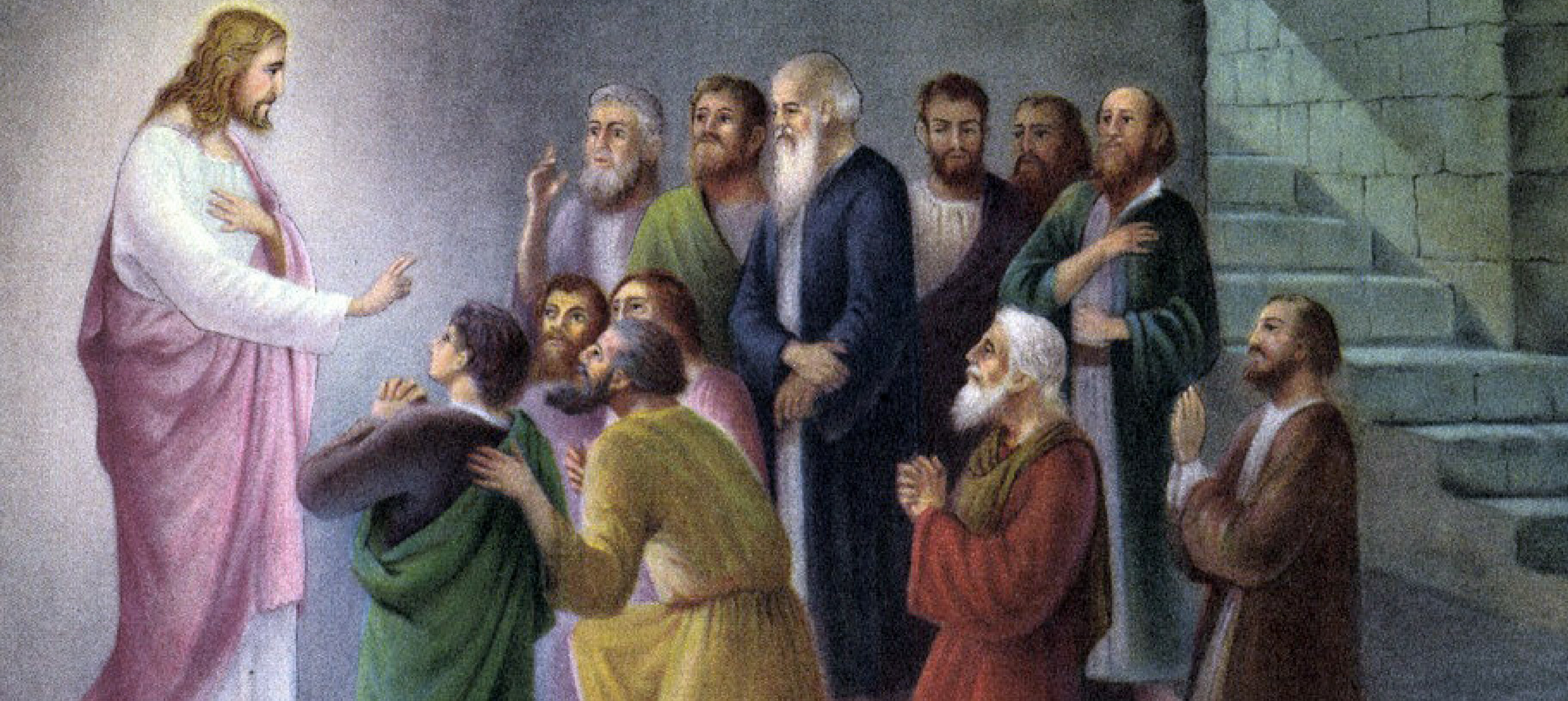
Over fifty years ago I distinctly remember being lined up with a bunch of other guys in a dingy, depressing room, downtown L.A., and raising my right hand and swearing to protect and defend the Constitution of the United States. We then stepped across a line painted on the floor and, instantly, I was no longer a civilian. For the next two years I would be a U.S. Army medic.”
As part of that induction ceremony, we all were given a list of “General Orders.” These were the duties we are to be about if there is no officer to direct us, if we got separated from our unit. “General Orders” are the common sense actions one would take in any emergency: secure government property, protect life, report to the first officer that one might encounter.
You are part of the Church because you have been inducted into the Jesus Movement. In this day and age, no one is making you be here. You are here because you were Spirit-called. In the Jesus Movement our General Orders are to “Love the Lord your God with all your heart, with all your soul and with all your mind, and your Neighbor as yourself.” That simple. Common sense. Gospel sense. Gospel orders.
At the beginning there were twelve inductees. “…first, Simon, who is called Peter, and Andrew his brother; James the son of Zebedee, and John his brother; Philip and Bartholomew; Thomas and Matthew the tax collector; James the son of Alphaeus, and Thaddaeus; Simon the Cananaean, and Judas Iscariot, who betrayed him.”
Then he sent them out. Their mission? To heal the sick, raise the dead, cleanse lepers, cast out demons. You received without paying, give without pay.” And why? “The Kingdom of Heaven is at hand.” And travel light. Common sense General Orders.
The “Kingdom of Heaven” – what our brother Martin Luther King called “the Beloved Community” is at hand. This is the inbreaking reality where all are valued for who they are. Sort of like Mr. Rogers’ Neighborhood. We’re here as citizens to fulfill its promise and celebrate its joys.
But there are those who would pain the Beloved Community. Do it great harm. And we are called to action. General Orders time.
This week, the summons came through those agonized words: “I can’t breathe. I can’t breathe.”
In today’s world the first assignment to those of the Jesus Movement is to remove the knee. Communities of color need to breathe. The scab has been ripped off four hundred years of oppression in America. As George had a knee on his neck, we all have a knee on our necks. Remove the knee! None of us can breathe. It begins with #BlackLivesMatter.
To those disbelieving souls who would object, “Well, don’t all lives matter.” There are some who just don’t get it. Some who don’t know our American history. Some having an appalling lack of empathy. Back to the Penalty Box. You’re not ready for this discussion if the first words out of your mouth are, if your first thought is, “Yes, but…” Best sit down, be quiet and listen. “I can’t breathe.” Do you hear him? Listen to the agony. Humility is the order of the day for you. Those are your “General Orders.”
In another sense, yes, you are right. For the forty percent of Americans who live in poverty and near poverty, your lives matter every bit as much. The lives of the impoverished and left out do indeed matter. Those who live day by day working a gig job with no future, laid off at an economic whim – your life matters. Those downsized, outsourced and abandoned — your communities matter.
Some insight into our common economic and political disenfranchisement might, hopefully, lead you to realize that at the root, you have much more in common than you think with your sisters and brothers of color. Maybe that’s why the crowds in the streets these past weeks are so diverse. Everyone’s marching. We all have a stake in this. The knee on George Floyd’s neck is also on yours. And on your children’s.
The call to us in the Jesus Movement is to tend the sick, lift up the downtrodden, and give hope to those abandoned by this idolatrous, so-called Free Market. Folks, there’s a big fat thumb on the scale. A thumb larded up with billions and billions in bribes to the political elite. This is not partisan. Both parties are equal opportunity grifters. That’s one thing Mr. Trump got right. The system’s rigged.
We can’t breathe. We need a platoon of disciples from the Jesus Movement to remove the\knee. George Floyd couldn’t breathe. Trayvon Martin couldn’t breathe. Folks in abandoned communities all across America can’t breathe. The citizens of the Inland Empire who have suffered decades of political corruption can’t breathe.
Our charge is to remove the knee. We are now all George Floyd. “I can’t breathe,” is our desperate cry. Maybe our dying cry.
While a citizen army of hundreds of thousands mobilized in the streets and boulevards of our cities all across the land, too many of our elected officials mobilized to be scarce.
“I’m not going to criticize other people,” was the lame excuse of one. “I’m late to lunch,” the response of several. Silence. Crickets, the response from others as they passed by reporter Kasie Hunt on the “Walk of Shame” to the Senate Dining Room. Remind me again, what are we paying these folks a salary for?
Unfortunately, a criminal element, we now know, was organizing to use these massive demonstrations for their own nefarious purposes — outright looters and arsonists. Others were acting out of their varied pathologies. And a few were political subversives – yes, we have evidence of their being egged on by the same malefactors who conspired to manipulate our elections in 2016 to great effect. What a delight the internet can be. For fun, profit, organizing, and election rigging.
The best, the majority inducted into these marches and rallies across the land, they were exemplary of the values of the Jesus Movement – Spirit recruited,
What gives me hope this time, what is different from the demonstrations of the ‘60s of my era is the portrait of this crowd. This is the most diverse group of people ever to come out into the streets of our nation. Those standing in solidarity with George Floyd’s family, those raising the cry for decency, sisterhood and brotherhood – those called to good purpose have been the most diverse group of Americans ever to take to the streets to say, “Enough.” We can’t breathe. They could be Peter, John, son of Zebedee and Bartholomew. Or Alice, Manuel, Serena, Jamil, or Alex. And cast out demons, do they ever! We’ve got whole new batch of ugly demons to confront in American: racism, poverty, dysfunctional politics, a decrepit health care system, hate, a collapsed economy – just to name a few.
We don’t need to worry about boredom and nothing to do. Did I mention a raging pandemic? People dying like flies? Another of our ills needing healing.
The work of those in the Jesus Movement is most contagious. We saw multiple scenes of members of the police, even chiefs and mayors taking a knee in solidarity. It is said that Hope is the evidence of things unseen. We’ve seen some beautiful evidence of Hope on the streets of America.
In a recent Reuters/Ipsos poll, 82% of Americans support the peaceful protests as a legitimate response to what has happened. Retired generals and admirals have finally spoken up against use of the military against peaceful protesters. The military is not a plaything. It is not a collection of toy soldiers that can be shuffled about as in a game.
All this protest is born of the values and teachings of the Jesus and the prophets. These enduring values are enshrined in our Constitution and common norms of decency.
We are inducted to raise our voices to high heaven over the injustice and oppression done to the “least of these.”
Because we are not bystanders in this democracy, but have power as citizens, it is up to each of us to pull our nation back to our higher ideals. It is up to all of us, in the face of the travesty of justice done to George Floyd to raise his voice, ‘I CAN’T BREATHE.” To raise the voices of all in the face of pandemic, racism, economic collapse and in the threat of a politicized military: “WE CAN’T BREATHE.” That is the commission of our induction into the Jesus Movement.
At the conclusion of his eulogy for George Floyd, the Rev. Al Sharpton asked the question. If time’s up for injustice, what are we going to do with the time left to each of us? Will we fritter it away with sitcoms and mindless consumerism? Will we just go to sleep or indulge in various addictions? Or expend it for that which endures? Kingdom building.
Will we use it to perfect our fragile union? Will we use it in acts of unselfish solidarity? For a cause greater than ourselves?
After I completed my service as a medic I became a member of Vietnam Veterans Against the War. I received my copy of their paper, The Veteran with updates on events, reunions, and projects. Often included are articles on the early history of the organization and the early protest against that war. Laurel Krause wrote of her sister Allison, one of the four students killed by the Ohio National Guard at Kent State on May 4, 1970 – fifty years ago this month..
One piece that caught my eye as I skimmed the paper. “The Little Girl at My Door.” On his way from Landing Zone Andy into the Vietnamese army base at An Loc, Jack Mallory noticed a group of several children.
“Something wasn’t right, and I told my jeep driver to head over there. Half a dozen kids were gathered around a young girl, maybe 10 years old, lying under a tree. She wasn’t visibly injured, but pale, motionless and dead.”
“Through my interpreter, her friends told me she’d been up in the tree gathering branches for firewood. She had triggered a booby trap set up by the local Viet Cong. A grenade, without pin, had been placed in a tin can with a wire strung across the road. They had hoped that the antenna on an American vehicle would hit the wire, yank the grenade from the can, detonate it over the vehicle. A few minutes earlier, however, the little girl had detonated the grenade herself. She was apparently untouched, except for a small hole not much bigger than my thumb nail, right in the center of her chest. She had bled out internally. Not my fault. Not, directly, our fault.”[1]
No not our fault, directly. Much of the racist history in America, not our fault, directly. Most do not scream racial slurs or expressly oppress. We would be horrified to have thought that it was our knee on the neck of another, snuffing out the last remaining seconds of life. Surely, we would have reacted to those dying words, “I can’t breathe.” This is what we learned as inductees into the Jesus Movement. It’s what we would have been taught in most any of the great religions of the world. Yet, collectively, our knee has snuffed out the breath of too many. Like that tragic event around a tree in a Vietnamese countryside, blame for the tragedy of that war is complicated.
Regardless of fault, and the American foreign policy of that time was surely complicit, how do we move on?
Vietnam Veterans Against the War’s answer has been to build links of people-to-people connection with the citizens of Vietnam. Approval has recently been received from the headmaster of a village school, Binh Thanh, to begin he construction of a future VVAW library. Many of us have donated to its construction. This last March was the organizer, Chuck Theusch’s fifty-third trip on behalf of VVAW.
Will this library bring back that little girl? Will our efforts to transform policing and our criminal justice system bring back George Floyd? No, that pain will endure — but goodwill and friendship can triumph over evil and death. Empathy and amends are tokens of Grace.
We are the incarnation of love that trumps hate. We in the Jesus Movement, by the power of the Pentecost Spirit, we usher into reality a New Heaven and a New Earth. “On earth as in heaven,” are our orders.
Just how did we get signed up? Over what line did we cross into this Jesus Mission? It was when the Holy Spirit got into our hearts and grabbed up our imagination. In that instant, we knew that Love is the Answer. My friend Ed Bacon says that each morning we wake up, we have a choice. Will we live in the House of Love or the House of Fear? The Spirit prompts our better angels. Most of us. Most of the time.
Presbyterian pastor and writer, Frederick Buechner, tells us of our duty in the Jesus Movement, in the Life Movement – it is our Vocation. Which is?
“Vocation is the place where our deep gladness meets the world’s deep need.”
For many our vocation has been to be out in the streets. Wearing your facemask. Keeping proper social distance. It has been to labor in crowded hospitals tending to the sickest of the sick. It has been in a newsroom. It has been keeping folks safe on the streets (Yes, there are good police who actually care). It is that teacher attempting to figure out technology in order to reach out to her students. It has been to mourn George Floyd.
Our vocation is where we are placed. It is where “our deep gladness meets the world’s deep need.” It is our commission.
Our commission is to speak truth in a time of lies and violence.
When peaceful demonstrators were summarily rousted by clouds of teargas, chemical agents and flash bang grenades from Lafayette Park, across the street from the White House, for a militaristic photo op, while our Secretary of Defense thought they might be walking to the park only to “inspect the restrooms,” some of the better angels of our retired military saw the danger of this spectacle. They found their voices. Senator Mitt Romney, unlike so many other senators, was not out to lunch. When our president made a travesty of our Christian heritage, waving about a Bible as if hawking a frozen steak on the Home Shopping Network –desecrating our church — religious leaders, the Catholic Archbishop and my bishop, spoke out against this tawdry spectacle – even the Rev. Pat Robertson and other Evangelicals – leaders often quiet on political matters, raised their voices. Our vocation is often to speak out, to exorcise the demons of racism, of hate and the perversion of Jesus message of peace. God is not a plaything.
In the end, our commission, our vocation, General Orders if you will, is summed up in a poem by the Jesuit brother Peter Byrne, “We are Simply Asked.”
We are simply asked to make gentle our bruised world,
To be compassionate of all, including oneself.
Then in the time left over to repeat the ancient tale,
And go the way of God’s foolish ones.[2]
Amen.
[1] Jack Mallory, “The Little Girl at My Door,” The Veteran, Spring 2020.
[2] Peter Byrne, “We are Simply Asked” as set to music by Jim Strathdee, “Light of the World,” Caliche Records, Ridgecrest, CA, 1982. Words copyright 1976 by Peter Byrne, S.J. Music by Jim Strathdee, copyright 1981.
June 14, 2020
Pentecost 2, Proper 6
The Rev. John C. Forney
John 9:35-10:8
Inducted
Fired Up. Ready to Go.

Four bishops gathered over the five days of the Annual Conference of the United Methodist Church in Southern California. From various local denominations, Episcopal, Roman Catholic and African Methodist Episcopal churches, they were invited to speak at the United Methodist Bishop Charles Golden’s, maiden Annual Conference that year in Southern California. On a hot, stifling afternoon, the Episcopal Bishop Fred Borsch was the first.
As the body quieted as Bishop Borsch settled into the pulpit, an air of expectancy filled the cavernous chapel at the University of Redlands. Fred took one last glance at his notes and waited until he knew he had the attention of all.
“Fire, Fire, Fire, everywhere. Except in the hearts of Episcopalians,” he began. For a second, I feared we might have a stampede out the doors, but Fred quickly continued. Yes, indeed! He certainly had our attention. “Fire everywhere except in the hearts of Episcopalians.”
Fire! I had thought a few days ago that my sermon was well on its way to competition. Add in some bits to carry the theme through the text, maybe a humorous story to keep interest alive, and I would be done. Ready to send it in to Faith, our Administrator at St. Francis, have her mail it out for those not having internet.
Fire! They say be careful what you wish for.
Now the whole country seems of fire – literally, as well as metaphorically. I’m taken back to the tragic days in Los Angeles after the assignation of Dr. King. I was a young deacon at an inner-city church in the Pico-Union Neighborhood. Not a one of us was untouched by the grief of our community. Fortunately, in our community, cooler heads prevailed. We gathered in the church for prayers, singing, the sharing of memories and outrage. And when it seemed that what needed to be said, the anger and grief expressed, when the tears had been choked back, we all drifted back to our homes. Each wondering if hope could ever be restored.
St. Augustine of Hippo said, “Hope has two beautiful daughters; their names are Anger and Courage. Anger at the way things are, and Courage to see that they do not remain as they are.”
If we are going to heal this nation, we must first address the anger. Some are angry at those looting, burning and causing wanton mayhem. I get that. There is the 10-80-10 rule that pertains to disasters.
Ten percent of those affected will step up. Their minds will be focused on what needs to be done. They are the ones who will begin immediately, once their safety is secured, to look after their families and then their neighbors. They provide the necessary leadership for recovery.
Eighty percent, whether in shock, or by natural inclination, will wait for leadership to emerge and then pitch in. They will begin taking neighbors to medical facilities, they will grab their chainsaws and begin removing fallen trees to clear the streets for emergency vehicles.
And then there are the remaining ten percent. These folks will use most any calamity to act out their sickness and perversion. They are the arsonists that went from store to store with containers of gasoline and matches. These are the ones who are the profiteers. And I hope they are stuck with boxes and boxes of worthless toilet paper when all is said and done. These are the rumor mongers, those spreading the lie that some of the officers were wearing “Make America White Again” hats. These are the people that necessitate the summoning of the national guard.
Our nation now needs that first ten percent and the next eighty percent. We need these folks fired up with compassion and clear minds, strong arms and open wallets.
This morning when we look around and gather our wits, there is much to do. First, we need to get a grip. We need those disciplined national guardswomen and men to clear the streets. To send everybody home. Arrest, if need be,, that last ten percent who will use the killing of George Floyd for their own demented ends.
We need our houses of worship and spiritual leadership to help us mourn and express our grief about all that has happened.
The righteous anger folks felt upon watching the life slowly being choked out of George Floyd needs to be acknowledged. We need to realize that this anger did not materialize overnight. This nation has witnessed black men and women disrespected and murdered under the cover of state authority now for years. Some would say four hundred years in America. It was only one generation after that fabled first Thanksgiving that the sons of those first Pilgrims were committing genocide on the same people their mothers and fathers had broken bread with. Now we are only left with a trail of tears and broken promises.
The anger of Broken Knee, Watts, the James Pettis Bridge, Ferguson…and Minneapolis…We need to get our arms around it all and grieve with those who grieve. We need to cry, to scream and shout, to hug one another – to do what ever is necessary to give voice to the pain we feel.
Tweets of bluster and threat do not improve the situation. They will not heal. We need an adult in the room who can acknowledge our collective grief and hurt. We need leadership to point a way forward out of this present chaotic, helpless moment, if our nation is to have any chance of healing.
That beautiful daughter of anger needs to be heard. Her voice is cleansing fire that will weld us back as one.
“We all feel as if there’s a knee on our neck,” mourned Andrea Jenkins, vice president of the Minneapolis City Council last night. There is a knee on our collective neck, but is not just the knee of police authority.
This pandemic has been a window to another knee on the neck of America. Those who have gotten sickest, those who have died are not distributed randomly across our cities and nation. The dead are the poorest, those with no health care. They were already the sickest because their diabetes and coronary issues were left untreated. These victims of coronavirus are a window to the stifling poverty stalking our land.
These victims are those who never received any PPP check. Nothing! Because all the Big Boys cut the line at our large banks. Their anger has been festering since the 2008 Great Recession. They are the discarded and ignored. Of course they’re mad. As always, almost all the recovery went to the top one percent, the top one tenth of one percent. They are the ones who still had to pay when the bankruptcy laws were jiggered and those who owned towers in Manhattan and Washington, D.C., got bailed out and stiffed their workers.
Yes, we need healing and consolation. We need each other to wrap our hands around one another, to remind one another how we have gotten through such national trauma before. That is what our faith is about. It’s also about this second beautiful daughter of hope. The courage to change.
That is the entire lesson for the Day of Pentecost. We must acknowledge the fire that burns in so many disrespected hearts, in our hearts. And we must remind one another of the courage and hope inspired through our walk with Christ. Courage as infectious in the Jesus Movement as that of a virus on our unmasked streets and grocery stores. Every bit as infectious.
This is our scriptural heritage. It is the testimony of those who have gone before us.
If ever the Church needed a wake up call from the Holy Spirit, now is the time. But what is the nature of this summons. Our three texts appointed for today are spot on. Tell the story! Tell that old, old story!
There was a sound like the rush of a mighty wind. The tongues as of fire appeared on the heads of the disciples and they began to speak in the languages of the gathered crowd. Partians, Elimates, Cappadocians – they all understood. Those from Medes, Pontus and Cyrene and visitors from Rome. They all understood, each in their own language.
Where did we have the referent of this story? Come on, biblical scholars, here’s a hint – Genesis. Okay, another – the word babel. Oh, you’re getting warmer. Yes! That’s it. The confusion of languages of those building the Tower of Babel. The end result of such hubris was that no one understood any of their coworkers anymore. Sounds familiar, doesn’t it? That chaos looked like that of the streets of Minneapolis and some of our other major cities last Thursday night.
The miracle is that out of confusion and chaos God’s will is for reunion and understanding. Unity over tragic division is the miracle. And what do they all hear? What is the life-giving Word? Love one another as I have loved you.
Paul speaks of the many gifts of the Spirit, all working together to bind us into one. This is also Pentecost Fire. Unity out of diversity. To each is the suitable gift for building up the whole, each one needed. All are baptized into the Body of Christ. All Christians are given this one same Spirit and charge.
In the Gospel of John, the words of the Risen Lord with the gift of the Anointing Spirit are, “Peace be with you. As the Father has sent me, so I send you.” And then this enigmatic charge, “If you forgive the sins of any, they are forgiven; if you retain the sins of any, they are retained.”
Friends, we are not meant to luxuriate in these sins. We are meant to forgive them. We are meant to be “repairers of the breech.” To bind up the sorrowful and lend a hand up to the fallen.
On the Day of Pentecost, the Church is commissioned to be the body of restoration. It is to be the repairer of the breach. And if you forgive the sins of any? Folks, that is our job. Sin is separation Our job is to forgive, to restore. That is our power we have in Christ. That is the Pentecost miracle.
Looking at where we are now, I think the best we can say is that this commission is a work in progress. We’re so far from it. In many ways.
Last Sunday, the New York Times featured on the entire first page one thousand of the nearly hundred thousand lost to the coronavirus. One commentator would give voice to the sadness in his spirit, “Jesus wept.”
Accompanying each of the names was a short piece: Audrey Malone, 68, Chicago, sang gospel music as a member of the Malone Sisters. Clara Louise Bennett, 91, Albany, Georgia, sang her grandchildren a song of the first day of school each year. William Helmreich, 74, Great Neck, N.Y., sociologist who walked New York City. Johnnie D. Veasley, 76, Country Club Hills, Illinois, teacher’s aide.[1] Would that the tragedy of this disease might have pulled us together. The opposite has been the result. This scourge has become so politicized. We’ve substituted opinion for science, rumor and conspiracy theory for facts. Wishful thinking for action. Jesus wept indeed. Unity is the gift of the Spirit. Unity in respect – wearing facemasks, in social distancing, in following our God-given intellect. Follow the science. God gave us a brain, let us use it to the God’s glory, for heaven’s sake!
All this death needn’t have been so. Had we begun, even one or two weeks earlier, taking the necessary measures rather than blaming and denying, upwards of some 60,000 names might not have been on this list.
O Lord, give us the courage for the needed change. Cast aside our hesitations. Cast aside the battalions of lobbyists we willingly suffer with suitcases stuffed with money (campaign contributions). Give us righteous anger at our pay-to-play politics of greed. Give us courage for change. So many deaths needn’t have been so. So many.
The tragic truth is that the fire has gone out of too many of our churches. Pierre Burton wrote much earlier, in 1965 a damning indictment of comfortable, laid-back Christianity, The Comfortable Pew. If ever we needed that strong voice and example of unified purpose from our faith leaders, this is the time. Fired-up moral leadership is what we need from our faith communities. Like the Rev. Dr. Barber of “Moral Mondays” down in Goldsborough, North Carolina. Like our friends at Urban Mission in Pomona, California.
There’s a story told of the 2008 presidential primary. It comes out of Greenwood, South Carolina. On an uncomfortable sultry evening, rain pouring down, the dispirited and weary Obama campaign pulled into the parking lot of the civic center. As then Senator Obama and the campaign staff slogged through the downpour into the center there was a small bedraggled group of about thirty who had come out to hear the candidate.
When the grandmotherly, African-American organizer, Edith Childs, saw the downcast look on the candidate’s face, she belted out, “Fired up.” And the room came to life. “Fired up,” echoed back the response. Edith continued, “Ready to go.” Again, the chorus responded in full voice, “Ready to go.” In future rallies, with thousands in various auditoriums across the country, this became the signature chant of the campaign. “Fired up.” “Ready to go.” Now and then, Edith would be invited onto the stage to lead the crowd.
Christians, we would do well to appropriate that chant. The world needs us fired up and ready to go. This nation needs that fire in our hearts and minds. Though the night be long and oppressive, it yearns for folks fired up for unity, fired up for common cause, fired up for justice. And ready to go. Our nation needs us ready to go right now.
Some have been in the trenches for weeks battling this virus. In hospitals and food distribution lines, in prisons and in community centers. Fired up? We’re needed. Ready to go? It’s time for the second team to get in the game.
The new Scientific American arrived in the mail the other day. The entire issue is devoted to various aspects of this pandemic. One section featured the stories of those healers on the front lines in our overcrowded hospitals.
Most exemplify the dedication of many who went into the health professions. Though many have been beaten down by the inhuman hours and incessant days of duty, a subdued idealism is still driving these people.
Roxy, an emergency room nurse from Dallas, Texas, talks about how the stress and worry has consumed her. She is torn in her conflict between the duty to her nursing vocation and the duty to her family. “It was so hard to stay away from my family and even harder to stay away from my work, which I love. It felt like punishment, like I was losing my mind. I’ll admit that I was drinking more than I ever do. In early April I decided to start staying in a hotel so not to accidentally bring the virus home to my husband and two kids, who could also spread it to my immunocompromised dad, who helps with child care.” [2]
Where Sin did abound, Grace did much more abound. Yes, as George Floyd’s life was snuffed out and the pandemic death toll passed one hundred thousand, Eric Trump could tweet, “GREAT DAY FOR THE DOW!!” To which one of America’s compassionate souls responded, “Not a great day for the 100,000 Americans who died of coronavirus.” Sin and Folly does ever abound.
Not a great day for the citizens of Minneapolis. Not a great day for the meat packers stuffed in contagion-filled plants in Sioux Falls, South Dakota or Perry, Iowa. Not a great day by a long shot.
Each is given a gift of the Spirit to heal, to restore. To come to our senses. It’s all in that prayer repeated meeting after meeting in twelve-step recovery groups – the Serenity Prayer.
God, grant me the Serenity to accept the things I cannot change, the Courage to change the things I can, and the Wisdom to know the difference.
This prayer leads us to those two lovely daughters of HOPE: Anger and Courage. Straight from the heart of God this prayer comes. A blessed Day of Pentecost to you and those you care for, those you serve. And don’t forget RED. It’s Pentecost Sunday! Amen.
[1] New York Times, “U.S. Deaths Near 100,000, an Incalculable Loss,” Sunday, May 24, 2020.
[2] Jillian Mock and Jen Schwartz, “How the Healers Feel,” Scientific America, June 2020, p. 38.
Dear friends in Christ
May 31, 2020
Day of Pentecost
The Rev. John C. Forney
John 20:19-23, Acts 2:1-11, I Corinthians 12:4-13
Fired Up. Ready to Go.
The Spirit of Truth

Well, You Didn’t Get it Here!
George Regas is fond of telling the story of a man who, one Sunday, wanders into a large, cavernous Episcopal sanctuary. Think of the National Cathedral in Washington, D.C. You’ve seen it. It is where many state funerals are held. You saw all of the living presidents assembled on the front pew at the service for President George H. W. Bush. The music was solemn, the liturgy stately. Iridescent light filtered from the majestic stained-glass windows played over the assembled congregation. The guys are all wearing ties and many women have hats on. Its business formal attire for both men and women.
The scene is set. You’ve got the picture of our High-Church Episcopal tribe. A visitor who has ambled in, takes a seat on the center aisle. He’s not well dressed, but acceptable. This is Southern California, remember. He seems not very versed with the prayer book and is unfamiliar with any of the hymns. Remember this is an Episcopal service. We have aerobics at worship. Stand. Sit. Kneel – but no push-ups necessary.
As the preacher moves into his sermon, the fellow perks up. This preacher knows how to hold a congregation. A few minutes into the sermon the visitor is responding, “Amen, brother. Preach it.” Heads are beginning to turn as people wonder who this unseemly fellow is, who it is that’s carrying on so. Soon, an usher discretely taps him on the shoulder and quietly whispers, “Sir, you need to be quiet.” The visitor says he’ll try to restrain himself. “Sorry,” he mutters.
The preacher hasn’t gotten much further before the visitor again, is unable to sit quietly and blurts out, “Amen. Lord have mercy. Sweet Jesus have mercy.” He’s half way out of his seat. Again, heads are turning and some nearby are shushing him. This time the usher is a bit more forceful in his admonishment to maintain decorum. And again, the visitor assures him that he’ll try to restrain himself.
A third time into the sermon, the visitor is completely overcome and jumps up, shouting, “Praise Jesus. Praise his name. You preach it brother. You’re on the glory road.” This time a very stern usher tells him in no uncertain terms that he will have to be still or leave. To which the visitor responds, “Sir, I just can’t help it. I’ve got the Spirit.” “Well,” the usher huffs, “You certainly didn’t get it here.”
Episcopalians, you know, the Frozen Chosen, have always been a bit skittish about emotion in our services. If any is to have a divine revelation, they best do it quietly. Especially in the National Cathedral.
Some of us used to get a bit edgy as the church moved into Pentecost Sunday. Please, no carrying on for us. With this Sunday’s appointed gospel reading from John, we move ever closer to the Day of Pentecost as Jesus promises to send a Guide, an Advocate, the Spirit of Truth. Remember, these are Jesus’ farewell instructions to his followers.
“And I will ask the Father, and he will give you another Advocate, to be with you forever. This is the Spirit of Truth, whom the world cannot receive, because it neither sees or knows him…I will not leave your orphaned…”
It is said that Truth is the first casualty of war. It seems to also have been a casualty of this pandemic. Truth certainly seems in short supply as we move through this national coronavirus debacle – every state for itself.
For those of us in “shelter-in-place” orders, or “lockdown” as we call it, the reality of this virus has been a very “Inconvenient Truth.” I’m reminded of an Ed Bacon quote, “Yes, the Truth will set you free, but first it’s going to hurt like hell.”
We Americans have great difficulty with such stubborn realities. We are not an overly patient people. After the Civil War the North quickly tired of Reconstruction. The many signs of progress for both whites and African-Americans were soon short lived. The KKK which had its origin shortly after the surrender at Appomattox, had spread through the Old South by 1870. By the 1920s and ‘30s it was active in many northern and some western states.
The KKK had virtually taken over the Democratic Party. Jim Crow laws stripped rights from not only African Americans but others. The KKK didn’t like Jews or Catholics all that much either. FDR was unable to get a national anti-lynching law through the Democratically controlled congress. This last May 14, America acknowledged the stain on Old Glory of voter suppression — on that day in 1955 NAACP member, the Rev. George Lee, was fatally shot by a member of an angry white mob for attempting to register to vote in Mississippi. On May 15, 1916 a mob of whites burned alive African American teenager Jesse Washington in Waco, Texas. The History of Racial Injustice Calendar reminds us on virtuallly a daily basis just how far we have to yet come for many Americans to redeem the promise of citizenship — a promissory note, as M.L. King said, that has been returned marked, “insufficient funds.” These are the most egregious inconvenient Truths. They hurt like hell. For too many attempting to exercise the promises of democracy, they are turned away with the rebuttal, “Well, you didn’t get it here.” And this is not just a blot on the Old South. A few years ago at All Saints, that congregation was besieged by a howling mob of so-called Christians hurling insults and profanities at those attending a day long conference sponsored by the Muslim Public Affairs Council. If Jesus had behaved like these people, nobody would have been saved.
This Spirit of Truth was sent to bolster up those of the Jesus Movement to keep his teachings. And the core of those teachings? Love of God and Love of Neighbor – NO EXCEPTIONS. One and the same. Remember, “God is Love and those who abide in Love abide in God and God in them.”
The work of this Spirit of Truth is the power to acknowledge and heed the challenges of our time. It is to come to grips with the difficulties of living together and to claim the blessing that comes through active love. This Spirit of Truth moves us through the trials and difficulties. It has nothing to do with magical avoidance of inconvenient realities. No, this virus will not just “magically go away.”
The Spirit of Truth leads in this time of COVID-19 beyond the bunkum conspiracies swirling around our current health crisis. No, COVID-19 was not a made-up story to hurt Trump. No, it’s not some Chinese bioweapon. No, COVID-19 deaths are not FAKE News. Some internet personalities have gone so far as to urge their followers to take cameras into hospitals to film the empty rooms. To show that there are no real patients. Nobody’s dying.
The Spirit of Truth will guide us out of this conspiratorial fog into the sunlight of reality. Unfortunately, it takes a while. And for some folks, it will hurt like hell. As the adage goes, “A lie will have gone halfway around the world before truth has its pants on.” These theories are stubborn, like devil grass.
But, eventually, truth will out. No, the moon landing was not a hoax filmed in somebody’s garage. The Spirit of Truth upholds competent social scientists like Professor Joseph Uscinski, the epidemiologists, and medical experts like Dr. Fauci and Dr. Birx.[1]
Aw, you mean nothing really happened at Roswell? There’s no spaceship? But I have my top secret parking permit for Area 54. I like my space alien friends, my space chums. Next, you’re going to tell me that Bigfoot is also a made-up story. But there are sightings! I saw it on the internet. Agent Scully and Mulder were on the trail. Don’t forget Obamagate – “a slogan in search of a scandal,” as one commentator quipped.
Enough, okay. It’s time to hear it for the Spirit of Truth and Politifact. Yeah, I guess — the “X-Files” is only a TV show. So, please, debunk with sympathy and kindness.
The Spirit of Truth leads us into “engaged compassion” and to healing justice. It allows people of faith to confess the reality of sin and repent. Old fashioned words for some, yes… Sin is our separation from God, from one another, and within ourselves. The acts we call “sins” are what flow from that tragic separation, from our insecurities. This separation is part of the burden of being human. It is our existential condition. As certain as “the sparks fly upward.”
This was the great enlightenment of theologian Paul Tillich.
But Tillich didn’t stop there. He went on to elucidate another, stronger reality, Grace. As St. Paul proclaims in Romans: “Where sin did abound, Grace did much more abound.” Dr King put it this way, “The moral arc of the universe is long but it bends towards justice.” Jesus, to those hapless disciples who all ran away in the end – the men, that is – to them he sends an Advocate, the Spirit of Truth to lead and to guide. Grace always trumps fear.
These past weeks we have been overwhelmed by the tokens of Grace breaking through the fear and hate engendered by this pandemic. We can’t go through a day without a newsflash of sacrificial love, neighbor caring for neighbor. This is the work of the Spirit. Just turn on the TV. Open the paper. Look at the pictures of those staffing testing stations and stocking shelves at food banks. And out in the streets, this Spirit is most contagious. These days it may wear a face mask, which is to say, I care enough about you that I’ll risk looking maybe a bit silly, I’m willing to endure some inconvenience, so I don’t make you sick. Such compassion is a highly contagious truth that saves lives. I hope you did get that Spirit here.
In most any church you can catch that Spirit. It may lead to spontaneous outbursts of affirmation. Now even acceptable and encouraged in some Episcopal Churches. But more than that, this Spirit of Truth will grab you up by the hand and lead you into gospel service. Some of us it may need to grab the scruff of the collar – but by whatever means, this Spirit moves to get us into gospel action. As our Presiding Bishop Michael Curry says, it’s to “turn the Jesus Club into the Jesus Movement.”
Another reality of the Spirit of Truth is that we are not left comfortless. Through neighbor, spouse, child, grace – Love – does abound. Where factions abound, the Spirit of Democracy has the power to bind together.
As bad as racial hatred and strife became after the Civil War – a war still being waged in many hearts – it was both black and white together who waged the Second Reconstruction to mend the rent in our national fabric. Both black and white were set upon by angry mobs at lunch counters in both North and South. It was blacks and whites who joined in chorus on long bus rides and in Montgomery jails singing “We Shall Overcome.” It was both blacks and whites whose tortured, mutilated bodies were found in shallow graves throughout backwoods fetid swamps. Black and white together, they died. Now joined by Mexican immigrants and Native Americans == the incarcerated, the aged, veterans, the homeless, all disproportionately killed by COVID-19 — all victims of a failing health system, evidence that our racial and income disparities remain deadly. First, the Truth will hurt like hell before it sets free. America, it’s “mend-thine-every-flaw” time. Overdue!
Let our prayer be that this mighty Spirit of Truth blow through our ravaged land to make new, to make us a more generous people, a more unified people.
This Spirt of Truth is a mighty friend, not a false friend that flatters. Not a fickle friend that sugar-coats reality. This friend does not abet conspiracy theories and lame excuses. It is a genuine friend that fortifies. Yes, with facts and sound reason.
The Spirit of Truth is the sort of friend that sends companions to guide us on the way through this perilous infection. It is a comfort to the bereaved. It has the power to bring out our best. This friend has the power to restore. It has the power to inspire repentance and amendment of ways. It has the power to cause us to see the stranger as our neighbor, as a friend. It’s motto? “Get over yourself – life is at hand.” In its most Inconvenient truth, you’ve got a friend.
Randy Newman, got it right in that great gospel hymn that could be sung of the Spirit of Truth, “You’ve Got a Friend in Me:”
You’ve got a friend in me
You’ve got a friend in me
When the road looks rough ahead
And you’re miles and miles
From your nice warm bed
Just remember what your old pal said
Boy, you’ve got a friend in me
You’ve got a friend in me
You’ve got a friend in me
You’ve got a friend in me
You’ve got troubles, well I’ve got ’em too
There isn’t anything I wouldn’t do for you
We stick together and we see it through
You’ve got a friend in me
You’ve got a friend in me…[2]
If it’s not in your hymnal, it ought to be. It’s about the kind of friend this Spirit is. You can get it most anyplace. Seek and it will find you.
It is said of this one and same Spirit, it’s like the wind. You hear the sound of it but it blows where it blows. So it is with everyone born of the Spirit. Yeah, you might even catch it in a stogey Episcopal Church or in a church of some other flavor. But God’s too savvy to place all the money on the church. It’s let loose, out there. This Spirit of Truth often is highly inconvenient. Can hurt like hell and then some. AND, regardless the pain, this Spirit of Truth is Life and Blessing. It is Restoration. It’s for our guidance and edification. It’s what will make us suitable for human consumption. It frees from the penalty box. It bridges the tragic separation of the races and the sexes. It’s Baby Baluga in the deep blue sea, counting on you and me – our vital connection to the natural world. It makes of us “repairers of the breech.”
In this time of COVID-19 may the Spirit of all Truth bend the national arc of these challenging times towards justice. This Spirit of Truth — I pray to God we all get it in the days ahead. We need it. America needs it. We’ve got a friend,
Amen.
[1] Joseph Uscinski, Conspiracy Theories: A Primer (Maryland: Rowman and Littlefield Publishing Group, 2020).
[2] Randy Newman, “You’ve Got a Friend in Me,” from Toy Story 4, Walt Disney, Pixar Films, April 12, 1996
May 17, 2020
6 Easter
The Rev. John C. Forney
John 14:15-21
 Forney Charities