
Forney Charities
Improving communities by helping residents, one person at a time.
Persistence in Prayer

I hear that in the city of Chino, there has been a strong push from some groups of Christians to institute prayer in city council and school board meetings. However, those heading up this effort have in mind the right sort of prayers. They aren’t thinking of my friends in the Amadea Mosque or the Church of the Latter-Day Saints around the corner and down the street. They don’t seem overly enthusiastic about the folks from the Buddhist temple on Central Ave. Only the “right” prayers please.
We settled this issue early on in our nation’s history. The VI Article of the Constitution prohibits any religious test for office. The First Amendment in the Free Exercise Clause states that “Congress shall make no law respecting an establishment of religion, or prohibiting the free exercise thereof.”
We got to this understanding, not by virtue of any enlightened notion of tolerance or the magnanimous inclusion of all points of view. If we will remember our American history, we had a multitude of religious expressions in the several states. If we were to have a United States, we couldn’t be waging the religious wars that lead to the slaughter of millions in Europe. Yes, we burnt Quakers at the stake. We demonized Baptists. Catholics were anathema in many parts of the country. Episcopalians were suspect because of their origin in the Church of England. Expediency won in the end. In our wisdom, we decided not to kill one another over what might be the correct form of prayer.
Prayer, used to promote tribalism is not prayer at all but hypocrisy. The ludicrous supposition that God is compelled by pious utterances to impress in the halls of our public assemblies – well it turns the stomach. To paraphrase my mentor, Joe Wesley Matthews, such prayer is to religion as pigeons are to statues. Don’t take it from me, but from our Lord – Matthew 6:6.
Close your closet door, and in silence, open your heart to God. There, God has half a chance of getting hold of you. And listen. Do not bring your laundry list. Ask not what God can do for you, but what you might do for God – to paraphrase a famous quote. Ask how you might be a living blessing to your neighbor, which is in fact to be a blessing to God.
Will there be prayer in school? As long as there are tests, there will be prayer in school. When I taught junior high in Oakland, so many of my students were ill-equipped to do eighth grade work. They didn’t have any hope of passing even a simple quiz, much less the end of the chapter test. Of the kids in what was called a “normal” class, almost one half could not read the textbook. Of those who could, many had no idea of how to get any useful information out of it. The test was just one more assault on their fragile self-esteem. One more message that you are failing. You’re worthless in this school. I could almost hear the inward groans of the spirit as my students stared blankly at their exam papers. Many could not write a complete sentence. It was so painful to watch the body language of these defeated souls. Of course. there was prayer. Fervent prayer — prayer born out of defeat. An inward groaning that broke my heart.
Of course, I remember my feeble prayers before semester exams. I remember a prayer before my chemistry exam. And it was answered. Yes, answered loud and clear – “Forney, you really screwed up. Next time, open the textbook. Go over your notes.”
As a small child I wanted a pocket knife so badly, that desire was front and center of my bedtime prayers. Even when I was told that this was not a proper thing to pray for, that didn’t stop my silent add-on before the “amen.” I never got that pocket knife until much later when I purchased my own.
So, what is persistence in prayer? Prayer is an alignment of our spirit with what gives life. I would call that the will of God. It is the voiced or unvoiced desire of our hearts for goodness – a cry from the heart.
Rabbi Beerman used to say that his marching feet were his prayers. Now, this is something I resonate with. I find prayer most efficacious as I respond to the spirit within. If I allow my prayer to move not only my heart but also my feet. My wallet and credit cards. My datebook — those things I clutch most tightly to my chest. Good thoughts alone don’t go anywhere.
Engaged prayer has the power to fill my spirit and brings joy to my days. Such prayer connects me to my neighbor. The end result may only be a smidge deeper understanding on my part. A bit more compassion for one less fortunate and beat down. Such prayer, when I allow it to move me, results in listening that hears beyond words. To pray without ceasing opens up all of life to be a vision of wonder. And it opens me to the cries and moans those around me. It is spiritual persistence.
I have been as of late, especially sensitive to the cries of our Kurdish allies. This past Sunday I had a chance to speak with a friend who is married to a Kurd. Suzann’s husband, Fouad, is from northern Iraq, far from the disaster unfolding in Syria, yet they feel the pain as deeply as if they were next door to the carnage. Speaking with Suzanne, she shared the anguish of our betrayal. Her pain and that of her family was palpable. My prayers have led me to be in solidarity with her and Fouad, to reach out. I have spoken out. I have written to the editor to express my dismay. These are not people half way around the earth. They are dear friends, next to my heart.
Such is the sentiment I hear from members of our military who have fought shoulder to shoulder with the brave men and women of the Kurdish forces. Yes, they do have women in their military. Northern Kurdistan is perhaps the most democratic society in the Middle East. The pain of their betrayal on the whim of someone who knows nothing of the bond between our two peoples is incomprehensible. To see the pictures of Kurdish prisoners summarily executed on the side of the road by the Turkish army and their proxies is more than the heart can bear. To paraphrase Tom Paine in part, through the childish actions of one man, we have unleashed the “full contagion of hell” on these people. And they weren’t even invited to the negotiations that sealed their fate!
And as they are driven from their cities and villages, are we prepared to build them new habitations. Are we prepared to replant their olive orchards and pistachio trees? Will we restore their belongings or just leave them to freeze this coming winter? I doubt we will give them so much as a thought.
O Lord, may we be a powerful people of prayer – prayer that would move us to make restitution for this unbelievable act of folly. May the deep groans of prayer move us to reach out to the refugees already in our midst. May the deep groans and sighs of prayer, too deep for words, move us to “engaged compassion.”
Thank God for Senator Mitt Romney for having the rare courage to denounce this dereliction. Censure by Congress is prayer in action. May we persist as did that elderly woman in Jesus’ parable. Prayer without ceasing — groans and sighs too deep for words. Yes, they have the power to move people of prayer to action.
But before action, however, prayer, fervent prayer of the heart awakens us. Urgent prayer awakens us to what we are doing and what is going on around us.
Prayer is like my old training sergeant bellowing at the top of his lungs, “Wake that man up,” when one of us would fall asleep during a training film. It is through prayer we wrestle with God as did Jacob. Wakefulness is the blessing we receive. Matthew enjoins us to be alert. “Therefore, stay awake! For you do not know on which day your Lord will come.” For the person persistent in prayer, the Lord appears daily, like the light show that begins every dawn.
Prayer alerts us not only to life’s crises but also to the beauty and satisfaction to be had in this life. What welled up in my heart this past week along with my anguish over the devastation that had befallen the Kurds, was deep gratitude for the life of Elijah Cummings. My heart and that of our nation has been opened to the beautiful life of this man. Gratitude — that is what prayer can bring.
Representative Elijah Cummings was a kind man. His empathy for those who came before his House Committee on Oversight was legend. As a faithful member of New Psalmist Baptist Church in Baltimore, Maryland, Elijah was a man of tenacious prayer.
The grace he showed during Michael Cohen’s testimony, his overture to Republican congressman Mark Meadows, called a racist – that is what set Elijah apart. It was that ability for empathy, even towards those with whom he disagreed. He was the embodiment of “kindness, empathy, compassion, grace, dignity and love,” wrote Mika Brzezinski. That is why she and Joe Scarborough asked Elijah to officiate at their wedding.[1]
We looked to Representative Cummings for hope. He inspired in us what he embodied, grace, love, peace, patriotism. Elijah was the light in dark times. Nothing came easy for this son of a sharecropper. But his love and dedication to people and the truth, and his humanity, made him a force for good. His voice will be missed. We are heartbroken at his passing.[2]
It has been said that we only use a small portion our minds, maybe as little as forty percent, or even less. And how much more is lost to mindless activities? Game shows and mind-numbing television, boredom, fantasy, daydreaming, stewing over past slights, and the video games on our electronic devices, games that suck our brains right out of our skulls.
A life of prayer, of meditation, pulls us back into life, back into thankfulness. It pulls us into engagement on the streets and into personal renewal. Prayer pulls us back into our families and those who love us. It pulls us into beauty. It pulls us into resistance to the systemic forces of racism, consumerism and militarism.
Prayer is silence. Prayer is song and poetry. Prayer is deep meditation. Prayer is persistence. It is marching feet.
Out of a textile strike in Lawrence, Massachusetts, came one of the most beautiful prayers of the women’s movement. Helen Todd, in 1911, covered that labor action. She told her readers that not only did the women fight for fair wages, but decent conditions and life’s other amenities as well. Workers need “life’s Bread, which is home, shelter and security, and the Roses of life, music, education, nature and books…”[3]
That strike would later be known as the Bread and Roses Strike. It was to be memorialized later in poetry by James Oppenheim and then set to music, sung by Judy Collins in a lilting, heavenly voice. It’s is a prayer of the yearning of hearts for a just and decent society. In our time when three persons own as much as ninety percent of the rest of Americans, it is a prayer for our time. When workers are ground by the gig economy and living on the streets of our cities,
it is a prayer for our time. A most fitting prayer.
As we come marching, marching, in the beauty of the day,
A million darkened kitchens, a thousand
mill-lofts gray
Are touched with all the radiance that a sudden
sun discloses,
For the people hear us singing, “Bread and
Roses, Bread and Roses.”
As we come marching, marching, we battle, too,
for men—
For they are women’s children and we mother them
again.
Our days shall not be sweated from birth until
life closes—
Hearts starve as well as bodies: Give us Bread,
but give us Roses.
As we come marching, marching, unnumbered women
dead
Go crying through our singing their ancient song
of Bread;
Small art and love and beauty their trudging
spirits knew—
Yes, it is Bread we fight for—but we fight for
Roses, too.
As we come marching, marching, we bring the
Greater Days—
The rising of the women means the rising of the
race.
No more the drudge and idler—ten that toil where
one reposes—
But a sharing of life’s glories: Bread and
Roses, Bread and Roses.[4]
Luke concludes this
parable with the question, “When the Son of Man comes, will he find faith on
earth? Indeed, as long as “Bread and
Roses” is sung in our streets and on the commons – yes, he will find
faith. Bread and Roses — A most
glorious, and urgent prayer for our time.
Amen.
[1] https://www.nbcnews.com/know-your-value/feature/remembering-elijah-cummings-why-joe-i-asked-him-officiate-our-ncna1068331
[2] Ibid.
[3] Helen Todd, The American Magazine. Crowell-Collier Publishing Company. 1911. p. 619.
[4] James Oppenheim, American Magazine. December 1911, Colver Publishing House. p. 214.
Preached at St. Francis Episcopal Mission Outreach, San Bernardino
Genesis 32:22-31; Psalm 121; 2 Timothy 3:14-4:5; Luke 18:1-8
Proper 24, Year C, October 20, 2019
The Rev. Dr. John C. Forney
It’s Not About the Tuna (mostly)

Last week Science Times had a piece about cats. Now there are cat people and dog people. You know the difference. Dogs have masters and cats have servants. At times we have been both. Most recently we took care of our younger son’s two cats, Brian and Larry, while he was working on this dissertation in Spain and Morocco. My wife gave me for Christmas a door mat with a snarky cat glaring at you. The caption read, “It’s about TIME you got home.” Such attitude. Such impatience. And there would be Brian and Larry waiting for me to get in the house and acknowledge their presence. I looked forward to it.
If you’re wondering where this is going, just hang in there for a bit. Anyway, the piece about cats brought forth recent research showing that cats actually do bond with their human companions. It’s not just about the tuna. Or whatever is for dinner on any given night. Some cats even recognize their names.[1] Brian did. Larry did not. But both cats quickly became affectionate. When Christopher took them back to New Haven, I did indeed miss them.
One recent post by a woman pleaded for friends not to say, “It was just a pet,” when her beloved cat had died. No, the woman was devastated.
I bring this up because, between humans and their pets, true bonds of affection develop – a mutuality, a relationship of gratitude, one for the other. And that’s where this is going. Life reaches out to life. It’s the attitude of gratitude, even for stand-offish cats. Their insouciance is part of what we celebrate when we bless the animals today. Everything is connected.
My friend, Mike Kinman, rector at All Saints, explained how that community had changed the traditional greeting which begins community prayer in our tradition. You know it. “The Lord be with you.” And the response, “And also with you.” The radical change at All Saints is, “God dwells in you,” with the response, “And also in you.” Why the change? Mike says that it had happened at All Saints long before he had arrived. But the affirmation in the words, “God dwells in you,” is a statement of radical inclusion. It is the proclamation that God dwells in every human heart. Each of us is a sacred vessel for divine goodness. That is surely the heart of Franciscan spirituality. God – whatever reality we mean by that word – the divine spark, dwells in all life. Especially, in our furry companions waiting at the door to greet us. Yes, Brian and Larry, God dwells in you. (Though we didn’t appreciate how you scattered your cat sand all over the laundry room floor – definitely not pleasant for bare feet in the morning).
Luke, in this morning’s gospel, presents a story of ten lepers who have been cleansed by Jesus. He meets them at the edge of a village he and his disciples are entering. With upraised hands the ragged lepers beg, “Jesus, Master, have mercy on us.” Jesus tells them to go and show themselves to the priests. As they do, they are healed. When one returns out of gratitude, Jesus asks, “Were not ten cleaned?”
Yes, ten were cleansed. But the one who returned was the one who was truly healed. He, through his thankfulness, was restored to community. And that is what healing and wholeness is about. The circle of blessing was closed. In his gratitude he knew deep down that God dwelled in him, and in his healing.
The Lukan story parallels that of General Naaman, the Syrian. Though a great general, Naaman has leprosy. It is a little Hebrew servant girl, a slave, who implores her mistress to have her husband go to Israel, and ultimately to the prophet. And yes, after being healed, Naaman does return to the prophet Elisha with his entire retinue. God dwelled in this great general and gratitude welled up. I hope he also thanked that servant girl. Any life worth living is all about an attitude of gratitude. That’s how folks are healed day in and day out in twelve-step meetings. Twelve-steppers viscerally know that a Higher Power dwells in them. And in all others.
Today at St. Francis we celebrate our patron saint, Francis. Around this time, I dig out some of my material on Francis. It is good for the soul. And I usually come across a story for my sermon.
As I was perusing a large tome, Francis of Assisi: Early Documents, I came across a vignette of his life that exemplified his humanity and deep humility.[2]
The story of St. Francis hugging the leper is the better known of Francis’ exploits. But the story I came across about a pious fraud might be more instructive for our time.
Francis and his companions had heard of a most pious brother, a man of great renown, and set out to visit him. This brother could explicate the scripture with such enthusiasm and his message was so pleasing to the ears. “Everyone considered him holy three times over.”[3] This was surely a man of “great and unmatched wisdom.”
Upon encountering this pious one, this man considered, at least by himself — if not all, a “very stable genius,” a brother with “all the best words” — Francis was not fooled. Though his fame had spread across the land, upon encountering this pretender, Francis denounced him as a pious fraud. “You should know the truth. This is diabolical temptation, deception and fraud…And the fact that he won’t go to confession proves it.” Francis’ companions were aghast. “How can this be true?” they asked. “How can lies and such deception be disguised under all these signs of perfection?” After having been exposed, the man “left religion on his own, turned back to the world and returned to his vomit.”
His unwillingness to go to confession was the key to his unmasking. No need of contrition. No self-transcendence here. Just get over yourself, fellow. That would have been Francis’ guidance. Settle down and know that God dwells in you. It’s that simple.
We make it so difficult. I’m reminded of Nixon’s press secretary Ron Ziegler, who had famously remarked, “Contrition is bull___,” when Nixon contemplated acknowledging his responsibility for the entire, sorry Watergate mess. Just how far might an attitude of gratitude have gone for Nixon and his cronies? Poor old Tricky Dick, had he only known that God dwelled in him. And believed it.
This brother’s piety was all an act. Everything about him was pretend. This pious fraud cared not a wit about others, and his story ends with a warning. The leper in our gospel story displayed something this plastic saint would never know: gratitude. The joy of being at peace with himself and with those around. This little vignette in the life of St. Francis ends rather sadly, as such stories frequently do. “Finally, after doing even worse things, he was deprived of both repentance and life.” Had this brother’s life reflected the reality of an indwelling God, who knows?
Unfortunately, some of us have been so damaged that it’s hard to detect this divine essence. It’s so deeply buried. This past week I have been on jury duty. I ended up getting tossed from the panel. I suspect the reason had to do with the nature of the case. There, across from me sat a sullen defendant in a spouse abuse case. When the judge asked us if any of us had had any previous experience with such, I had to reveal that my wife and I had offered our house as a safe home in Alaska for women who needed to escape violence and abuse. We would put them up until the ferry came into port and they could flee our small town for the safety and anonymity of Seattle. I’m sure the defense attorney did not want me on the jury. Besides, being clergy. That, in some minds, equals being a “religious nut.” So, I got the rest of my afternoon free.
As I drove home, I reflected on this sad looking defendant. Of course, I have no presumption as to his guilt or innocence. I never heard any evidence. My experience with abusers is that they are inevitably passing along the violence to which they had been subjected in their formative years. While this is certainly no excuse, it helps me understand how violence is perpetrated from one generation to the next. As the prophet Jeremiah says, “The fathers have eaten sour grapes, and the children’s teeth are set on edge.” Because of the sins of the father, the children’s’ teeth are set on edge “even to the third and fourth generation.” While we may reject this theology, the prophet knew that dysfunction and criminality are often transmitted from one generation to the next as surely as night follows day. Passed right along like a winter head cold.
I wondered about this young fellow sitting in the dock of that courtroom. What sort of household did he grow up in? What abuse or neglect might he have suffered? How often did he witness his father beat his mother? Or beat him? What anger did he bottle up? From his demeanor, it seemed to be a most dark and dreary day. I’m sure that it didn’t help that his lawyer was such a grandstander he had to be shut up several times by the judge, even in the brief time I was there in the courtroom. Spare us all! Would that all lawyers know deep in their hearts, God dwells in you. No need for pompous puffery.
Those haunting questions stayed with me through my drive home on the 10 Freeway. Those questions are at the root of our work to build the House of Hope, an opioid addiction recovery center. Those questions are the nerve that connects our hope to action. As we put together the final touches of our business plan, I felt a profound sense of gratitude washing over me. Gratitude for all who have been part of this holy journey. For those in San Bernardino and in West Virginia who have gotten us to this point. Blessing filled my heart as I began to proofread our plan.
I’ve always figured that one is either part of the problem or part of the solution. We who claim to follow Jesus will be known by what my friend Dick calls “engaged compassion.” Francis alerted his followers to pious nonsense, what young climate activist Greta Thunberg called “empty words” as she excoriated the world’s leaders at the recent United Nations Climate Action Summit. Inaction is betrayal. To claim not to be informed is willful ignorance. No excuses. Read a science book!
Yes, God dwells in you, and in this young man awaiting his fate in a West Covina courthouse. He probably was not feeling that reality at the moment. And, if guilty, he sure had some accounting to do. But, regardless of any transgression, we hold out potential redemptive possibility. Yes, God dwells in him. Even if he is not yet aware of that truth, God dwells in him. I nurture the possibility that some day he will be able, in gratitude, to acknowledge the precious gift that he is. Make restitution for any wrong and get on with his life – see it as a blessing. Restoration is ever God’s will.
I am profoundly grateful for those like St. Francis. Francis is a window to God’s love for all creation. If the stories and legends are even only halfway true, Francis is a most wholesome spiritual guide. He got it right. Everything is connected. Let us delight in one another and give thanks for our animal companions.
When we lived in Anchorage, we shared our lives with the most enthusiastic Dachshund, Nevada. That is the name a previous owner had given him. He slept in the garage at night so he could use his doggie door when nature called. Most mornings Jai was up before me tending to our oldest. She would open the door from the garage to the dining room. I would hear her saying to Nevada, “Go get him. Go get him, Nevada.” And I would hear Nevada bounding through the hallway, his dog tags jingling. Into the bedroom in a flash, and before I could pull up the covers, Nevada would be up on the bed licking my face and hands. If I got the covers over my head, he would be burrowing under the sheet. No escape. And such tail-wagging enthusiasm! “Get up! Get up! Lick-lick-lick-lick-lick. I’m here. Aren’t you happy to see me? Let’s go have fun. I’m so happy, happy, happy to see you. Get up. Get up. Come on, time’s a wasting. Time to eat.”
Nevada was God’s summons to spring into a beautiful day. Indeed, morning has broken like that first morning. This is the memory I celebrate as we bless all the animals, great and small. Jonathan would later bring his tarantula to the blessing of the animals. Yes, God dwelled in it, too.
God dwells in all — Nevada, Brian and Larry. My furry friends, God dwells in you. The leprous man at the roadside so long ago — God dwells in you and all we marginalize and shove to the side. No matter the transgression that might have landed that young man in court, God does not judge any of us by our worst day ever. You, in the dock of justice, God dwells in you.
As we sing, “All creatures of our God and
King. Lift up your voice and with us
sing. O praise him, O praise him! Alleluia. Alleluia. Alleluia.” Amen.
[1] Rachel Nuwer, “Aloof? For Cats, It’s Just an Act,” New York Times, Science Times, October 1, 2019, p. 3
[2]Regis Armstrong et al, ed., Francis of Assisi: Early Documents (New York: New City Press, 2000) 264.
[3] Ibid.
Preached at St. Francis Episcopal Mission Outreach, San Bernardino
2 Kings 5:1-3, 7-15c); Psalm 111; 2 Timothy 2:8-15; Luke 17:11-19
Proper 23, Year C, October 13, 2019
The Rev. Dr. John C. Forney
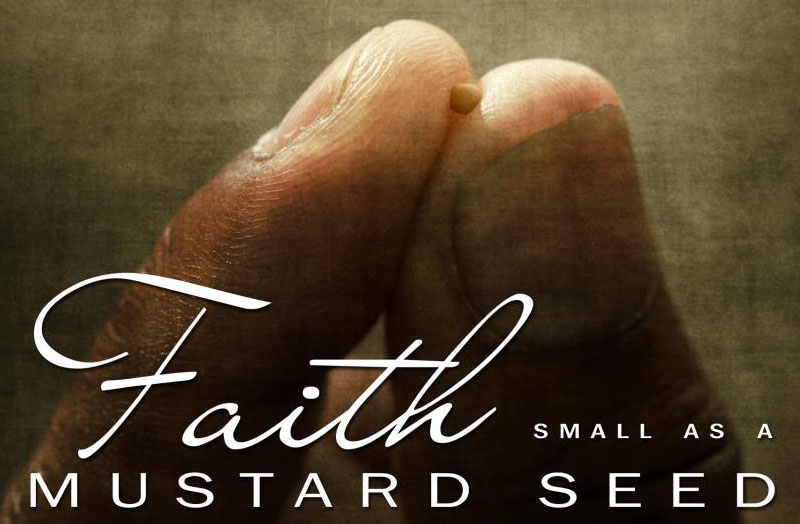
Mustard Seed Faith
This past week we all received a just and well-deserved scolding from a sixteen-year-old girl from Sweden. Greta Thumberg at the United Nations Climate Action Summit.
This is all wrong. I shouldn’t be up here. I
should be back in school on the other side of the ocean. Yet you all come to us
young people for hope. How dare you?
You have stolen my dreams and my childhood with your empty words. And yet I’m
one of the lucky ones. People are suffering, people are dying, entire
ecosystems are collapsing. We are at the beginning of a mass extinction, and
you can only talk about money and fairy tales of eternal economic growth. How
dare you?[1]
Her warning is no different in kind than that of the prophet Habakkuk. He castigates a political leadership that has distorted justice and perpetrated violence upon the land. And for this reason the Chaldeans, the predatory nation to the north shall be God’s rod of chastisement. Swift and terrible, they descend on Israel.
Their horses are swifter than leopards, more fierce than the evening wolves; their horsemen press proudly on…They come for violence; terror of them goes before them. They gather captives like sand. At kings they scoff, and of rulers they make sport. (vv. 1:6-10).
Every bit as urgent and as terrible as Habakkuk’s warning, Greta does not mince words in her message to the leaders of our day.
You are failing us but the young people are starting to understand your betrayal. The eyes of all future generations are upon you. And if you choose to fail us, I say we will never forgive you. We will not let you get away with this. Right here and right now is where we draw the line.[2]
To reinforce Greta’s message, millions upon millions of young people and their friends and parents poured out into the streets in cities all around the globe. Here in Claremont many gathered on Foothill and Indian Hill to sound the alarm. To warn our politicians that the time for empty words and half measures is over.
The science is clear. More than clear, as we celebrated this past week the patron saint of Mother Earth – St. Francis. Already we are in the middle of the Sixth Extinction, as many scientists refer to the great die-off presently taking place around the world. America has lost one third of its birds. Some 2.9 billion birds.[3]
Our oceans are in peril. Acidification and ocean warming are proceeding at breakneck speed. We run the risk of killing off the very plankton that produces some fifty to seventy percent of all the earth’s oxygen — some current research estimates it at eighty percent. It’s not all trees that keep us alive, but little creatures in the trillions that we can’t even see with the naked eye.[4] That study is now almost ten years old. Has it gotten better in the meantime? I highly doubt it.
And on and on it goes. We have really fouled our nest.
So, what to do? We might dismiss and ridicule such folks like Greta Thunberg and the scientists. Fake news. Nothing to see here, folks. Just move along. Or try vituperation as did our president on Twitter: “disturbingly redolent of a victim of a Maoist ‘re-education’ camp.” Or like Laura Ingraham we can label Greta and her companions the pathetic victims of “climate hysteria.” But no amount of ridicule will make this problem go away.
Or we can resort to complacent, magical theology, throw up our hands and proclaim that it’s now all in God’s hands. There’s nothing we can do. That option reminds me of a story of a country preacher walking along a dirt road when he spotted a farmer out in his field. He hadn’t seen this guy in church since he’d been there. He motioned the farmer over and noted that this was a mighty fine farm the fellow had. “If I had a farm like that, I come to church and let God know how thankful I was.” “Well, Sonny,” drawled the farmer, “I want to tell you — it certainly didn’t look like this when God had it all by himself.”
When it comes to creation care, some stewardship activity is required on our part. Further, as God did not poison the oceans or heat up the place, why should God take the rap for it? God didn’t do this. No, it is not all in God’s hands.
Peter W. Marty proposes another consideration. Repentance and restitution.[5]
The other day he was surprised to receive a letter from his seventh-grade science teacher. He hadn’t thought about Mr. Erickson in almost fifty years. Included was an old photograph of the Amateur Radio Club with a few of its members. There were the club officers in the front row with Mr. Erickson and off to the side in the back was a kid named Eric. Eric was physically disabled with few social skills. He had halting speech and a definite limp. Needless to say, Eric was the laughing stock of his classmates. Enthusiastic, but just not fitting in.
Eric was on the receiving end of ridicule and insults. Classmates lobbed nasty names at him and pushed textbooks from his arms. They dumped his milk at lunch when he turned his back. A few kids were practiced at bumping into him as he carried his food tray. If he swatted back at those who teased him, they only bullied more. This wasn’t just a small group of hooligans; it was a whole cadre of outwardly pleasant middle schoolers.[6]
As memories came flooding back, the most painful of all was the recollection that he had done absolutely nothing to stand up for Eric. Yes, he sat with him occasionally and helped pick up the things the other boys knocked from his hands. But Peter did nothing to really include Eric. He never spoke up. He never admonished those cruel classmates. He never invited Eric to the cool kids table. As he admits, his moral compass was frozen. No compassion here.
Looking back on all those years, Peter realizes that there is no real way he can make his repentance meaningful in anyway to Eric. Too much time has past and he has no idea what ever became of Eric. So how does one make restitution at this late date?
Peter concludes that perhaps there is no real way to atone for past wrongs and shameful behavior. But that doesn’t mean we must just wallow in the sins of our past.
Confession can deepen compassion. It can instill a greater kindness and promote understanding and empathy. It can be the beginning of serious midcourse correction. And that is what Greta would urge up on us adults in the room.
I used to scoff at what I took to be small, half-way measures to environmental remediation. How could changing out lightbulbs be restitution for all the damage we have wrought? What difference did recycling really make? I derisively called it “eco-pietism.”
Then one day, I read that changing lightbulbs for more efficient versions really was important. Not in the small amount of electricity saved and the less coal burned to produce that electricity. No! Changing out lightbulbs and other small actions was often the beginning for most people of a serious midcourse correction. It led to other things – like walking more and riding one’s bike for local errands – taking the Metrolink into L.A. instead of sitting for hours in exhaust fumes on the 10 Freeway – joining a group like Citizens’ Climate Lobby or 350.org. Changing that lightbulb, for many people, was a first step to an environmental sensitivity that could build the political will for change. Repentance does not mean feeling sorry for past misdeeds. It means turning around and amending your ways.
Like the Chaldean horsemen with rapier edged swords, CLIMATE CATASTRPHE will soon be upon us. Few, if no prisoners will be taken. Just ask the Pacific Islanders or the farmers of Bangladesh. Devastation will be swift and complete.
In a past issue of Time magazine, Bill McKibben, the prominent writer on the threat that global warming portends, lays out a possible alternative future to impending disaster.[7] In his piece, Bill writes as if from the year 2050. He lays out a somewhat hopeful scenario. Yes, we will still have to take our lumps for our past foolishness and inaction. But he describes a future that, though tough, is livable.
My takeaway from his future world is that we will have survived by wising up and acting on what was easily done – the low hanging fruit. Doing a bit more of what many are already doing, only much, much more rapidly. We will have survived by educating ourselves and our children. We will have survived by electing leaders at all levels of government who understood the existential threat to our planet and who acted. No matter be they Republican or Democrat, the only qualification for office – were they willing to move on positive solutions. And do it quickly before it was too late.
Yes, Greta, there are sincere people in both parties willing to join forces. Citizens’ Climate Lobby has proved that. CCL’s tax — they call it a fee because politicians do not get to spend it — on carbon is a plan that both Republicans and Democrats have endorsed. It is a plan that reduces CO2, creates jobs, and does not grow the government. This fee is returned in its entirety back to the American people less a small fraction for administrative costs. Those at the bottom of the economic pile benefit the most – mainly because they consume less. No airplanes or yachts for them. No ten-thousand-square-foot McMansions for the destitute. So, of course, the poor will come out ahead. And if other nations cheat or refuse to tax their own carbon pollution, we can extract the tax at our shores. It can be calculated relatively easily. I’m sure Russia, China or India would rather collect the money themselves than have us do it – and keep it.
Mr. Habakkuk is correct in his warning of eminent danger. I do not believe that God sends invading armies to punish wayward nations – we’re perfectly capable of punishing ourselves. It’s called consequences. Warnings are a means of grace. They’re an opportunity to understand where our behavior is taking us, and to change. Bill McKibben is a hopeful prophet in that he lays out a plausible future.
Yes, we all have an impact on the planet. Every time we turn on the stove or fill up our gas tank, we impact the planet. Every time we board a plane. None of us is pure. Even Greta. But there are actions each one of us can each take. Change that lightbulb. But more than that, we can vote for political leadership that will allow us to take collective action on climate. Folks, the government is not some evil behemoth out there. It’s us. The “Deep State” is the Constitution.
With faith as big
as a mustard seed, we can move the climate mountain. Maybe not move sycamore trees, but with mustard
seed faith, you might be like that proverbial tree planted by a clear, ever-flowing
stream. A tree that bears its fruit in
due season, a tree that prospers in all seasons. And this is how we will save this earth, “our
island home.” Only needed is the mustard
seed faith that I can make a difference.
That you can make a difference. That
we can make a difference. Add water,
sunshine and love. Amen.
[1] https://www.youtube.com/watch?v=haewHZ8ubKA
[2] Ibid.
[3] Carl Zimmer, “Birds are Vanishing from North America, New York Times, September 19, 2019.
4 Lauren Morello, “Phytoplankton Population Drops 40 Percent Since 1950,” Scientific American, July 29, 2010.
[5] Peter W Marty, “Dealing with Past Sins,” Christian Century, September 25, 2019, p. 3.
[6] Ibid.
[7] Bill McKibben, “How we Survived Climate Change,” Time, September 23, 2019.
Preached at St. Francis Episcopal Mission Outreach, San Bernardino
Habakkuk, 1:1-4, 2:1-4; Psalm 37:1-10; 2 Timothy 1:1-14; Luke 17:5-10
Proper 22, Year C, October 6, 2019
The Rev. Dr. John C. Forney
Jerusalem, We Have a Problem

We have here one of the most problematic parables that Jesus was ever said to have uttered. It would have not been surprising, upon listing to this parable, for one of the disciples to have muttered, “Jerusalem, we have a problem.” This teaching is unacceptable. Completely! This is not the ethic of the Beloved Community.
The Parable of the Unjust Steward is so morally reprehensible that the gospel writer concludes it with a number of possible interpretations in an attempt to clean it up. Many of which are contradictory. Taken together the parable and the following commentary looks like the word salad of some politician as to why they were caught for what they were caught doing – a bunch of words strung together without any sense or meaning. Just words with no connection. A refrigerator magnet poem put up by your second grader.
This parable would seem to counsel the sort of behavior that Reuters recently reported as getting several top FEMA presidential appointees indicted from criminal wrong doing. The ethics of the swamp seem to be slowly permeating throughout all the ooze. From top to bottom.
To wit, Reuters reports that a top FEMA official overseeing the rebuilding of Puerto Rico along with several others has been indicted by a grand jury for taking kickbacks to rebuild Puerto Rico’s electrical grid after Hurricane Maria. Ahsha Tribble, who oversaw the reconstruction work for FEMA allegedly accepted gifts, including a forty-foot long catamaran boat and sack loads of money, to pressure the government of Puerto Rico to steer business to Donald Ellison and her benefactor’s firm, Cobra Acquisitions.
This, after a contract was previously jerked from a small company with only two employees in Montana – a company that had been awarded the contract to rebuild Puerto Rico’s entire grid. Can you imagine, an outfit with only two employees getting this contract? That would be like our administrative assistant Verity and I, strapping on equipment belts and just the two of us heading off to the devastation of Puerto Rico with nothing but billions of dollar bills in our pockets and absolutely no idea of which end of the wire to stick into the outlet. Tell me, what’s that story about, if not massive corruption. Just who’s benefiting somewhere out there in Montana? Certainly not the people of Puerto Rico. They’re still waiting for power in many places. Is that the sort of business ethics Jesus is promoting in this parable? The ethics of Eden’s snake?
And today, we hear that the leader of Ukraine is being pressured to turn over dirt on a potential political opponent in our upcoming 2020 election.
Where does it end? In the mire of this cesspool it would seem that everything we Americans hold dear is for sale to the highest bidder. Any end justifies any means. Maybe the hope is that the American people will just tire of the so much corruption and simply tune out. Friends, we do that at the peril of our enduring values. We do that in betrayal of what Americans have lived and died for. I can’t believe that this is where Jesus’ teaching wants to take us. What??? Rot is good?
Listen to Amos’s counsel: Woe to those who ask when shall the Sabbath be over that we can make hay? When we can jigger the weights and tweak the scales. Make the ephah small and the shekel great? How soon can we deal deceitfully and grind the poor into dust? Money’s there for the making.
Amos warns that such a generation shall be cast adrift. They shall be utterly lost. To such a generation the Lord will send an intense hunger. “Behold, the days are coming,” says the Lord God, “When I will send a famine on the land; not a famine of bread, nor a thirst for water, but of hearing the words of the Lord. They shall wander from sea to sea, and from north to east; they shall run to and fro, to seek the word of the Lord, but they shall not find it.”[1]
The denizens of the swamp shall prevail. As Hobbs predicted, it will be a war of all against all. And Gordon Gekko rings the opening bell of Wall Street trading every single day, even on the Sabbath. That’s the dystopian future that derives from the business ethic of the Unjust Steward. Jesus, is this your counsel?
These are consequences for a generation that has lost its mooring, that has lost its soul. They are not like a tree planted by a living stream with deep roots, but like the chaff which the wind quickly blows to the four corners of the earth.
Is this the business ethic Jesus is recommending to his followers? If this is the course of action Jesus was suggesting through this story, it has certainly taken hold in our time with a vengeance. In such a society no institution is exempt from the seeping mire. A parent with a wad of cash can buy admittance to the most prestigious schools in the nation. Bankers cheat their customers with fake accounts they concoct out of thin air in the middle of the night. Even the church is not exempt. We, too, are a very human community not exempt from temptation and malfeasance. However, I can assure you that here at St. Francis we have no golden faucets or a huge bank account stashed away.
No wonder the gospel writer was so perplexed. No wonder Luke was hunting for any rational explanation for this parable.
It happened that I was sitting at lunch last Thursday at Pilgrim Place with a noted biblical scholar. I told Dennis what the upcoming lectionary selection from Luke was, and how on earth was the preacher to make any sense of the Parable of the Unjust Steward? Was Jesus commending the ethics of a snake like Bernie Madoff to his followers? Or was something else going on that I was missing? Please, Dennis, give the preacher some help here!
Dennis suggested that there was indeed another way of understanding this problematic story. Perhaps Jesus was telling his hearers that they should be just as wise and artful in doing good as those steeped in the corrupt ways of the world. We were not to do as the Unjust Steward but were to be just as clever as he in building the Beloved Community.
Lift each other up with the same determination and the same foresight. Not for evil, but to a different end. Be wickedly smart in doing good, just as smart as that crooked steward.
Well, that makes sense. Such sentiment warms the heart. Much better sense than that Jesus would be counseling us to loot, steal and cheat. And sink into the mire of the swamp.
Listen to the wisdom of our biblical heritage: “Choose life that you and your children may live.” And as the writer of 1 Timothy urges, we should commend all in prayer, even the vipers of the swamp, that “…we may lead a quiet and peaceable life, godly and respectful in every way.” Despite all evidence to the contrary, we must hold out for the possibility of redemption – even for ourselves.
Yes, let us be adroit and canny in doing good. Let us be persistent in such things as compassion. We’re talking about patience, kindness, generosity, faithfulness, gentleness – the fruit of the Spirit. The attitudes that make for life. It’s the “attitude of gratitude,” as they say in the twelve-step movement.
And where does such a moral compass lead? Here’s where such gifts of the Spirit lead us. It’s a story I came across scrolling down through the AOL news one morning last week. It is about a young, sixteen-year old high school girl named Whitney Kropp.
Whitney has always been a fairly quiet girl, usually sitting in the back. She wasn’t known for having many friends, and her family came from fairly modest means. They were certainly not among the movers and shakers in their Michigan community.
Well, some of the school bullies — girls of the so-called “in” clique, as a prank, decided to put forth Whitney’s name for homecoming queen. What a joke, they thought it would be, on such a nothing girl who wouldn’t have had a prayer for that honor. Yuck it up, ladies. Lots of fun at a nice person’s expense. Of course, no one told Whitney.
Well, it turned out, the joke was on them.
As you can imagine, Whitney was flattered. Flabbergasted, really. Could it be that, after all those years of being the quiet girl in the background, high school life was finally opening up for her? Maybe she wasn’t the ugly duckling after all.
Whitney soon became suspicious when, after the homecoming court was announced and she had heard her name over the speaker, that she happened to glance over at a group of kids laughing their heads off. She noticed the group of the soch girls – you know the ones – the snooty, moneyed girls who think they’re better than everyone else — giggling and pointing at her.
However, she decided to ignore this. Just pay no attention. They’re of no account. On the day of the announcement Whitney couldn’t wait to tell her family and friends. One of her friends posted the news on Facebook.
As Whitney didn’t fit in well with her classmates, it began to make sense to her when she discovered that her nomination had been a cruel joke. It was the work of this little group of school bullies. To make matters worse, she discovered that many in her school had been in on the joke.
Whitney was devastated, and her mind went to some very dark, destructive thoughts. In her depression she even contemplated suicide. She also discovered that one boy so did not want to be associated with her that he had rejected a nomination to homecoming court. You can imagine how the news hit this vulnerable, young girl! She began to feel like SHE was nothing but a big joke. She didn’t belong.
When she finally mustered the courage to tell her family, of course, they were devastated. But they encouraged their daughter to attend the homecoming game anyway. It wasn’t going to be easy for this fragile girl whose confidence had been completely shaken, but they would have her back. Myself? I think I would have hidden in my closet and never come out. But Whitney’s family was strong and Whitney discovered an inner strength from their support. They would show these bullies what real family strength was.
Whitney’s sister started a Facebook group to support Whitney and inform the wider community what had happened. In a flash this group exploded to thousands as the story spread. And as community businesses learned of the recent events, they offered all sorts of support: shoes and a new dress fit for a queen, a complete makeover by a local hairdresser, a homecoming dinner and a limousine for a ride in style to her coronation.
That night as Whitney walked across the field at halftime, under the glare of stadium lights, escorted by her proud father, she was still nervous. And then she looked up. She saw hundreds of folks in the stands cheering her as they stood in her honor. They held signs and wore orange tee shirts to match her stunning, new, orange dress. And there were the news teams. Whitney, who had thought she was a big nothing, was overwhelmed by the awesome embrace of so, so many strangers who come out to honor her that night.
When being interviewed that evening by reporters, Whitney had a message for every girl in America, “The kids that are bullying you, do not let them bring you down. Stand up for what you believe in and go with your heart and go with our gut.”
This is what happens when an entire community excels in doing good, when a family is wise in the ways of social media and reaching out, every bit as creative as those who had intended evil. Just as clever as that Unjust Steward. Every bit as cunning as that proverbial serpent. Just as adroit as that reptile in its serpentine deceit, but this time, for doing good. And in the doing, God was most highly honored that evening.
Gospel faithfulness is life indeed. Whitney, her family, and entire community chose life. What some self-absorbed and inconsiderate classmates intended for evil, they chose for good.
Friends, that’s my take on this most problematic of parables. That’s my story and I’m sticking to it.
St. Paul reminds us that the gifts of the Spirit are love, joy, peace, patience, kindness, generosity, faithfulness, gentleness and self-control. Against such things there is no law.”[2]
That night, at the coronation of a radiant girl in a small, mid-western American town, all the gifts of the Spirit were let loose. They gushed forth like an ever-flowing stream of righteousness. Whitney and her clever Beloved Community chose life. Life abundant. Brimful and overflowing.
As songster Jim Manley writes: “Did somebody
say that you’d never be queen? Send them
our way and we’ll paint their nose green.”
Amen.
[1] Amos 8:12, the RSV.
[2] Galatians 5:22-23. RSV.
Preached at St. Francis Episcopal Mission Outreach, San Bernardino
Amos 6:1a, 4-7; Psalm 113; 1 Timothy 2:1-7; Luke 16:1-13
Proper 19, Year C, September 22, 2019
The Rev. Dr. John C. Forney
Missing

We have all lost something from time to time. I could sure identify with my dad this last month. I remember that we would scour his bedroom hunting for a lost hearing aid. The search would soon move into the bathroom, the kitchen and then encompass the entire house.
Well, on my last trip to West Virginia, when I was on my connecting flight from the Denver Airport, heading back home to Ontario International, I realized that one of my hearing aids was missing. The only thing I could think of was that I had been listening to a recorded book through my noise canceling headphones. While waiting for our flight back to Ontario, I had received a call and took off the earphone on one side. I must have pulled one of my hearing aid off in the process. Back home, when I asked the hearing app to find my hearing aid, it duly displayed it on a map of the Denver International Airport. Unfortunately, no one at the airport had found it.
To compound matters, it wasn’t but a few days later I lost the other one. At this point I was ready to have myself committed to our memory care unit. I shouldn’t be allowed out of the house with anything more expensive than a pencil or a paper towel. However, on Saturday Jai found it…in a bedsheet she was removing from the washing machine. Fortunately, grace abounds. Or maybe just dumb luck. When I installed a new battery, I couldn’t believe my good fortune. It worked. And is still working. And maybe it’s a bit cleaner. Maybe the grace is having such a wonderful wife who notices such things.
Of course, all of us have had much more serious losses. Like the time Jonathan and Christopher decided to go on an “Explore” late one afternoon. Behind our house in Petersburg, Alaska, it was all forest. It was only when we called them to dinner that we realized that they were nowhere to be found. As it became darker, our worry increased exponentially. A friend had come over for dinner. He, Jai and I were scouring the neighborhood and the forest behind the house. Finally, I spotted them coming back on the walking path that led from the airport into town. Fortunately, they had stayed together and were as relieved to see us as we them. I can’t even begin to describe our relief. I didn’t know whether to bawl them out for leaving like that or just to hug them and cry. We all had a very grateful dinner, a bit late, a bit cold. But the family was together.
Now this was serious loss. The kind that drives parents and friends out of their minds. I believe it must be as close as I can possibly imagine to the loss God must feel. The only worse loss I can imagine would be that of a kidnapped child or the loss so many experienced on 9/11.
When I see pictures of the aftermath of Hurricane Dorian’s devastation, I am dumbstruck. The section of the Bahamas called The Mud is where many undocumented Haitians had been living. It is a jumble of splintered wood and crushed cars and other debris. As far as the eye can see. It’s hard to see how any searchers can even move through that pile of splintered wood and twisted metal. The overpowering stench is witness to the many lives that must have been lost there — bodies that no one can get to until the water recedes. And those who managed to survive? They have no idea as to where their loved ones might be, or if they’re even still alive.
But we, the Land of the Free and Home of the Brave — we’re going to deny the stragglers from this hellish landscape entry into our country because they don’t have the proper papers? Please, pray tell me — where are these poor souls with nothing but the ragged, filthy clothes on their backs – just how are they to obtain get proper documentation?
God must be weeping a river of tears. That magnificent Lady who bids wayfarers welcome out there in New York harbor – who offers sanctuary to the tempest tossed, she must be sick with grief. A lot has died, not the least has been compassion. America is being lost. The Author of our sweet liberty must be so grievously hurt at what we have done with our promise. Like a distraught woman hunting for a lost coin, God searches in vain for a shred of decency in this Land of the Free and Home of the Brave.
Such overwhelming loss is numbing. Such loss blocks out any rational thought. We’re overwhelmed in shock. Unfortunately, one response to overwhelming loss is denial, or the resort to magical thinking.
The children of Israel, left behind at Mt. Saini completely lose it when Moses fails to return. They’re blaming Moses. “Why didn’t you just leave us out there to die in Egypt. Didn’t they have enough graves back there?” They’re blaming God. They decide, in the absence of Moses or God, to make their own god, a golden calf. Just like we are prone to look to magical thinking when faced with disaster and loss. Just as I resorted to irrational thought when I lost my second hearing aid, hunting in places where I’d hunted before, where I knew it couldn’t possibly be. Magical thinking wouldn’t be too far back.
Like this poor woman seeking that coin, turning her house upside down, God is every bit as desperate and distressed at loss as are we. How do we know that? We know it because the God dwells within the human breast that heaves with such great sobs at loss and ruination is the same God who is as near to us as our beating hearts and the fleeting thought of mind. Our anguish is God’s. Whether it’s the loss of a child who’s wandered off or a loved one who’s drowned in the floodwaters of a storm. This very one and same God who bears up our grief and cradles us in despair. Like a shepherd seeking out a lost sheep, I imagine God searches through the wreckage of our loss.
This very same God is equally distressed when an entire people, an entire nation, has lost its way. Lamentation is real. God crying out from the distress of our people. I fear we have desperately lost our way as a nation. Is tragically divided. Our farmers are committing suicide at unprecedented rates. The average family is barely making it anymore. We bury our pain in addiction.
In the previous Atlantic Magazine, there was an incredible article on how some of our biggest businesses and their CEOs are gaming the system. If anything is to destroy our capitalist system, it won’t be the likes of Bernie Sanders or Elizabeth Warren, or my son and his girlfriend who are Democratic Socialists. It will be the greed of the so-called captains of industry themselves. I’m not talking about the Mom and Pop Grocery, but the huge multinational corporations that, though once American, have no loyalty to their workers here. This outlandish, self-serving greed must surely cause a flood of tears to flow from the divine Author of our liberty. We have lost our way. God’s heart surely aches.
Here’s the story. It’s not sexy. It’s pretty into-the-weeds economics. It’s junk-yard-dog ugly. It’s not a story that would spark not a bit of interest from most of us. Its far from our minds as we are concerned with getting to our usual morning chores, the stuff you have to do to get out of the house.
The money we worry about is that little bit in our bank account that will, hopefully, get us through to the end of the month. But as I’ve said, while we may vote at best once every two years, money votes every day. BIG MONEY, that is. Corporate money.
Someone has begun to look into the huge windfall many large companies have reaped from the recent tax till. Oodles and oodles. Take Home Depot, for instance. Well, did their CEO, Craig Menear, share any of that bounty with those “what brung him to the dance?” Did he give his employees any well-deserved raise? Did Home Depot lower prices? Did they build more factories and hire workers? No. None of these.
They bought back their own company’s stock. So why should we care? Let me connect the dots for us. As a result of this buyback, the remaining shares on the market became worth more, much more it turns out. There were now far fewer of them. Basis econ 101. The less there is of something, the more valuable it becomes. Including the shares owned by a CEO, who often gets a big – a very big – chunk of their salary in company stock.
Yeah, I bet you didn’t expect to get an econ lesson this morning. In fact, one of the most frequent themes in scripture is the wise and just use of wealth and privilege.
Soooooo. To continue…This president and CEO of Home Depot, Craig Menear, went off on a buying spree of their own Home Depot stock – four billion dollars’ worth – 35 percent of all outstanding shares! President Meanear’s stock, in the process, became worth a whole extra bunch and he promptly sold a lot and netted a nice $18 million. Not bad for a day’s work. To reward him, Home Depot turned around and gave him another gift of stock, over 24 thousand shares. On the spot, he unloaded another batch of that payout. And, KA-CHING! He walked away with somewhere around $4.5 million. It’s amazing what a little bit of hard work will get a fellow. I’m sure president Menear’s worth every cent of it.
But what about his workers? You know, the helpful folks with those orange aprons who are there to assist you in finding things and will check you out at the register? What about these workers making only $23,000 a year? What if that money, instead of being used to line the pockets of the very wealthy, had been used to provide a living wage for the folks what make Home Depot happen every single day? The folks who struggle to pay rent and scrape together car payments. Those who live on the ragged edge? The ones who collect up the shopping carts we leave strewn about the parking lot? What about them? The Roosevelt Institute and the National Employment Law Project have calculated that every Home Depot worker would have an additional $18,000 a year in their paycheck IF Home Depot had made a different decision about their pile of cash. IF – such a small word and such a big potential difference.
But the story doesn’t stop there. One more dot to connect. What do these folks do with this ill-gotten lucre. They use it to corrupt our political system. They invest that money in politicians at all levels of government. And that is why the stuff the ordinary voter cares about never happens. America, you are better than this.
As our democracy is increasingly financialized, I’m sure the Author of liberty must weep most grievously. The idea of America is on the verge of being lost. Sold out to the highest bidder. We should all weep. With such disparity of opportunity, we have indeed lost our way. Our workers are shoveled into impoverishment. Addiction rates continue to climb. God is saying to each one of us, “America, you are better than this.”
You ask, but what can we do? Well, we can do something. It may not be much, but if a lot of folks do it, it adds up to a lot. We can vote for leaders with integrity. Leaders who have a record of serving the public interest and not their own pocketbook. We can pay attention. Democracy is not a spectator sport!
It’s time for all of us, for this nation to be WOKE. It’s Mend-Thine-Every-Flaw time.
Look how we got through another time of despair in our nation’s past. People pulled together. Churches and voluntary organizations pitched in. We had political leadership. And the Greatest Generation did get us through the Great Depression.
Different folks learned different lessons from that searing national experience. My dad learned that a person could never have enough. So, he saved up a huge pile of money. My mom’s parents learned that, even if you weren’t personally struggling – Grandpa had a safe, pretty high-up job in the Lodi Post Office – there were a lot of desperate folks out there on the verge of starvation. Give a care.
I heard the story growing up of how every evening Grandma would make an extra amount for dinner. She would set it in a big pot with paper dishes and spoons for the destitute who wandered through their back alleyway. It wasn’t much, but she did what she could. Grandpa, like thousands others, planted a Victory Garden during and gave away vegetables.
Hundreds and thousands of Americans did similar acts of charity all across the country. Churches of every stripe and denomination pitched in. Synagogues and mosques as well. Grace abounded for the distressed. The nation voted for political leadership that devised national recovery programs, putting its idled men back to work.
It is no coincidence that the leadership — that FDR — came right out of the of the church. The Episcopal Church. FDR served on the vestry, the ruling board of the congregation, and even through the duration of that war, he never missed a single meeting. Not one! And many of our other leaders in both the administration and in Congress exercised the same bold leadership reflecting the values they had learned in Sunday school or Sabbath school.
By the grace of God, a lost nation found its way. Yes, some would argue that it also took the tragedy of a world at war to get the nation moving again. But in the progress, we stood up against some of the most murderous regimes history has known and liberated a world.
All is lost. All is found. Yes, we can do this again. We can find our moral compass. Again, arms are strong.
How does Jesus’ story of the Lost Coin end? The story becomes the celebration not of one woman, but the joyful victory of her entire community. Ultimately, it’s a story about us, not me. “See, I set before you the ways of life and death. Choose life, that you and your children may live.” That your nation may live and flourish.
It is the inner urge to tirelessly seek what has been lost. – just as my son some time ago scoured his Portland neighborhood when their orange striped cat Morris didn’t come home one night. For days, he walked the neighborhood calling. He and Rachael truly mourned that beloved cat’s loss. At odd moments they would imagine they had heard his license tags jingling, when it was only a passing kid on a skateboard or maybe a car going by. That is surely how the heart of God must ache for us when we’ve lost our way.
God plants within each one of us the restless need for restoration and connection. We feel that painful sense of loss when one is missing around the table at dinner, even if it’s only Morris the Cat. God seeks us out when we’ve gone astray with the same dogged (excuse the poor choice of words, Morris, wherever you may be) persistence, as of a woman scouring her home for what is missing — Just as God seeks out a crooked tax collector and remorseful thief on a cross at Golgotha. Or a repentant member of the NIMBY crowd.
In the sentiment of that beloved song, “His eye is on the sparrow and I know He watches over me.” He watches over each and every one of us frail creatures, ever searching us out. And His – Her eye — is over our very endangered democracy. Yes, His eye is on our good, old US of A. AND on this frail and dying planet, our island home. Dear Lord, give us eyes to seek out the Right and the courage to do the Right. Amen.
Preached at St. Francis Episcopal Mission Outreach, San Bernardino
Exodus 32:7-14; Psalm 146; 1 Timothy 1:12-17; Luke 15:1-10
Proper 19, Year C, September 15, 2019
The Rev. Dr. John C. Forney
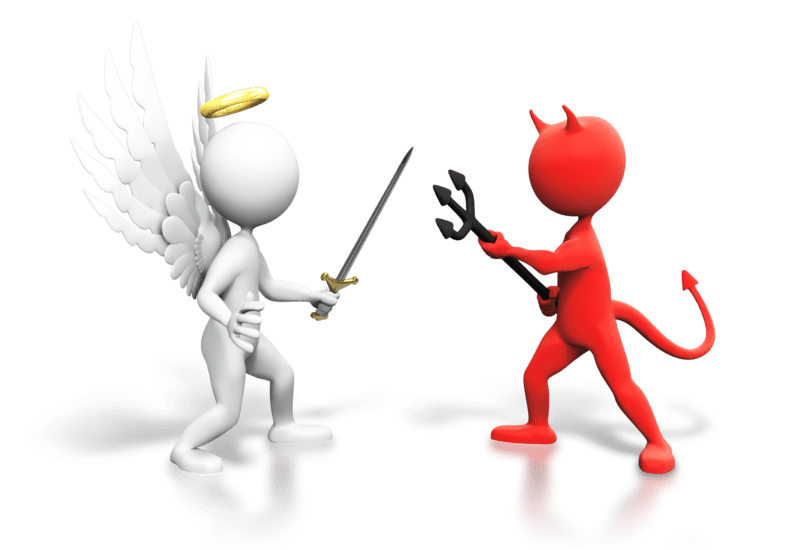
LIFE AND GOOD, DEATH AND EVIL
There’s an old freedom song from the 60s we used to sing. Sometimes, still, I hear it today. When I read todays passage from Luke’s gospel, that old song bubbled right up in my mind.
Ain't gonna let nobody turn me ‘round,

Turn me round, turn me ‘round.

Ain't gonna let nobody, turn me ‘round.

I'm gonna keep on a walkin', keep on a talkin',

Walkin' into freedom land.
Those were heady days when we thought America was on the verge of a new birth of freedom. Working in Los Angeles, our church was right smack dab in the middle of that birthing. The Pico Union Neighborhood was alive with bustle and we had our eyes on the prize. If you wanted slacker Christianity, if you wanted your ease in Zion, there would be no rest for you here. Yes, you had to let go of the old stuff. Let go of old attitudes. Let go of old priorities. Our parents couldn’t understand why we would ever want to work in such a vermin, such a gang, such a poverty infected neighborhood. All who worked at our church had some version of that discussion with parents. Yet we kept on marchin, kept on talking all the way into a new freedom land.
And because that congregation in very real ways worked to live up to both the mandate and the promise of the gospel, it was a most joyful place. Most every Sunday church would conclude with the music group and choir rocking out to that song from the musical “Hair.” “Let the sun shine in, let the sun shine in, the sun shine in.” And off we’d all go, energized and focused for another week. And we made a difference.
I can still remember that old Latina who one evening a week taught some of the neighborhood girls cooking. Many of these girls came from homes where mothers were sometimes working two and three jobs just to keep it together. So, we taught cooking. But that wise old Latina taught much more than cooking. She held out the promise of a future for these girls. If nothing else, they picked up the message that their whole existence didn’t depend on any boyfriend. These girls held the future of being women of promise. You want to be a teacher? You want to be a nurse or a doctor? You want to be a sheriff? Follow your dream. The last thing you need right now is to have some parasite boyfriend get you pregnant and then disappear. You need to graduate. You need education.
That is the same singlemindedness Jesus urges in today’s gospel reading.
My wife thinks I sometimes exaggerate, blow up a story for dramatic effect. Yeah, I can sympathize with poor Joe Biden. Sometimes the story gets away from those of us who make our living with our mouths.
But we don’t hold a candle to Jesus on this account. He was the master of hyperbole, exaggeration for dramatic effect. As we move through the long green season of the church year, more and more the lessons focus on the “Cost of Discipleship.” “If anyone comes to me and does not hate his own father and mother and wife and children and brothers and sisters, yes, even his own life, he cannot be my disciple.” Tough stuff indeed.
This is an echo of the summons from Deuteronomy. As the community of faith gathered at the Jordan River, about to enter the so-called Promised Land, they were instructed by Moses, “See, I have set before you this day life and good, death and evil…that I have set before you life and death, blessing and curse; therefore choose life…that you and your descendants may live, loving the Lord your God…” Choose life. Stay in school. Get your education. Graduate. Become that doctor, that teacher.
This stark choice is front and center in the two antithetical life modalities the writer lays out in the first Psalm. “Blessed are they who have not walked in the counsel of the wicked, nor lingered in the way of sinners, nor sat in the seats of the scoffers…They are like trees planted by streams of water.” “It is not so with the wicked, they are like chaff which the wind blows away.” Choose this day, life or death. Keep your eyes on the prize. Marching into Freedom Land.
Talk about a sharp morality tale! The ways of healthy religion are the ways that lead to life abundant. They lead to a life worth living. And they require a conscious choice. A decision. A decision for a life of sisterhood, brotherhood. A life where all are invited to the table.
The ways of the world are not the ways of the Gospel. Au contraire, Gordon Gekko, greed is NOT good. Do not leave your chances to the Snake. With the Snake, there’s absolutely no future for any Garden of Eden. The way of the Snake is paved-over cities choked with pollution and rates of childhood asthma that are stratospheric. Greed is definitely NOT good. Ask the homeless family living in a tent on Wilshire Blvd. who couldn’t make the last increase in rent.
We all, each and every day, have a choice set before us. The ways of life and the ways of death. Each and every day America stands before the same fateful choice. Will we learn to live together as brothers and sisters? Or will we perish as fools – and take the planet with us?
The ways of Jesus’ gospel require self-transcendence. As the kids would say, “Get over yourself.” Survival is not an individual project. It is a “we” project.
The other morning, I heard our back doorbell ring. There was my neighbor Sue with some disturbing news. She was there to inform me that I had a dead rat out on our side lawn. I made a facile quip as to which political party this rat might have belonged to before recalling a book I am currently reading, Love Your Enemies.[1]
This is the sort of book I would normally pass over with hardly a second glance. But as how I had mentioned several Sundays ago from the pulpit that this Jesus stuff was a pretty difficult challenge – like loving your enemies – I thought I should at least pick it up and see what Mr. Brooks had to say.
Then I noted on the back cover that it had been given a promo by a couple of folks I respected: David Axelrod and Deepak Chopra. What I discovered was a book which, if put into practice, could help heal our national conversation across the political divide. This approach seemed to be an echo of what Jesus had in mind. It could be a choice for life over evil and death. I picked it up and kept reading. The author got me with a story, and what a story!
He begins the book by relating an event at a Trump rally. The usual battle lines were drawn up. On one side, the folks with the red MAGA hats and on the other, a group from Black Lives Matter.
As the two sides traded insults and curses the situation grew more combustible. Hawk Newsome had recently arrived nursing an injury from Charlottesville, Virginia. A white supremist had thrown a brick which had hit him in the face. Hawk and his team were ready for battle. He approached the Trump supporters with the same distain he had held for those white nationalists and neo-Nazis in Charlottesville. The Trump supporters responded in kind.
Then the most amazing thing happened. The leader of the Trump rally, Tommy Hodges, invited Hawk Newsome onto the stage. “We’re going to give you two minutes of our platform to put your message out.” Tommy added, that Hawk shouldn’t be concerned with whether the Trump supporters agreed or disagreed with his message, “It’s the fact that you have a right to have the message.”
As Hawk accepted the invitation and mounted the stage with no little trepidation, he flashed back to what a little old white lady had told him as he had been prepared to throw a rock in Charlottesville, “Your mouth is your most powerful weapon. You don’t need anything but that.” As a Christian, Hawk said a brief, silent prayer as he took the mic. In that moment a voice in his heart told him to just let them know who he was.
“My name is Hawk Newsome. I am the president of Black Lives Matter New York. I am an American.”
He had the crowd’s attention, and he continued. “And the beauty of America is that when you see something broken in your country, you can mobilize to fix it,” he said.
To his utter surprise, the crowd burst into applause. Emboldened, he said, “So you ask why there’s a Black Lives Matter? Because you can watch a black man die and be choked to death on television and nothing happened. We need to address that.”
“That was a criminal,” someone yelled, as boos started emanating from the crowd.
Hawk pressed on. “We’re not anti-cop.”
“Yes you are!” someone yelled.
“We’re anti-bad cop,” Hawk countered. “we say if a cop is bad, he needs to get fired like a bad plumber, like a bad lawyer, like a bad…politician.”
At this the crowd began cheering again.
These days, there’s nothing political ralliers hate more than bad politicians.
“I said that I am an American. Secondly, I am a Christian,” Hawk said, once again connecting with his audience. “We don’t want handouts. We don’t want anything that’s yours. We want our God-given right to freedom, liberty, and the pursuit of happiness.”
The crowd erupted in cheers.
Then someone shouted, “All lives matter!”
“You’re right, my brother, you’re right. You are so right,” Hawk said. “All lives matter, right? But when a black life is lost, we get no justice. That is why we say black lives matter.”
As Hawk prepared to step off the stage, his two minutes over, he left the crowd with one passing thought, “Listen, I want to leave you with this, and I’m gone. If we really want to make America great, we do it together.”
The crowd roared.
To the amazement of many, including Hawk himself, he was mobbed by well-wishers who embraced him. A member of a four-thousand-man militia upon noticing that Hawk had cut himself took out a medical aid packet and began bandaging up his finger. Another fellow from a group called Bikers for Trump approached Hawk and told him, “Your speech was amazing. I’d be honored if you meet my son.” The biker introduced his son Jacob and asked Hawk to pick up the boy so they could have a picture together. [2]
Yes, it cost Hawk something. Some in his group called him a “KKK-loving Trump supporter.” Another said what he did was treasonous. It costs us all something, it might cost us to give up what Arthur Brooks calls our “addiction to hate.” But, oh, the benefit! The video of the event on social media has had over fifty-seven million views. Look at it yourself. What does Democracy look like? This is what Democracy looks like. What does the Gospel look like? You got it!
Keep on marching. Keep on talking. Marching on to Freedom Land. No turning back here!
This Jesus stuff is tough. But it is redemptive. Choose Life, indeed! Now, before you think I’ve gotten all sappy and am ignoring the real values that do, in fact, matter – yes stay strong and hold fast to those values – AND…and, we can also have political discourse that doesn’t demonize and is not contemptuous of the opponent.
Yes, lets struggle together. Let us fight it out at the ballot box and in public hearings. But as Hawk said, let’s remember that if we are to make America great, we will have to do it together. It’s a “we” project.
And should we get a bit raucous and rambunctious, let’s pray God sends us the stern John Bercow, Speaker of the British House of Commons, crying above the bedlam, “Ohduhr, Ohduhr. Ohduhr.” You can see it all on YouTube.[3] Marvelous to behold.
If our nation pursues the path of respect, of truth, of decency, of fairness, we will have chosen life. Might that sacred Tree of Liberty be planted by an ever-flowing stream of righteousness. Choose life and goodness.
Now, in the past it was said that the Tree of Liberty was watered by the blood of the patriots and tyrants. I say, let the Tree of Liberty be watered by the deeds of the righteous. Let it be watered by the faithfulness of all those who have kept their eyes on the prize. Let it be watered by a vision of unity where all are invited to the feast. All of us — walking into Freedom Land.
Those wonderful women in our midst working to prepare a food pantry – they’re taking us all by the hand. Walking into Freedom Land. The faithful who prepare each Sunday, week after week, that our worship might be an act of praise and recommitment – they’re taking us all by the hand – walking into Freedom Land.
Yes, those folks who put their pledge without fail into the collection plate. They keep the promise alive that St. Francis might remain a bold expression of God’s gracious will and abundance here in this little corner of San Bernardino. Yes, indeed – they’re taking us all by the hand — Walking into Freedom Land.
The faithful six who month after month make the trip into Los Angeles to be a part of the diocesan Episcopal Enterprise Academy, dreaming the vision of a House of Hope – San Bernardino – they’re taking us all by the hand — Walking into Freedom Land.
Let
our motto at St. Francis ever be: “Whoever you are, and wherever you are on
your journey of faith, there’s a place for you here. Come right in. Sit right down. ‘Cause… ain’t gonna let nobody turn us around. Turn us around. Turn us around. Aint
gonna let nobody turn us around. Keep on
walkin’. Keep on talkin’. Walkin’ into Freedom Land. Amen.
[1] Arthur Brooks, Love Your Enemies (New York: Broadside Books, 2019).
[2] Ibid, 5-6.
[3] https://www.youtube.com/watch?v=EY7EIZl4raY
Preached at St. Francis Episcopal Mission Outreach, San Bernardino
Deuteronomy 30:15-20; Psalm 1; Philemon 1-21;
Luke 14:25-33
Proper 18, Year C, September 8, 2019
The Rev. Dr. John C. Forney
Strive to Enter the Narrow Gate

Strive to enter the narrow gate. That sounds like a lot of work. Actual effort. I must confess that my early college career was not stellar by any sense of the word. I can still hear my kindly German teacher, Frau Bluske, telling me in front of the entire class one afternoon after I had to admit that I hadn’t done my homework, “Herr Forney, wenn sie nicht studieren, sie will durchfallen.” Translation: “Mr. Forney, if you don’t study, you will flunk.” The narrow door was a much more difficult operation than hanging with the guys the night before in the pool hall drinking a beer. Enter the narrow gate, indeed!
And I still shudder when I remember that physics exam on electricity. The only question I could answer with any certainty was the one that asked, “name.” Not my finest moment.
Unfortunately, I wasn’t much better at pool.
The reality is, that if one’s Christian faith is to amount to anything, it takes a bit of doing. Sometimes this Jesus stuff is downright hard. And the results are not always going to be what we had in mind. There’s no guarantee of success.
It has not been that long ago that the Episcopal Church had a bit of a reputation for being the “party church.” You’ve probably heard the line: Where two or three Episcopalians are gathered together, there’s usually a fifth. We have been a part of that “wide door” the world holds open. Hopefully, that’s not so much the case anymore – back in the day when our church was known as the “status church” of the upper classes.
To the extent that we come to church “for solace only and not for renewal,” as the communion prayer puts it, we may be coming to just a party church. Church as entertainment. And all we will get is junk food religion. Lots of sugar and calories but no nutrition. As the grandma in the Wendy’s commercial demanded to know, “Where’s the beef?”
If we’re prone to take our ease in Zion, today we get a warning shot across the bow from our Lord. When asked who would be saved, Jesus answers, “Strive to enter by the narrow door; for many, I tell you, will seek to enter and will not be able. When once the householder has risen up and shut the door, you will begin to stand outside and to knock at the door, saying ‘Lord, open to us.’ He will answer you, ‘I do not know where you come from.’”
That the road through the narrow door is difficult and the path ahead is unclear, is no excuse. Jesus didn’t give up, and his narrow door led to the cross. One friend said about extravagant discipleship, “There’s two possibilities. There’s success and there’s a learning experience.”
Now, some are wont to say upon hearing such dyspeptic talk, “Well, I don’t agree. The real Jesus would never say anything like that. I come to church for comfort, not to be riled up.” I don’t remember Jesus promising comfort.
Don’t discount what Bonhoeffer calls “the cost of discipleship.” And what was all this talk we had last week about Jesus bringing a sword. Pretty tough stuff. His message is sure to cause great consternation. It asks of us something difficult like loving our enemies and forgiveness. It is about struggle, it’s about spiritual warfare, if you will. The ethic of the Jesus Movement is not the ethic of the world.
My friend Wesley knows that he needs a big kick in the pants at times. He needs challenge. His frequent prayer upon entering the church door is, “Jesus, dropkick me through the goal posts of life.” He wants the whole gospel, not fast food spirituality. Where’s the narrow door. Point me there, he asks of the preacher.
I suspect that Jesus was a pretty radical fellow who put his marker very far out there, knowing that we couldn’t possibly reach it in all likelihood. But we would enter into life abundant in the trying. We need such a holy goad because it’s so easy to get distracted by all the stuff out there which does not nourish.
Jesus might be sort of like my old chemistry professor. She was a tough old bird who told us all on that first day of class in that huge lecture hall to look at the person on either side of us, because by the time the course had finished, one of us wouldn’t be there. She was right. Talk about the narrow door!
Now, she didn’t want people to flunk out, but she knew that for those folks who didn’t keep step, who idled in the pool hall, that they would soon fall by the wayside. She was indeed right. Far less than one half the class was left by the time the final rolled by. I was hanging on by the skin of my teeth.
“Strive to enter at the narrow gate,” Jesus admonishes. It’s easy to get lost. Durchfallen doesn’t require much effort at all (remember Frau Bluske). As Dante writes in the opening pages of the Inferno:
Midway in the journey of our life
I came to myself in a dark wood,
For the straight way was lost…
How I came there I cannot really tell,
I was so full of sleep
when I forsook the one true way.
That the “true way” could so easily be lost on the road to the pool hall, I’m here to tell you. The world offers a plastic religion – all sorts of things that will make life worthwhile. Indeed, there are a jillion things out there that promise life abundant. If you only have the right car, the right trophy wife or husband, the right toothpaste, the right hair, or at my age, if you have any hair at all! And so much of this hype is aimed right at our youth and young adults.
One of my friends had a Porsche, another had a chopped and souped up Olds. The girl across the street got a new Thunderbird with those little porthole windows on the sides. But I was in teenage agony. I didn’t have a car. I had a hand-me-down 1950 Studebaker! You remember the ones of the early 50’s with the curved back window, so you really couldn’t tell whether the thing was going backwards or forwards. It had a chrome bullet nose and was sort of a pukey dark green. Even the name sounded horrible – like rutabaga, or cauliflower. Bleah! It’s a wonder they ever sold any of them.
My dad the dentist was the only one I ever knew who bought one, because it was cheap. Cheep! Not cool. Cheep. My dad didn’t understand cool. I don’t think most dentists do. Not another family in the entire neighborhood had one. So, it was a miracle I ever got any dates at all with that car. I was convinced that my whole career as a teenager was being severely stunted by this ugly car. No telling how many years I might have to spend in therapy working through the psychic damage. (Looking back on things, I did get a pretty good wife — but probably not because of the car.)
Now, as my hair has turned quite grey in my latter years (my wife says “white”), perhaps a bit of God’s wisdom has finally sunk in. “Strive to enter at the narrow door,” says our Lord. It will never be about the car, the toothpaste, or any of the rest of it. It is about a tradition that nourishes. It is about a God who redeems. Yes, even through the difficult sayings and hard lessons of life – God redeems. It is about a spirituality that is mature enough for the long haul.
Fortunately, I believe the party days are mostly bygone for our beloved Episcopal Church. The period of cultural captivity of our church has been slowly coming to an end. Reality check time.
When the church came out foursquare against the Vietnam War, it took on a tough issue. Just as it had over slavery. When the church came out for women’s ordination, it knew we would lose some folks. The same as for LGBT inclusion. Yes, God does love everyone! When we elected our first woman bishop…well, can you imagine the uproar in some quarters. And then a woman presiding bishop. Yes, there was hate mail.
I can still remember my friend Bob up in Sitka one day announcing, “Well, I finally figured out why God wanted us to have women priests.” Knowing Bob’s unrelenting opposition to women clergy, in amazement I asked, “Why’s that, Bob?” “To show us that it couldn’t possibly ever work!” he said, banging his fist on the desk. Yes, we lost members.
When you drove or walked up to church this morning, you surely didn’t see any “Golden Arches.” No junk food spirituality offered here. Here you get a meal here which lasts for the long haul. It is this same rich and deep Anglican spirituality that has nourished so many faithful souls who have gone on before. That’s what we’re about at St. Francis.
In the New York Times this week I came across an article about a nun, a doctor and a lawyer…now, now, I know. You’re thinking that this is leading to some bar joke…a nun, a doctor and a lawyer walked into a bar… Well, that’s not the case. Actually, it’s all about the narrow door.
What these three stalwart people did was to walk right into the face of big pharma, Purdue Pharma, to be exact — in Pennington Gap, Virginia. This Catholic nun, this doctor and this lawyer were present at the beginning of the opioid epidemic in Appalachia. In sounding the alarm, these three entered through a narrow door they hoped would prevent a lot of misery.
They inspired “a burst of local activism against Purdue Pharma, Oxycontin’s maker, that the company ultimately crushed.[1] Their failed effort was a missed opportunity to stem the onslaught of addiction to opioids and the drugs they quickly led to — fentanyl, heroin and methamphetamine.”
Sister Beth Davies had known an epidemic was on the way. She witnessed it’s unfolding in their little town of nineteen hundred people in the southwest corner of Virginia. The journalist covering the story, Berry Meier, had come to that part of Appalachia about twenty years ago. Out of the activism of Sister Davis, Dr. Van Zee, and Ms. Kobak, Barry Meier also witnessed the inception of the scourge. These three would become the central cast of the reporter’s book, Pain Killer: An Empire of Deceit and the Origin of America’s Opioid Epidemic.[2]
Dr. Zee urged Purdue to change the way it was marketing OxyContin but to no avail. He and the others launched a recall petition to the FDA to have the drug taken off the market. Purdue countered by threatening to publish a full-page ad in the local paper attacking the recall drive, and offered $100,000 to the group to drop the recall drive. They refused.
Things looked up when the Justice Department finally announced felony criminal indictments against Purdue Pharma and it’s three top executives. The charge? Deceptive marketing. Purdue said the stuff was harmless.
Victory was short lived. Department officials negotiated a plea deal under which the executives would cop to minor charges and no jail time. There would be no right of discovery. No chance to see all the emails documenting the nefarious plot to cover up the work of this addiction factory.
“In the years that followed, executives of other opioid makers and distributers kept shipping millions of addictive pain pills into towns like this one apparently without fear of serious penalties.”[3] Dr. Zee is convinced that had the Justice Department not reversed course, the outcome would have been completely different. Appalachia might have avoided so much needless death and misery. The malefactors would have been in prison.
Recently, Dr. Van Zee and Ms. Sue Ella Kobak flew to Oklahoma to testify in its lawsuit against Purdue. They continue the fight. Sr. Beth, standing outside a courtroom in the rain, still remembers her bitter disappointment in the Justice Department’s settlement of the case against Purdue. All three continue to insist that these pill-pushers face scrutiny and be held accountable for the untold lives they have ruined and the communities they have destroyed in Appalachia.
These three activists indeed entered through the narrow door of our criminal justice system. And though the door of justice was slammed in their faces, yet they persisted. The tide is changing. I hope they know the satisfaction of having alerted all of us to this disaster now facing America. I’m sure our Lord is saying, “Well done, good and faithful servants.” Indeed, strive to enter the reign of God through the narrow door.
When it comes time for me to lay my life down on God’s altar, I would like to be able to offer something like the work of those fearless Appalachian activists: Sr. Beth Davis, Counselor Sue Ella Kobak, and Dr. Van Zee. Oh, that our lives might be laid upon God’s altar, if only as a pale likeness of their gift.
That it might be said of each of us — as I
believe the Lord must regard the unblemished gift of a nun, a doctor and a lawyer
from Pennington Gap, Virginia — they have striven to enter at the narrow door,
and it has made – it still does make — all the difference in the world. Blessed are they indeed. Amen.
[1] Barry Meier, “Ruling Lost Chances to Stem the Opioid Crisis They Saw Coming,” The New York Times, August 19, 2019, p. A13.
[2] Barry Meier, Pain Killer: An Empire of Deceit and the Origin of America’s Opioid Epidemic (NewYork: Random House, 2003).
[3] Barry Meier, New York Times. op.cit.
Preached at St. Francis Episcopal Mission Outreach, San Bernardino
Isaiah 58:9b-14; Psalm 103:1-8; Hebrews12:18-29;
Luke 13:22-30
Proper 16, Year C, August 25, 2019
The Rev. Dr. John C. Forney
A Great Cloud of Witnesses

It has been said that the past is never past. Our history, for good or ill continues to live in and through us. When I was in the Army, stationed at Ft. Sam Houston in San Antonio, Texas, I discovered that my U.S. history teacher was greatly misinformed. I discovered that we, the North, didn’t win the Civil War, called by many locals the “War of Northern Aggression.” In fact, the Civil War wasn’t even over. It was still being fought, only with different weapons and strategies. And so it continues down through Jim Crow and Nixon’s Southern Strategy, down to this very day. Our racial differences have become weaponized and are tearing the country apart. William Faulkner has said, “The past is never dead. It’s not even past.” This truism runs like the trajectory of a bullet straight through his novels and through our politics.
In the same way, our ancestors and others continue to live through us, even to this day. I can surely see parts of my parents in myself. I can see a few of my former teachers in myself. A scoutmaster as well.
The early Christians understood that we were surrounded by a great cloud of witnesses. My friend George Regas speaks of two sorts of witnesses – Balcony People and Basement People.
You know the basement people in your life. They are the folks ever dissatisfied with life. Nothing is good enough. Everyone is against them. They are hidebound rule followers who delight in beating our hopes to death with the rule book. They are the glass-half-empty folks. They always have a “BUT” ready to dash any good idea or dream. But it will never work. But nobody will want to do it. But. But. But. A beat-it-into-the-ground-and-stomp-on-it BUT. They’re like Joe Btfsplk in the Li’l Abner cartoon who walks about with a thundercloud over his head. Anyone coming in contact with him is permanently jinxed. He’s the ultimate bad news. You know these people. Basement people can infest your life like plague of cockroaches. If you let them.
Those in the balcony we might visualize as beaming faces benevolently looking down on us, cheering us on as we run the race of life. The biblical writer was thinking of Balcony People, those of gladsome tidings.
Balcony people cheer us on as we go forth to live out the joyful message of God’s radical love. They are the ones who push us to pull out our best stuff, to go the extra mile, to get to our “A” game. They are the ones who don’t give up on us, even when we’ve made a total mess of things and have given up on ourselves. They are the ones who shout in my ear, “John, wake up. Wake up. Get out of bed. The day’s a-wasting.”
My balcony people are those whom the hymn, “For all the Saints” conjures up: “And when the strife is fierce, the warfare long, steals on the ear the distant triumph song, and hearts are brave again, and arms are strong.” These are the brave hearts in our lives, whose strong arms we depend upon. These people persist. They endure.
I cannot run the race without such folks cheering me on. This Cloud of Witnesses lives in our hearts and minds. They are the absolute sign of God’s presence with us. As I and my co-workers working on House of Hope have found, this stuff that Jesus has put into our hearts to do is not easy. Sometimes it gets downright discouraging, especially when those you thought ought to be with you turn out to be lazy, self-indulgent, hostile and territorial.
Even when one tries to do the right thing, division will arise. The malevolent forces of NIMBYism and greed will raise their ugly heads. Thank God for those balcony people who cheer us on in spite of fearful and wrongheaded opposition. In our minds and hearts, our balcony people bring a smile. They are our fortitude.
Like this past week in West Virginia working to round up allies and friends. Our development officer called up one newly established opioid treatment centers to learn what they might have to teach us from starting up their facility. My colleague hadn’t gotten very far into the conversation when the woman on the other end of the line stopped him.
“Where are you located?
“In Wellsburg.”
“Wellsburg, that’s district 1… You’re going to steal my patients; you’re going to take my beds. Why would I help you?”
“I thought we were all working together to help people.”
“Well, yes, BUT… Well, of course, we are, but, but…you’re going to steal my clients.”
Oy veh… Sigh.
Later that day when we met with one of those marvelous bureaucrats (and there really are wonderful, dedicated civil servants in state government offices) our host stated that he was well aware of us and our project.
“I already know about you. I’ve had calls about you.”
Our development officer Jim responded, “I know who called you.”
“You spoke to (name deleted to protect the insecure).”
The fellow had a good laugh. “Because of you folks, I missed my lunch. This woman went on and on and on for some forty-five minutes. You guys are going to steal her clients.” We all chuckled some more.
This wonderful public servant is truly a balcony person, a gift of God, to cheer on House of Hope and our efforts to “do something” about opioid addiction in the state of West Virginia. That he controls some of the state funding for programs like ours is only an additional plus.
In my mind, I could see all those who, down through my life have given me the strength and resilience to withstand the nay-sayers. Even when I was the nay-sayer. Those nay-sayers who might like the idea of an opioid recovery center somewhere – just not near them. Not in their back yard. No! We need balcony people – that great cloud of witnesses who cheer us on. People like my dad who was persistence personified. People like an English teacher in high school who believed in my abilities far more than I did. A college professor who taught optical mineralogy. A campus minister. Various parishioners. A United Methodist superintendent. A bishop or two. We need that great cloud of witnesses. All members of the glorious company of saints calling me to bring out my best effort. To persevere and run the good race.
Jesus has warned us that his message of compassion, his message of justice and deliverance would bring opposition. Families will be divided as will communities. They had NIMBYism even back then.
I came into adulthood at the beginning of the Vietnam war – a time when our country was most divided. I was counter culture personified. My family was divided. I don’t think my dad and I spoke for over two years as a result of my opposition to that war. Unfortunately, many of us displaced our anger to that war. We blamed returning soldiers rather than the misguided government that had sent them into a corrupted, no-win situation. That is why the slogan of Vietnam Vets Against the War is “Honor the warrior, not the war.”
Before I left on this last trip to West Virginia, I received my copy of The Veteran. the biannual publication of VVAW. Featured was an article about the library being built in a Vietnam city by our members. That, after all the animosity and pain coming out of that war, we should now be building and furnishing a library warmed my heart. That the Vietnamese would be receptive to such a gesture – well, it brought a tear to my eyes and a check from my checkbook. The people involved in this project from both nations are indeed balcony people. They are the sign primordial that grace trumps evil. Even the evil of a most divisive war that destroyed both our nations. Hate may last for a day, but not forever. Balcony people eventually will have the last word. And the world is better for them. Indeed, they are tokens of the grace of God. It brought joy to my heart that I could be a small part of that project in Vietnam. A great cloud of witnesses indeed!
Our recovery facility in West Virginia will not only be treating opioid addiction, but PTSD as well, for both our current vets and our first responders. All involved in this effort are a part of today’s great cloud of witnesses to hope. It’s about paying it forward. It’s what the twelve-step folks call “an attitude of gratitude.” It’s the Jesus movement in action.
Our nation could presently use a few balcony people. We are presently two or three, or more Americas. Our politics are at the breaking point. We are a nation of haves and (mostly) have-nots. Income and wealth inequality, since the first days of slavery, poison our national discourse. With the demise of unions and many good jobs, the politics of resentment now feeds on itself.
However, there are hopeful voices of sanity. Often the political fabric of America can be much better discerned and unraveled through the art of the novelist. We’ve had facts heaped upon facts. We’ve had expose and commissions until we’re numb. Mueller has testified. Trials have been held. Some guilty have been sent packing off to jail. Yet none of it has seemed to have grabbed the national conscience. Maybe, as Shakespeare is oft quoted, “The play’s the thing, wherein I’ll catch the conscience of the King.” But in a pinch, a good story or a novel will do.
Lately I have come across Allen Drury’s Advise and Consent, a story of both the worst and the best of our national politics. Written in 1959, it captured the silent generation that came to power during the Eisenhower years and the McCarthy period. In Drury’s frank and compelling narrative, we find those qualities of character that rise above the moral quagmire of Washington’s political scene. Drury explores the enduring themes that have always been the material of great literature: tragedy, sacrifice, sex and power – the great themes of Tolstoy, Shakespeare, Melville, Hawthorne and scripture. Drury has become one of my balcony people, as he has told a great tale that captures both the triumph and the pathos of that fateful time, our fateful time. His use of the English language is mesmerizing. I can see why it is that he received a Pulitzer Prize and I didn’t. Speaking of the ethos of the Eisenhower years – and might we say the pathos of our years — he writes:
The great age of the Shoddy came upon America after the war, and Everybody Wants His became the guiding principle for far too many. With it came the Age of the Shrug, the time when it was too hard and too difficult and too bothersome to worry about tomorrow, or even very much about today, when the problems of world leadership were too large and too insistent and too frightening to be grasped and so everybody would rather sigh and shrug and concentrate instead on bigger and bigger cars and shinier and shinier appliances and longer and longer vacations in a sort of helpless blind seeking after Nirvana that soothed them but unfortunately only encouraged their enemies.
A dry rot had affected America in these recent years and every sensitive American knew it.[1]
Marvelous writing. Drury speaks to our ethos, and his story telling is riveting. No, I don’t have any stock in Doubleday, but I heartily recommend Advise and Consent for the hopeful vision of his writing. In the midst of “the Shoddy,” Drury congers up fully fleshed out, multi-dimensional characters worthy of the story he would tell. This is the sort of writing that elucidates and gives perspective on our dissolute days. Drury indeed knows us and our politics. Read any of his rewarding books. They’re at your local library, or available on line. Allen Drury is definitely one of my balcony people. You most likely have similar authors you’d recommend, authors who know our hearts and our times. Definitely balcony people. Authors such as Allen Drury are God’s gift to us.
Another of my balcony people was the dearest, sweetest pastor’s wife I have ever known. In Long Beach our pastor was very near retirement. He was a rather stern, austere man. Difficult to know and not very approachable, especially for a young junior high boy. But his wife, Nellie was another matter.
Now, remember we were junior highers, full of energy and full of mischief. We were awful – the stunts we would pull were beyond the pale. Instead of having us sit through adult church, we gathered in the gymnasium for a brief worship period before we went to our classes. The hymns and prayers and brief meditation were led by Nellie Hughes. She seemed to know each of us by name and it was obvious that each one of us, yes, even us disruptive boys, had a place in her heart. I would rather die than disappoint Mrs. Nellie Hughes. And to have to be disciplined by her? Unthinkable! It was during those years that what little I learned of kindness and gratitude, I most likely learned from her. I can still picture in my mind that diminutive, frail, old woman waiting at the mic in that cavernous room for us to settle down. And settle we did. Her smile could light the deepest darkness. She was kindness personified. As a young boy, I knew that whatever Jesus might have looked like, my bet is that he looked an awful lot like Mrs. Nellie Hughes. Nellie Hughes, you are indeed one of my balcony people.
It has been through the lives of these sorts of people that we catch the Christian faith. Though there be controversies and disputations, the church endures through people like Nellie Hughes. I can’t recall anything she might have told us, yet she endures because of who she was, and who she is in my heart today. Each of us is surrounded by a great cloud of witnesses. People who, like Nellie Hughes, testify that love endures, and so can we.
Though Jesus may be the source of division, though members of a household will be set upon one another over what it means to follow him, do not despair. Sometimes the church eats it’s young and destroys its prophets. The NIMBY crowd may endure for a season, but will not always have the final say. While it may look in the heat of the moment as though fire has been cast down upon our best efforts, it will be the quiet folks like Nellie who endure and persevere. Allen Drury assures us that in the morass of the D.C. swamp, it will be stateswomen and statesmen who will reach the needed compromises to carry the day forward for the common good.
Yes, we give thanks for the balcony people in our lives, those of strong arm and stout heart. They are the tokens of God’s grace incarnate. “Therefore, since we are surrounded by so great a cloud of witnesses, let us also lay aide every weight, and sin which clings so closely, and let us run with perseverance the race that is set before us, looking to Jesus the pioneer and perfecter of our faith…”[2]
“And when the strife is fierce, the warfare long, steals on the ear the distant triumph song, and hearts are brave again, and arms are strong. Alleluia. Alleluia.”[3] Amen.
1 Allen Drury, Advise and Consent (Garden City, New York: Doubleday and Co., 1959) 483.
[2] Hebrews 12
[3] William Walsham How, “For All the Saints Who from Their Labors Rest,” The Hymnal 1982 (The Church Pension Fund, New York) 287. This is the hymnal of the Episcopal Church, however, many other denominational hymnals include this well-known hymn.
A Great Cloud of Witnesses
Jeremiah 23:23-29; Psalm 82; Hebrews 11:29-12:2;
Luke 12:49-56
Year C,
Proper 15, August 18, 2019
Preached at St. Francis Episcopal Mission Outreach
The Rev. Dr. John C. Forney
Stuff

As we were preparing to leave for an errand, I opened the trunk of my old Buick and one of my sons looked in. Shaking his head, he asked, “Dad, does the landfill company pay you rent to keep their stuff in your car?” Or my wife might query, “Does the landfill company pay you to store their stuff in your office?”
Yes, we have a well-expressed wiseguy gene in the Forney family. We also have a very prominent packrat gene in the family.
I remember one breakfast when my wife Jai shared a dream she had had that evening. She was defrosting the refrigerator and opened the freezer. It was full of books in her dream. After she finished recounting her dream, or was it a nightmare, I flippantly remarked that she was very fortunate to be married to a biblical scholar who could interpret her dream.
The meaning? She needed to buy another refrigerator – so there’d be room for the food. She had another solution in mind.
Stuff! I do have a lot of it. Now, I would not subscribe to the bumper sticker that proclaims: “He who dies with the most toys wins.” I do know that accumulations can become all consuming. It comes down to the question, Roberta Flack poses in her song, “What’s it all about, Alfie?”
That is the question about a good life posed by the writer of Ecclesiastes. The book speaks of a life of vain toil coming to the point of futility. “I hated all my toil in which I had toiled under the sun, seeing that I must leave it to the man who will come after me; and who knows whether he will be a wise man or a fool?” In our reading from Luke we are again confronted with the question of acquisitiveness in the story of a rich man and abundance. So much abundance that he is forced to keep pulling down his barns to build larger. So much stuff! And, after a life of laying up ample goods, after a life of ease and making merry, God confronts him late in the evening, “Fool! This very night your soul is required of you; and the things you have prepared, whose will they be?”
St. Paul provides alternative to a life of stuff. If one is wont to accumulate, try accumulating such as “compassion, kindness, lowliness, meekness, and patience.” Is not that where true happiness lies? Try “forgiveness and love.” How about the “peace of Christ?”
David Brooks in his new book, The Second Mountain: The Quest for a Moral Life[1], arrives at a similar place. He identifies the “first mountain” as that effort to establish oneself. It’s about acquiring the stuff of accomplishment: a good education, a family, material possessions, the right circle of friends, respect of colleagues. And let’s not discount these. In some measure, all have their place. As someone once said, “Poverty is not a disgrace. Just damned inconvenient. We all need certain things to live. Basic stuff. The psychologist Robert Maslow talks about the “hierarchy of needs” – usually portrayed as a pyramid. The basic needs form the base while the “nice-to-haves” are towards the top. If one doesn’t have a roof over one’s head, you’re probably not worrying about buying the latest SUV you spied out on the dealer’s lot. You’re probably not worrying about violin lessons for your kid. Yes, we all need some basic stuff just to live. And in our greed, we’re not very good at making sure everyone has a chance at the brass ring. Most end up being thrown off the merry-go-round.
A recent Christian Century commentary on today’s lessons pokes fun at excessive stuff, car-trunk-filled stuff, through a monologue of the stand-up comedian George Carlin. One of his few routines suitable for a “G-rated” audience:
You got your stuff with you? I’ll bet you do. Guys have stuff in their pockets; women have stuff in their purses…Stuff is important. You gotta take care of your stuff. You gotta have a place for your stuff. That’s what life is all about, tryin’ to find a place for your stuff! That’s all your house is: a place to keep your stuff. If you didn’t have so much stuff, you wouldn’t need a house. You could just walk around all the time.
A house is just a pile of stuff with a cover on it. You can see that when you’re taking off in an airplane. You look down and see all the little piles of stuff. Everybody’s got his own little pile of stuff.[2]
David Brooks says that there’s a second mountain, and between the two is often a devastating valley. That valley might be an illness, a divorce or unemployment. It may be a child addicted to drugs or one who has committed suicide. It might be the subtle feeling of malaise. I made it to the top and it’s not what it was cracked up to be. Most of my associates were only fair-weather friends. Let a slight bit of difficulty come up, and, poof! they’re gone. No wonder President Truman was famously quoted as saying, “If you want a friend in Washington, get a dog.”
At some point of disenchantment, we begin to approach that second mountain, the mountain of generativity. This is the assent towards a greater fulfillment. Those on that journey up the second mountain begin to learn the joy of being part of something greater than one’s self. It is about riches gained from giving stuff away. It is about the meaning of it all. Indeed, “What’s it all about, Alfie?” Certainly, not the biggest pile of toys at the end.
Phillips Brooks, that famous Episcopal priest and bishop of the late 1800s, the lyricist of “O Little Town of Bethlehem,” said something to the effect that the greatest tragedy in life is to have missed the opportunity to have been a part of something greater than one’s self. To have missed that higher cause to which one has been called. That higher cause is the second mountain.
Sometimes a greater cause finds you. No need to seek it out. A while back, when I was up in Portland visiting our oldest son, an article on the front page of The Oregonian had caught my eye. It was about what is happening to our wounded veterans upon their return from combat. Being a Vietnam era veteran who served as an Army medic, I have very sensitive antennae when it comes to how our vets are treated. Now, mind you, I’m not an enthusiast about these wars, or war in general. In fact, I’m already against the next one. I do belong to a veteran’s group, Vietnam Veterans Against the War. Our motto is, “Honor the warrior, not the war.”
The great patriot Thomas Paine understood the tragedy of war when he warned his countrymen: “He who is the author of a war lets loose the whole contagion of hell and opens a vein that bleeds a nation to death.”
Yes, we do not honor the war, we honor those who have served. And take care of them upon their return. I believe that. If someone goes off to risk life and limb for our nation, we have a binding obligation to do whatever it takes to make that person whole if they return to us wounded.
But I digress.
Anyway, right there in the Oregonian was a story about a soldier, Mayer, who was serving in the Oregon National Guard and had returned home from Iraq suffering from post-traumatic stress disorder and depression. The article talked of how Meyer tires easily, how his short-term memory problems make it nearly impossible for him to remember even the simplest tasks. He cries easily as he struggles to get words out. A grey confusion clouds his mind with the result that he cannot drive over 20 miles from home without getting lost. Returning to his civilian job is not in the realm of possibility. He could not hold down any job.
Mayer and his wife, Jeannette, know their life together will never be the same again. They have a strong faith and they are committed to each other. They are a couple that truly meant it when they promised, “in sickness and in health…”
But what they have found most distressing has been the treatment Mayer has received. They have had to fight the Army every step of the way for the little care he did receive, and for his paltry disability payments. The Army seemed much more interested in getting him off the payroll than in doing what is right. He was prevented from getting into a specialized brain injury program through bureaucratic intransigence. This was not bungling. It was premeditated callousness.
Now I can see how one unfortunate soldier could become the victim of Army red tape. I was in the Army. I know red tape.
But it turns out, as I read further, that this is not about just one or two isolated cases. It is about thousands who have been victimized by an adversarial system of rating disability. How can anyone in such a mental fog negotiate this system, I ask you? Mayer and his wife have tumbled into some Hieronymus Bosch version of hell. Some demonic hall of mirrors where up is down and down is up.
As I continued to read, my blood was at a furious boil. Prayer unbidden rose up within my breast. My God, is there no justice? No sense of decency? What do these hypocrites, these cheapskate patriots, mean when they urge us, “Support the troops?” And then they behave like this? What could “support the troops” and a yellow ribbon bumper sticker possibly mean to Mayer and Jeanette with all they’ve been through?
My fervent prayers, and maybe even a few obscenities – yes, that also is unbidden prayer – the unspoken petitions of heart and soul shortly transformed themselves into action. I wrote e-mails. I sent in my donation for my veterans’ organization that they might continue to be a forceful advocate for our Vietnam vets. I hectored my political representatives.
But we can do more. Much more. That’s where my friend Scott comes into the picture.
Scott, also a vet, also believes with all his heart that we need to care for those who served. Scott is a colleague already up that second mountain, the mountain of service beyond self. When he called one evening three years ago to ask about hosting a Wounded Warrior event on our farm outside of Bethany, West Virginia, I was all ears.
After telling me what he had in mind, of course I wished him all the best. “See what you can do,” I responded. I had no idea that he was a crackerjack community organizer, so I was absolutely amazed when he later sent me back some pictures of his event. Incredible! I definitely vowed not to miss the second, and I didn’t.
We’re now heading into the third this August 10th. I’ll be there along with our son Christopher. We will also have the founder of Wounded Warriors, Brace, coming out again from Detroit. Brace says that Scott’s weekend is one of the best run events for Wounded Warriors in the whole country.
Parenthetically, it should not surprise anyone to discover that Scott is also our West Virginia point man for House of Hope – Ohio Valley.
We are indeed proud to be holding our third annual Wounded Warrior event this August on the Forney Farm. Scott tells me this one will be bigger yet, with three bands playing. We call our weekend “Mudding with the Warriors.” It’s a thrill ride through one hundred eighty acres of abandoned back woods logging trails in off-road vehicles. It’s definitely an “E” coupon ride. Any of you old enough to have been at Disneyland in its early days knows that the “E” coupon rides were the fastest and the scariest.
Once again, Scott has pulled together a good chunk of Bethany and Brooke County to give back to our vets — Brooke County’s finest to show a little love. And I can absolutely bet that Dagmar will be bringing my favorite – hot German potato salad. Scott and his gang are definitely well up that second mountain of giving back. Scott, I thank you, and I know these vets thank you. America, at its best pays it forward.
Right now, every day, an active duty service member takes his or her own life. What is wrong with us that we have pushed them to such desperation? We can do better.
The assent up that second mountain may drain the soul and tire the body, but for many of us nearing the end of our journeys, it’s the only trip worth taking. It is, in Summerset Maugham’s words, “A summing up.”
Try the stuff of eternity – “compassion, kindness, lowliness, meekness and patience, forbearing one another…” For this one needs no larger barns, no bigger car trunk. Or even an extra bookcase.
As St. Paul would further exhort us this morning: “Let the word of Christ dwell in you richly, teach and admonish one another in all wisdom, and sing psalms and hymns and spiritual songs with thankfulness in your hearts.” This is the climb towards eternity. God in us and we in God. And sing! For God’s sake and for ours, SING! For the sake of your own soul, SING!
Phillips Brooks preached a most joyful gospel. He would remind us, it’s about the happiness
and blessedness that second mountain. “Distrust your religion unless it is
cheerful, unless it turns every act and deed to music and exults in attempts to
catch the harmony of the new life. Yes,
indeed: SING! Don’t mumble. SING!
Speaking of
blessedness, this week around the campfire at our farm, with good friends and
food, I’ll be joining our vets and others in sweet harmony – in a spiritual
song. “Country roads, take me
home/To the place I belong/West Virginia, mountain mama/Take me home, country
roads.” Amen
[1] David Brooks, The Second Mountain: The Quest for a Moral Life (New York: Random House, 2019)
[2] Cynthia Briggs Kittredge, “Living the Word,” The Christian Century, July 17, 2019.
Ecclesiastes 1:12-14, 2:18-23; Psalm 49:1-11, Colossians 3:1-17;
Luke 12:13-21
Year C,
Proper 13, August 4, 2019
Preached at St. Francis Episcopal Mission Outreach
The Rev. Dr. John C. Forney
We are Bold to Pray
The other day a young fellow came to the house to change the batteries in our pendants. Those are the things given to us at Pilgrim Place to alert the staff should we fall and can’t get up. Or worse yet, have an emergency medical issue. An “incident,” as my cardiologist calls it. The Mueller testimony was on the TV and I asked him what he thought about the revelations Mueller had to report to our nation. He said, he doesn’t watch any news. He said that none of our politics concerned him. He just tunes it out. Not his worry.
Fair enough. I must confess that, frankly, some days I’m weary of it all as well. The problems of our nation, our world, are just so overwhelming that I sometimes I just don’t even want to hear about it. I want to pass over those stories in my morning newspaper. Surely, what Mr. Mueller had to report was most distressing. But as alarming as his findings were, what is even more distressing is the fact that the work of his office has settled nothing. We Americans are still as divided as ever concerning the facts he and his team have reported. And if we can’t agree on the facts, we certainly can’t agree as to their meaning. We’re as divided as ever. And so, we’re going to yell and scream at one another until the 2020 election? And beyond?
When our boys were little, the remedy for antisocial behavior, for the violation of family rules, for fighting, was a “time out.” When they were unfit for human consumption it was “chillout time.” Fifteen minutes in the penalty box. It’s as if our entire nation now needs a “time out.”
In addition to the lies, to the duplicity, to a Russian attack on our elections — a thousand other civic and family tragedies have unfolded as well. All overshadowed by the wall-to-wall TV coverage of the Mueller Report. In Los Angeles we had another mass gang shooting. Six members of one family shot, four killed. One cannot drive down Wilshire but note the ever-increasing number of the tents of the homeless. They’re all over McArthur Park. Forty percent of our families are on the brink of eviction as rents skyrocket. To boot, addicted people usually don’t have money for rent. An emergency car repair or illness would drive many families right over the financial cliff.
Yes, we need a national time out. A collective moment to calm ourselves, to take a deep breath and count to ten. The words, “Let us pray,” come to mind.
Jesus’ disciples certainly must have been at their wits end from time to time, and had frequently observed our Lord at prayer. One day, after observing him in solitude, they implored him, “As John had taught his disciples to pray, teach us to pray.” And so he did. “Our Father, who art in heaven…” Thus, we received one of the most radical prayers known throughout the world.
In the Episcopal Church and the Anglican Communion this prayer is imbedded in the communion liturgy. It is introduced by the words, “We are bold to say…” But I believe it should be, “We are bold to pray!” This is about being audacious! In your face spirituality.
Bold? Bold? We Episcopalians don’t do “bold.” We’re the quiet. We’re the “frozen chosen.” We mostly mumble through these familiar words on autopilot. Not giving them or their import a thought. And yet, this simple prayer is absolutely mind-blowing. If one considers and takes seriously what our words actually are saying. If one doesn’t mumble through it in a mind-numbing spiritual haze. This prayer offers one humongous spiritual “time out.”
The Lord’s Pray, taken to heart, is a cry from the heart and soul for a complete reordering of all that is. It’s a plea for a far different world, where it’s not okay to lie, steal and cheat. Where it’s not okay to sell your country out to a hostile foreign power. It’s a cry for a world where murderous dictators are not considered “good people.”
The Lord’s Prayer is a plea for a moment of sanity, wherein we might collect our wits. Wherein we might recenter on what truly matters. It is at the heart of all that church means and what we value. It is a spiritual time out — a brief moment in even the most hellacious of weeks, to reorient our lives to what actually gives life. Yes, that we might choose life!
In these simple words, words like “on earth as in heaven,” an entire new vista unfolds. Time when spent with what truly matters, stands still. Eternity opens up. St. Paul’s words, “Do not conform yourselves to the standards of this world, but let God transform you inwardly by a complete change of your mind.” Heaven on earth. Now.
A clergywoman friend of mind reported to her church that recently she had had an opportunity to visit a parishioner in hospice. Now, hospice is certainly a “time out.” A final time out.
Sally reported that this woman was given the gift of a complete reorientation of her priorities, her values. She shared with Sally that one day the director of the hospice facility had asked her why she thought she was still alive. This is how the woman responded:
“God knew I needed to become a better person while I’m still on this earth. You see, I’ve cared about peace and justice all my life, and I’ve always known God loves every human being. But I’ve never really gotten to know anyone outside of my own circle until I needed hospice care. Now, interacting with my caregivers, hearing stories of their lives, I’ve gotten to know them. I know their names and the names of their families. Now when I hear the news, I’m not at a distance anymore. I see faces that look like, and hear names that sound like these women that I have come to know and love, and it wrenches my heart. Through these women, God has given me one last opportunity to become more of who God wants me to be.”
That’s the sort of time out these simple but powerful words of the Lord’s
prayer offer us. Let us ever be “BOLD TO
PRAY” these words. And pay attention to
their meaning.”
That hospice director’s question ought to be before each of us every morning, right up front with that cup of coffee or OJ. “Why do we think we’re still alive?”
My friend, Fr. Paul Clasper, used to say that if we had lost almost all of scripture but had just a bit remaining, just a smidgen – the story of the Good Samaritan, the parable of the Prodigal Son and the Lord’s Prayer – we would have enough. We would have enough in these few spiritual snippets to get the whole thing. The centerpiece being the Lord’s Prayer. It is about the entire journey of life, beginning to ending. What this dying parishioner has been learning in her latter days – it’s all grounded in the spirituality of that short prayer. Let us not mumble through it. Let us be “BOLD TO PRAY.” For forgiveness for the wrong we do, for the inbreaking of God’s new order, for our daily bread. For everything we need to enter into eternity. It’s all there.
You won’t get this at Rotary or at City Hall. You won’t get this out on the golf course or in the poolhall. You won’t get this at college or in the union hall. You got this in church, or at your mother’s knee – where she got it from church. This is the spiritual treasure that this frail, earthen vessel — the church — contains. More precious than much fine gold. And it’s not for sale. Freely given, it is.
The time out offered by this radical prayer leads both to internal solace and to daring works of justice. Daring, life-on-the-line, acts of justice. The Lord’s Prayer is, as John Lewis is wont to say, a call to get in trouble, “good trouble, necessary trouble” as it did those priests and nuns led away in handcuffs this last weekend protesting the horrific conditions faced by children crammed in cages on our southern border. Ever let us be BOLD TO PRAY, our Father who art in heaven… And let us be bold to attend to what we are actually saying as we pray.
Every month it seems another high-ranking administration appointee is hauled before one congressional committee or another to account for incompetency, corruption, lying. Or sent to jail.
The world continues to heat up. Drought stalks the land. Al Gore was right, for all the good that seems to have done us. We seem not to have the capacity to act on what we know. Bill McKibben, the noted climate author writes in his latest book, Falter, “…as a team of scientists pointed out recently in Nature, the physical changes we’re currently making by warming the climate will ‘extend longer than the entire history of human civilization thus far.’”[1]
Might that we be BOLD TO PRAY… We need a global time out. We need a complete reorienting of our values. Yes! Our Father who art in heaven…restore us to our senses.
In the paper – the business section of all places – we read of the McKinsey and Company, a consulting firm to drug manufacturers. The business model these wizards were advising their pill-pushing clients? “Get more patients on higher doses of opioids,” and study the techniques “for keeping patients on opioids longer.”[2] What could possibly go wrong? Indeed! This is definitely not the ethic they might have gotten from the Lord’s Prayer. They didn’t learn this in Sunday school. No, this is the sort of ethic they might have learned in most any business school. Oh, not directly. It would have been inhaled from the go-go ethic of the atmosphere of the place and of their fellow students. It’s in the ethic of get it while you can. Time’s a-wasting.
With big money in our politics, everything and everyone seems to have a price. All is for sale. Our democracy is so stretched beyond all recognition, to the point that would have poor Madison rolling over in his grave. Money. Money. Money. Where’s my commission?
Was Timothy Leary, the guru of my age, ultimately right? Should we all just “Turn on. Tune in. And Drop Out”? Don’t you sometimes find yourself in this sort of blue funk? And a huge portion of our citizenry has tuned out. Just like the pendant technician who came to our house the other morning. There are days I would like to do that. Just retire to some rural Elysian field and spend the rest of my days fishing, reading, and keeping up with friends and family. Drinking a brewski with the folks out at the farm. Yes, “take me home, country roads.” AND Let the country take care of itself. But that’s not the ethic of the Lord’s Prayer. This prayer shoves us back into the fray. It is life-giving, not life-denying.
This simple and profound prayer recenters us in what really matters. It recenters us in friendship and commitment. Recenters us in truth. It recenters us in the entire message of our Lord. The whole enchilada! Had McKinsey & Company grounded its ethic – had they been BOLD TO PRAY – they would have recommended a far better business plan to their drug company clients.
BOLD TO PRAY…That is the sort of prayer that might open one’s eyes to doing something about the McKinsey business plan. It might move some to the Jesus business plan of bringing liberty to the captives of opioid addiction. BOLD TO PRAY…it might even bring ordinary folks like you and me out to begin a rehabilitation clinic. Clinics in West Virginia and San Bernardino. Just saying…
This Jesus stuff could be dangerous to drug company business models. Could put them out of business. A time out in the spiritual penalty box. Definitely – they’re unfit for human consumption!
Unspoken sobs, moans of the spirit, prayers through which God might move to bind up the hurt and sorrowful — prayers transcending the inexplicable, prayers ushering in the yearning of many hearts, prayers moving towards a new reality rooted “in heaven as on earth.” Prayers awakening us to be co-creators with God, in and through the kick-ass power of the Holy Spirit. Like the saying goes, “Without us, God won’t. Without God, we can’t.” It’s all there in the Lord’s Prayer.
Let us ever BE BOLD TO PRAY… These few words of Jesus are an opening of our lives to God, that God might begin to work through our hands and feet, hearts and minds, checkbooks and datebooks. Entering the Lord’s Prayer at its deepest level, it is ultimately not we who pray, but God praying in and through us.
What about the fallout from the Mueller Report? What about the opioid crisis? What about a terminally ill patient in hospice? What about us gathered here as St. Francis’ spiritual heirs? What about finding a way to get in trouble, good trouble, necessary trouble? Gospel trouble? Jesus trouble? The answer all begins with that brief, simple, and most radical prayer we all learned in Sunday school.
Let us also BOLDLY PRAY for the comfortable – for us — that our consciences might be sorely afflicted by the Spirit of all that is holy. Let us BOLDLY PRAY for an audacious spirituality that dares to build a House of Hope.
Let us BOLDLY PRAY for a generous spirituality that will strengthen our bond of affection that we might be up to the task.
Let us BOLDLY PRAY for a creative spirituality that will invite our neighbors to join with us in building House of Hope.
WE ARE BOLD TO PRAY: “Our Father who art in heaven…” Amen.
[1] Bill McKibben, Falter: Has the Human Game Begun to Play Itself Out? (New York: Henry Holt, 2019), p.15-16.
[2] Walt Bogdanich, “McKinsey Had Advice on Opioids,” New York Times, July 26, 2019
Genesis 18:20-32; Psalm 138, Colossians 2:6-15;
Luke 11:1-13
Year C,
Proper 12 July 28, 2019
Preached at St. Francis Episcopal Mission Outreach
The Rev. Dr. John C. Forney
 Forney Charities