
Forney Charities
Improving communities by helping residents, one person at a time.
Whose Seat

We are creatures of habit. When I look around the church on any Sunday morning, I can pretty much predict where I will find everyone seated. We also are creatures of prerogative and entitlement. We know who belongs where.
There’s a story told of one of the first Black women who showed up for worship at All Saints in Pasadena. As she sat up toward front waiting for the service to begin, she overheard two women behind her speaking loudly enough so she would hear, “Why don’t they just go to their own church?” “What’s she doing here anyway?” the other commented.
She paid them no mind. She’d heard it all before.
After the service was over folks had stayed for coffee, conversation and the action tables out in the patio. Afterwards, she found her car and was leaving, driving past the front of the church. There she saw one of the two woman who had been sitting behind her out there on the standing at the curbside in the sweltering heat. She pulled over, leaned out the window and asked her if she needed a ride home.
That offer began a fifty-year friendship. Some days it’s all about who’s sitting where and coincidence, and where the Spirit plops us down.
We shouldn’t be so presumptuous about such things, the book of Sirach consuls its readers. “For the beginning of pride is sin, and the one who clings to it pours out abominations, Therefore the Lord brings upon them unheard of calamities and destroys them completely.”
Likewise, Luke. “When you are invited by someone to a wedding banquet, do not sit down at the place of honor, in case someone more distinguished than you has been invited by your host; and the host who invited both of you may come and say to you, ‘Give this person your place,’ and then in disgrace you would start to take the lowest place…’”
And if you’re throwing a party “invite the poor, the crippled, the lame and the blind and you will be blessed.” And they will have the best seats in the house.
So, who would you choose for those coveted seats? Who might God choose?
It might be thirty-six Mayan women who fought back, who refused to accept their degradation by government paramilitaries during Guatemala’s civil war. They were systematically raped and brutalized for months on end by these roving patrols of government-supported thugs.[1]
Because they lived in remote villages, these Achi Mayan women were at the mercy of these men looking for subversives and anyone cooperating with the other side. When rounded up, some of the victims were as young as 12 and 14, raped and held captive for weeks on end – the age of some of Epstein’s and Maxwell’s victims.
Four decades later, dozens of these women have come together to prosecute their attackers for crimes against humanity. These women, many in their 80s, now have a last chance to see these man brought to justice. The final case went to trial this past April.
Others have stepped forward to confront other crimes committed during that brutal civil war. A war conducted by the brutal dictator Efrain Rios Montt, supported by the U.S. as more then 200,000 were killed or disappeared, most civilians. U.S. foreign policy at its finest.
One of the survivors of a most notorious massacre, Jesús Tecú Osorio, then just a child, worked for months on a farm after being abducted by a patroller. In 1993 he led an effort by the survivors of the killings in their village to prosecute the perpetrators, including those who murdered his entire family.
While interviewing survivors, he came across those Achi Mayan women who had been abducted and raped by the patrollers and soldiers. Could these men be prosecuted for sexual violence as they had been for their role in the massacres?
He, working with many of these women, decided to try. With the legal aid society that Jesús had created, lawyers, also Mayan, began meeting with many of the women in Rabinal to build a case.
For years, these women had sheltered in anonymity, barely speaking of the horrors they had endured. Brutal assaults that left some pregnant. Many suffered miscarriages. One victim said she never even told her husband what had happened.
As they continued meeting, their courage grew. “I feel more like talking, because it isn’t just me.”[2]
In 2014 the first case went to trial. While only a few were named as plaintiffs, the case relied on the testimony of all 36.
One woman, Paulina Ixpatá Alvarado had been held 25 days at the barracks. She took the stand to describe to the judges how she and others had endured the nightly assaults.
After a landmark ruling in the women’s favor, another judge freed the imprisoned men, “finding the women’s testimonies insufficient, and dismissed the case.”[3]
Again, these strong women banded together and managed to get that judge removed.
“For years [Paulina’s] community had cautioned against speaking out, believing nothing would be done. ‘That’s why we have to persist,’ she said in an interview. ‘Because if we leave it be, it will stay like this – sealed away.’”[4]
These courageous women and their supporters, Jesús and his companions at the legal aid society he founded — these will have front row seats at the Banquet of Life. Serving has already begun.
And we are blessed by their courage and perseverance. In the face of the growing totalitarianism in our own nation, the Spirit has provided all patriots the courage to resist. How dare we, in the face of what these Guatemalan women have endured…how dare we stay silent!
Daily we have front row seats to the opportunity for involvement. The sign urges, “If you see something, say something.”
That’s what I do in the checkout line at the supermarket. My opening is there in the increase in grocery prices. In a very loud voice, I castigate the effects of Trump’s tariffs. How my coffee prices have gone up 20 percent. How we can barely afford hamburger anymore. “Is this what we voted for?” I ask those standing with me in a raised voice. Then I’m on to the Jeffery Epstein sex scandal, Trump’s buddy for 10 years. What did he know and when did he know it? And what are they hiding? Yes, by golly, by then I’m on a roll.
This is what Sister Simone Campbell of “Nuns on the Bus” calls “checkout line evangelism.” Helen asked me as I explained my method, “Is Jai kicking you in the ankle by now?”
Given what these Achi Mayan women have endured and their courage to come forth, my meager protest pales in comparison. Nothing on the order of Jeremiah’s dramatic diatribes. Or Elijah’s excoriations of King Ahab.
Like that old gospel hymn, “Down to the River to Pray” …”studying about that good old way and who shall wear the starry crown. Good Lord, show me the way.”
Like those Achi women who in their courage and fortitude now wear that starry crown, that’s where I want to be headed.
Like a young ten-year-old boy who threw himself on top of a classmate and took the bullet himself in a Minnesota mass shooting this past week at a Catholic school. That kid already wears that starry crown. And has a front row seat at the Lord’s table.
And when the heavenly banquet is served up, here are the seats of honor. Reserved for those who have washed their white robes in the blood of the slaughtered. Reserved for those who put stranger and friend first. Reserved for those who have endured unimaginable suffering in Guatemala and Gaza.
In the meantime, we lend our feeble efforts to building up the Kin-dom of God, the Beloved Community. Trusting that the Spirit will have a reserved seat for us at that table. Just as long as I get there before the coffee’s gone and the beer’s finished.
In the meantime, “studying about that good old way and who shall wear the starry crown. Good Lord, show me the way.” Good Lord, show me the way. Amen.
[1] Annie Corral, “The 36 Who Fought Back,” New York Times Magazine, August 10, 2025.
[2] Op cit., 30.
[3] Op cit., 32.
[4] Ibid.
August 31, 2025
Pentecost 12, Proper 17
Sirah 10:12-18; Psalm 112;
Hebrews 13:1-8, 15-16; Luke 14:1, 7-14
May I Have Your Attention

We are a distracted nation. I see folks walking down the sidewalk in front of my house, their faces in their phones. Having no idea of what’s going on around them.
Kids in restaurants with their parents, what might be quality family time, but in their phones. And sometimes it’s also the parents captivated by their phones.
We’re bombarded with hundreds of messages daily seeking to get our attention. Overwhelmed, I sometimes have several tens of thousands of e-mails awaiting my attention at my inbox.
With such competition, how can God possibly get a few moments of our undivided attention? Only when things get catastrophic, or unusually emotionally disturbing. Or sometimes so radiantly beautiful it knocks our socks off. Or when something so deeply speaks to our heart that we’re speechless.
The little vignette in Luke is all about attention.
Jesus is an itinerant, homeless street preacher who happens upon the home of two unmarried sisters. He’s tired and hungry and initially they must be overjoyed to have the change of routine this visitor presents.
Not only does Jesus violate custom by imposing on these two women, but he’s soon pushing the boundaries of what’s acceptable. He soon fills the house with his presence, takes it over. He invites both women to “tremble forth into their souls” as he expounds on what makes for life – humility, generosity, patience, truth, justice among other matters.
But Martha is too busy with extraneous busyness. She is all about herself – me, me, me she proclaims three times. Jesus notes her distraction, and yet there she might be, before Holy Ground – at his feet.
“Martha, Martha, you are worried and distracted by many things; there is need of only one thing. Mary has chosen the better part, which will not be taken away from her.” In his rebuke, Jesus invites Martha to also sit as his feet also where Eternity is revealed.
In that moment, the presence of the Lord is asking both women, “May I have your attention?”
In the midst of our infernal busyness of phones and meetings, that voice still echoes, “May I have your attention?”
The summons comes through the excruciating pain of ICE raids. The stories of inhumanity cry out to the heavens. Pain our Lord embraces utterly and completely. Holy Ground.
Matilde, from Mexico, age 54 – not a threat to anyone, every day worked her taco cart, providing for herself in Pacoima. Every day, early in the morning she set up her business, selling tacos and tamales near Lowe’s.[1]
As ICE agents began swarming the parking lot, grabbing up anyone with dark skin, she began hastily taking down her stand.
One agent, no identification ran up to her, provided no warrant, never asked about her immigration status, but grabbed her from behind and held her in a suffocating bear hug. “I could feel his vest on my ear. ‘I told him I couldn’t breathe.’”
The agent pulled up her shirt exposing her bra. As she tried to pull her shirt down the agent applied more force.
Matilde can’t exactly remember what happened next because she fainted from lack of oxygen. She came to on the ground crying, “I can’t breathe. I can’t breathe. “’My chest hurts.’
But they didn’t listen. They ignored me.”
“I looked up at the tree where I had a picture of the Virgin posted and began to pray, ‘Virgin Mary, please help me, don’t abandon me. I don’t want to die.”
Another agent came up who identified himself as a paramedic. She told him that she had high blood pressure and was a diabetic and that her chest was hurting.
Though someone dialed 911, they left her on the ground unattended. Videos taken by bystanders show her now on the ground unconscious.
One woman in the crowd screamed in Spanish at one agent, “You have Latino blood!” Another, “Does it feel good doing this?
When Matilde arrived at the hospital, the doctor told her she was fortunate that her veins weren’t too clogged. Otherwise, she would have to have been rushed into open heart surgery. She was told that she had had a minor heart attack.
In all 29 years she has lived in this country, she could never have imagined that America would have come to this.
She is now kept sleepless many nights from anxiety and pain. Because of the bruises on her arms and legs she can’t do much, not even cook.
She and her husband had come here for the opportunity and to send money back to relatives still in Mexico. They have raised a family, paid taxes and abided by the laws of their new home. Her 28-year-old daughter is a nurse and her 15-year-old son wants to go to college.
“We both suffered from our sacrifice…but we wanted a better future for our kids…we wanted things just to be better.”
To stand before both the pain and the hope of Matilde’s story is to stand on Holy Ground. If God doesn’t have your attention through the aching humanity of this story, you are as hopeless as Martha. Just flitting about, a complete flibbertigibbet.
And yet, I would imagine, Jesus still asks of the Martha in each one of us, “May I have your attention?”
While overwhelming sorrow and pain is the Holy Ground Jesus enfolds in his own being, so also is unimaginable beauty. Gaze upon the Milky Way and perceive the Holy asking, “May I have your attention?”
As the hymn proclaims in the second verse, “Lord, how thy wonders are displayed, where e’er I turn my eye, if I survey the ground I tread, or gaze upon the sky.”[2] Yes — may I have your attention?
This week I opened the science section of the New York Times and gazed upon spectacular beauty revealed in the photo covering the entire lead page, God had my complete and undivided attention. It was our universe; that’s right, the whole shebang laid out right before my eyes.[3]
With a new telescope in Chile, we will now be able to stitch together, photo by photo, the panorama of the entire universe in exquisite detail. Looking back almost to the time of the Big Bang.
Thousands of galaxies in this one small frame, dating back to almost the beginning of it all. Millions upon millions of galaxies we’ve never before seen. Imagine the billions of stars they must contain with multiples of planets orbiting most of them. It astounds with Glory.
This was a story of the Vera C. Rubin telescope perched high in the mountains in northern Chile. Dr. Rubin and her team were the ones to first postulate the presence of dark energy and dark matter. Dark matter is that mysterious energy propelling the ever- increasing expansion of the universe, gaining velocity with each passing second. Discoveries that would transform the study of astronomy. One of her colleagues commented, “She was the ultimate role model for women in astronomy in the generation after her.”[4]
Just as an aside, this, the Befuddled Administration, in their signature legislation passed this week – the Big Bodacious Boondoggle — reduced funding to the National Science Foundation by 56 percent – a significant reduction in any D.E.I. efforts. The sort of effort that would bring a stellar scientist (pun intended) like Dr. Vera Rubin to the fore. How crazy is that? But I digress.
And how many might have sentient life? Boggles the mind. The beauty of it all held me in rapt attention. All I could murmur was, “Thanks be to God” — “Gloria in Excelsis.”
With every new dawn our undivided attention is requested in a hundred different ways. It may be the invitation to dwell in the pain and distress of a fellow human being. It may be in the lingering beauty of an embrace. It may be in the anticipated birth of a baby. In it all, the summons of such, Eternity addresses our puny existence, “May I have your attention?” Those who have ears to hear, let them hear. And those with eyes to see, let them see. Amen.
[1] Ruben Vives, “Outrage and criticism over immigration sweeps,” The Los Angeles Times, July 15, 2025.
[2] “I Sing the Almighty Power of God,” The Hymnal 1982, No. 398 (New York: Church Hymnal Corp., 1985.
[3]Kenneth Chang, Katrina Miller, “Technological Marvel’s Stunning First Images, The New York Times, Science section, June 24, 2025.
[4] Katrina Miller, “A Powerful Telescope, with a Legacy to Match, The New York Times, Science section, June 24, 2025.
July 20, 2025
Pentecost 6, Proper 10
Genesis 18:1-10a; Psalm 15;
Colossians 1:15-28; Luke 10:38-42
“May I Have Your Attention”
Made for You and Me

On the Fourth we celebrate in all sorts of ways: some with downright jingoism, some with smoky barbecues, some with a sporting event, some just chillin in the park with friends and family. Oh, and don’t forget the fireworks.
July 4th is also a popular date for naturalization ceremonies wherein immigrants officially become US citizens — ceremonies often held in parks, courthouses, stadiums, or even historical sites.
America means many things to many people, but it’s especially precious to the many who have chosen to move here from far-away lands and make America their home. Precious to those who have seized the golden opportunity for a better life.
As Neil Diamond belts it out, “America.”
“On the boats and on the planes
They’re coming to America
Never looking back again
They’re coming to America”
Coming to America is coming to the full promise of America. It’s about all men and women being created equal,”the existence of unalienable rights — life, liberty, and the pursuit of happiness.” It’s about a government “of the people, by the people, for the people.” Sacred principles that must be fought for every single day.
That’s the reason they’re coming to America. Compared to the many places of corruption and dictatorship, oligarchy and rule by drug lords, for all our flaws – America, to much of the world, spells opportunity.
To my mind, the greatest tragedy is to miss the open doors of opportunity, to fail to make something of oneself, or contribute to a cause greater than self.
During college, when I worked in L.A. County Juvenile Hall, one of the saddest days of my experience there was one day on the night shift.
Mostly what we did at night was just to monitor those sleeping, and because of the overcrowding, many slept on mats on the floor. If a boy needed to use the restroom, we would accompany him down the hallway and unlock the restroom door, wait until he finished his business and then walk him back to his dorm.
This one evening, a young fellow who had made a life’s career of juvie hall over many of his twelve years or so, upon returning from the bathroom paused with me at my desk. I’ll never forget his words. He said, almost a prayer, “I wish I’d studied in school and listened to my Mom – so I wouldn’t be where I am now. I wish I’d been like you.”
For this young boy, the hope and promise of America was so, so far away. But it doesn’t have to be this way.
Last Thursday I had lunch with a fellow who did listen to hope and promise beckoning.
Michael, a former gangbanger, a former inmate of California’s correctional system sent up for murder, at fifty-two, is a changed man.
Michael gave me a paper he had written for an English class on critial thinking. It told his life story.
Michael writes: “Growing up in a broken home, with my siblings all in gangs, it was all around me.” His father, his mother’s fourth husband, after an episode of domestic violence, left the family when Michael was three years-old. Michael was one of ten children, every one of whom was, or still is, in a gang.
Michael ended up in prison for murder, killing a man when he ran a red light while high on PCP. He was sentenced at the age of twenty-four to 19 years to life. Somewhere along the line in his despondant loneliness, the Spirit spoke. “Your life doesn’t have to be like this — an addict behind bars for the rest of your life with no future ahead but death.” In that bleak instant, Michael listened. “Your life doesn’t have to be like this.”
Michael has been released. He has turned his life around. Found sobriety – he’s been sober many years. Found a wonderful woman and made a family. He’s on the cusp of completing his A.A. degree and headed for a B.A. in addiction recovery. He now wants to work with those stil incarcerated, to let them know they have a better choice.
I must say, his GPA is far better than mine was in my first go around at college. Far better!
Michael is the promise of America. He is living proof that recovery works. Catching up with him over lunch, Michael reaffirms my hope in the work we do, and in the promise of our nation. He shines brighter than any sparkler that I’ve ever set off. Michael is the promise of America. This Fourth I celebrate him.
I need to hear again and again Michael’s story because it is easy to become discouraged and jaded by the chaos, brutality and lies of this government. His story gives me the courage I need to press on, doing whatever I can to “Keep Hope Alive.”
Michael focused on what was life-giving during his time in prison. That is what James Baldwin urges. The only fact for certain is death. The other fact is the choice we make to live a life worthy of the brief moment we each are given.
At the conclusion of this earthly drugery, there are no do-overs. But in the midst of it, the moment may be seized for a worthy life of self-respect, a life of true companionship with one’s neighbors, family and friends.
The question is ever and always: what is owed? And to whom?
In our lection for today, again Jesus’ opponents confront him with a ploy to trick him into sedition. “’Teacher, we know that you are sincere, and show deference to no one, for you do not regard people with partiality, but teach the way of God in accordance with truth. Is it lawful to pay taxes to the emperor, or not?’” Just an aside here – while such empty flattery usually works to sway the Orange Felon, Jesus has no patience for such hypocritical fawning. “’Bring me a denarius and let me see it….Whose head and title is on it?’ ‘The emporer’s,’ they answered. ‘Then give to the emporer the things that are the emporer’s and to God the things that are God’s.’”
This choice of allegiences is becoming abundantly clear to many Americans as we head into the sixth month of this incompetent, inhumane administration. The choice is becoming clear as we come together to celebrate the Fourth this year.
As we look at the human misery caused by this morally blind and shambolic administration, many are sorting out their allegiences to God and country. But above all, it’s the blatant cruelty that shocks most citizens.
In reporting by the Associated Press, there was a piece on the abhorrence of Americans to ICE raids.[1]
One fine day in San Diego, Adam Greenfield was nursing a cold when his girlfriend called to tell him that ICE was in the neighborhood conducting a raid.
Adam couldn’t be an unconcerned bystander. Grabbing his iPhone, he was still barefoot as he rushed out the front door of his house. By the time he got to the street, assembled were some seventy-five of his neighbors, resturant patrons, workers and others gathered around an ICE vehicle.
They were recording masked agents barging into a popular Italian eatery down the street in their upscale neighborhood. The crowd yelled for the agents to leave as they blocked the agents’ van.
“I couldn’t stay silent,” Greenfield said. “It was literally outside of my front door.”[2]
Continuing from the reporting: “More Americans are witnessing people being hauled off as they shop, exercise at the gym, dine out and otherwise go about their daily lives as President Donald Trump’s administration aggressively works to increase immigration arrests. As the raids touch the lives of people who aren’t immigrants themselves, many Americans who rarely, if ever, participated in civil disobedience are rushing out to record the actions on their phones and launch impromptu protests.”[3]
Finally, over the protests of the crowd and through a haze of smoke from flash bangs the agents rode off with four terrified workers.
Hauled off to where? To overcrowded, squalid and unsanitary holding pens. No due process whatsoever. Their grieving families not knowing whatever happened to their loved ones.
For Adam Greenfield, it was very clear where his allegiance lay — to God in standing up for these decent, hard-working immigrants just trying to provide for their families. Many of whom have peacefully lived among us 20, 30 years or more. Paying taxes and abiding by our laws. These are not the storied gangbangers, worst-of-the-worst criminals this administration claims to be targeting for deportation.
These are the real essential workers of America.
Our duty to the nation? To work the politics of our system to provide a pathway to citizenship for these unseen, unacknowledged heroes of our national life, essential workers of our communities, of our economy.
Essential workers! Whether washing dishes, picking vegetables or processing our meat – caring for our elderly in nursing homes, building our houses and highways, putting out linens in our hotel rooms or studying to better themselves. Essential workers all.
The worst of the worst? Ask yourself, how many gangbangers and criminal scumbags are out there toiling in one-hundred-degree scorching heat picking our cabbages?
Our duty to God is to stand up for their dignity, to honor and be grateful for their labor. To care for them and their families. Our duty to our country is to provide a path to citizenship so they can continue to enrich the fabric of this nation. To resist the cruelty of these raids. To open the opportunity for them to make their contribution to building this nation as have countless immigrants done before them.
They’re coming to America. Some from faraway places, some from the ghettos and barrios of our cities, some from addiction and prison cells – given a chance, they’re coming to America. Its promise and duties.
It’s children like a discouraged little boy in juvie hall, who, given half a chance would, I hope beyond hope, leap at that opportunity for a different life – that he might be coming to America.
It is folks like Michael, now making an incredible contribution to himself, his family and to this nation as he continues his journey through recovery. This Fourth — Coming to America. Coming to America. Coming to America.
That all who call this land home might seize the promise of America. This hope I celebrate with my barbecue, potato salad, cheese and beer, friends and family this Independence Day. Remember that Wisconsin saying, “With brats, cheese and beer, you can save the world.” Coming to America. Amen.
[1] Julie Watson, Jake Offenhartz and Claire Rush, “Many Americans are witnessing immigration arrests for the first time and reacting,” Associated Press, June 20, 2025.
[2] Ibid.
[3] Ibid.
July 6, 2025
A Celebration of Our Nation
Deuteronomy 10:17-21; Psalm 145;
Hebrews 11:8-16; James Baldwin Reading;
Gospel: Mark 12:13-17
“Made for You and Me”
Stories of Wonder

Today the Church celebrates the only Sunday reserved for a doctrine, the doctrine of the Trinity.
All across the nation hapless preachers will stumble from one heresy to another in an attempt to explain what can’t be explained. For you see, it is the experience that comes first, then come our feeble attempts to put inadequate words to it.
When the first humanoid looked up at the sky, beholding the Milky Way, when astounded by the immensity of the sea, when she beheld the wonder of a newly birthed child, when a person painted in caves the first likenesses of the beasts of the fields that provided nourishment, these were moments of sheer awe. They may not have had words for the emotions that welled up in their being. But as they acquired language they told Stories of Wonder. Eventually, a sense of gratitude grew for the entire panoply of nature in which they were immersed. Stories of Wonder. Sacred Stories.
Gratitude to whom? To a Great Spirit, to a Birthing Mother, to the Holy of Holies, to a benevolent and sometimes terrifying diety? El Shaddai, Allah, Elohim, Yhwh? One whom my tribe calls Creator — Father/Mother, for lack of other words.
As our particular tribe unquely received this heritage through the person of Jesus, we saw the same Force within his very persona. A Force for healing and renewal. A Force for admonishment and entreaty. The life-giving parables he told, often against exclusionist ideologies and hateful antagonists. Restoration and wholeness.
Such folks often confronted him, seeking to diminish him in the eyes of the crowd. When told to love the neighbor, one such — a lawyer (and wouldn’t you have to just know it would be a lawyer) – arrogantly demanded, “Just who is my neighbor?” So, Jesus told a story.
There was a man on the road from Jerico to Jerusalem who was beset upon by robbers, highway men. They stole everything, beat him and left him for dead at the side of the road.
Several religious folk came upon him but didn’t want to get involved, get their hands dirty, and so they ignored his sighs and passed him by.
Finally one considered a despised outcast, a Samaritan, came upon him. He tended to his wounds, loaded him on his own donkey and brought him to a lodge in the next town along the way. He told the innkeeper to take care of the man, gave him some greenbacks and said he would reimburse him for any extra expenses on his return trip.
“Now, of all who came upon the unfortunate traveler, who was the neighbor?” Jesus asked.
Of course, the lawyer was cornered, for he knew the sympathies of that crowd of listeners. Trapped, like a rat. “The man who took care of the beaten and robbed man,” he reluctantly, and barely audibly answered. “Go, thou, and do likewise,” Jesus commanded. A Story of Wonder, indeed!
Through such compassion, Jesus followers and others began to believe that within himself, within his teachings, dwelt the Divine, a spark of Eternity. “Great High Priest,” “Son of God,” “Emmanuel,” “Messiah,” “Savior,” “Bread of Life,” “Light of the World,” and many more they called him. For in their experience of Jesus they beheld the Holy. In him the saw their beginning and the end to which they were drawn – the Alpha and the Omega.
That was their experience, and the experience of those of us who have followed him down through the ages. Incarnated in John the Revelator, St. Francis, and Hildegard of Bingen –Sojourner Truth, Harriet Tubman, Mother Teresa, Martin Luther King, John Lewis – they also, through this tradition of the Jesus Movement, have revealed all that is Holy and Redemptive. His parables and teachings, his life, lived out down through the ages — a Story of Wonder.
And we have beheld the residue of that Glory. Working through imagination, working through daring impulses of courage, working through moments of utter surprise and delight, working through moments of fall-down laughing humor that puts all in grace-filled perspective. Undistilled Wonder!
When my wife Jai asked me recently how my day went, I told her of the five of us planting a bunch of bareroot persimmon trees that morning in St. Francis Garden of Hope.
Without missing a beat, she asked, “Did you plant them upside down?”
She was refering to a story I had told of my Army days in basic training. Since all of us in our Company D3 were conscientious objectors to be trained as medics, we didn’t have rifle practice and weapons training to attend. So, the Army thought of other ways to occupy our time.
One of these diversions was called “Area Beautification.” One Saturday morning before mail call, we were assigned to weed the bed of irises outside the orderly room. We were being supervised by one of our fellow draftees, elevated to acting corporal, Corporal Palmer.
As we were pulling weeds, separating the iris bulbs to replant them, my friend Bob Mead nudged me and whispered, “Just follow my lead.”
As Palmer strode over to see how the work was going, Bob began replanting the irises upside down. Palmer, in an accusatory voice, asked, “What are you doing?”
Mead responded, “Don’t you city boys know anything? You plant the leaves down so they rot and become fertilizer,” and with a dramatic swoop of his arm, he continued, “and the flower comes up here.” Palmer, most skeptical, responded, “What???”
Mead continuing, “If you don’t believe me, let’s go ask Sarge.” “Yeah, Sarge will know,” I chimed in, supporting Mead. Grabbing one of the plants, Bob strode up the stairs, Palmer in tow, and plopped the plant, dirt and all right on Sarge’s desk.
By this time we were all avidly listening at the open window. We heard Sarge yelling, “Stop. Your getting dirt all over my papers.” Bob was then going on with his explanation of how the flower grew up from the inverted iris plant.
Finally, in exaspiration, Sarge responded, “I don’t know anything about these plants, they’re the lieutenant’s flowers. Go ask him.” By this time we were rolling around on the ground in fits of laughter.
The answer from the lieutenant after hearing Palmer’s routine? “Maybe you should plant them rightside up so they all look the same.”
When Mead and Palmer returned from the orderly room to see us in gales of laughter, Palmer realized he had been had. Even he, too had to crack a smile.
An outrageous Story of Wonder.
Laughter that softens a boring, demeaning experience, we can surely call a gift of the Spirit of the Risen Jesus. Just as Sarah laughed at the incredible promise of the Three Strange Angels camped outside her tent. Laughed so hard she named that unexpected child Isaac, Yittzak, laughter in Hebrew.
Moments of unexpected insight, could only come from that Creative Force, an inspiring force those of the Jesus Movement connected with his promise to send a Comforter, a Guide, a sustaining Spirit.
Spirit — that Justice Force now prompting thousands across our nation to rise up in protest against the inhumane and unjust treatment of sojourners in our midst from ICE and and our own soldiers. Illegially dispatched, I might add. Would have been nice if President Mayhem had sent them out on January 6 when we experienced an actual insurrection. Just sayin’.
No, we did not plant the persimmon trees upside down that morning, but as I prepared to get in my car for a meeting, a monarch butterfly flitted past and then soared upwards in a current of wind.
The Spirit struck. She summoned, “Why not reserve one or two of these thirty beds for milkweed?”
Milkweed is the only plant monarch caterpillers will eat. That’s where they will lay their eggs. We can also, as cooperators with nature and God, provide food for this endangered species. Milkweed seeds are on order. Thanks, inspiring Spirit.
Creator, Redeemer, Sustainer, aka. Father, Son and Holy Spirit. That’s my story, the story of my tribe, and I’m sticking to it.
Amen.
June 15, 2025
Trinity Sunday
Proverbs 8:1-4, 22-31; Canticle 13;
Romans 5:1-5; John 16:12-15
“Stories of Wonder”
Great Balls of Fire
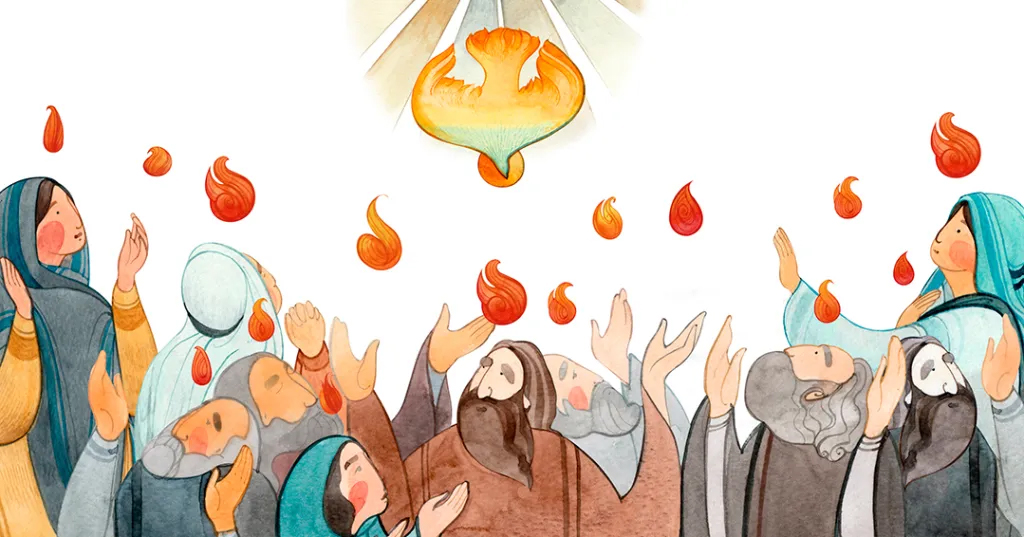
Take a trip down Memory Lane to your high school days. The homecoming game your team won and the sock hop at the gym afterwards. Hormones raging and some old-fashioned teacher attempting to police the two-inch distance between slow-dancing couples on the dance floor. I can still picture my girl friend of that time and to this day her perfume lingers in my mind.
And after a few slow dances, the DJ would do a change-up and on would come Elvis with “Jail House Rock” and Jerry Lee Lewis’s “Great Balls of Fire.” By then the gym was rockin’. Sweat pouring down our foreheads and hearts racing.
At the next change-up to “Love me Tender, Love me True,” we were all too hot and sweaty to dance so close together that the prude on the prowl need worry.
That’s what Pentecost is all about – Great Balls of Fire, fire in the imagination, fire in the gumption.
The most opportune moment for the Holy Spirit to get hold of us is through our imagination. To fire us up with an idea, to fire us up with hope, with a moment of sheer grace.
When the Spirit hits, it’s Jerry Lee Lewis’s song come to life.
“You shake my nerves and you rattle my brain
Too much love drives a man insane
You broke my will but what a thrill
Goodness gracious, great balls of fire.”
Well, in the words of the ’08 Obama campaign, folks touched by the Spirit are “Fired up. Ready to go.”
A saying attributed to Augustine concerning Hope – Hope has two beautiful daughters, anger and courage. Anger at the way things are and courage to change them
Here’s the story of one man fired up with anger at the high cost of higher education and upset by the countless minds going to waste because of their want of opportunity.
And ready to go with audacious courage.
Shai Reshef in his retirement as an entrepreneur thought there might be a fix to this dilemma. He had an incipient idea for a university on line, University of the People — UoP. It would be free to any student anywhere in the world that had access to the internet.
Since students in many countries, in grammar school through high school, learn English, courses would be taught in English; but since he was also wanting to include women in the Middle East who are often deprived of schooling, the courses would also be taught in Arabic.
Classes demand 20 hours a week and are kept small at 20 to 30 students. A student has 10 years to complete a degree.
A young Afghan woman, Maliha, now living in America, tells of the great sorrow in her nation as the Taliban took over.
Twenty-three-old Maliha was studying civil engineering at the University of Kabul, Afghanistan, when everything changed.
“The first thing they did was that they said that women are not allowed to go to schools and universities.”[1]
But she and many other Afghan women found a way – the internet. Surreptitiously, some 4000 Afghan women have continued their education right under the noses of the Taliban.
These women have certainly imbibed the spirit of Langston Hughes, “I have discovered in life that there are ways of getting almost anywhere you want to go, if you really want to go.” These women did.
Maliha remembers, “On those dark days that I was at home and couldn’t do anything for my future, University of the People was like a light in my darkest days.”[2]
Women in a university in Afghanistan!? – Good God Almighty. Great Balls of Fire!
Unlike many online courses which are scams – Trump University comes to mind – UoP offers fully accredited BA and Masters degrees. And they’re free. There are some fees, usually not more than $5,000 over the course of the degree. More than half the students receive a scholarship.
The founder and now president of the UoP, Shai Reshef, does it through grants from foundations and wealthy donors. He also relies on a staff of 47,000 volunteer faculty. These are mostly world-renowned professors, who in their retirement have decided to “pay it forward” by teaching without charge. As Reshef remarked, “I’m a volunteer.”
Degrees are only offered in a limited number of majors: associate and bachelor’s in business administration, computer science and health science, master’s in business administration, information technology and education. These are majors leading directly into jobs, and 80 percent of graduates end up working in the field of their major. Come, Holy Spirit, come!
With a valid degree earned online, Maliha eventually escaped Afghanistan and is presently living in the United States pursuing a master’s degree.
All this glory began with the spark of fire in one man’s mind. Yes, the Glory of God is a Woman fully alive. “Great balls of fire.”
The Fire of Compassion has struck also an Israeli former prime minister – Ehud Olmert. He has written an op ed in Haaretz (The Land), the foremost progressive newspaper in Israel – calling the government’s operations in Gaza war crimes.
Prime Minister Olmert, obviously angered at Isreal’s role there had great courage to call his nation to account. He certainly was fired up and ready to go when he wrote this.
In his interview with Steve Inskeep on NPR, this is what he had to say about the death and starvation inflicted on Gazans.
“All of us are absolutely certain that there is not any achievable purpose that is worth continuing and expanding this operation. Now, while these operations are not going to save the hostages, are not going to achieve any important national interest, and hundreds of people are killed on a daily basis, who are not involved. This is a crime.”[3]
Further…
“…the fact that senior Israeli ministers in the cabinet called expressly and explicitly to deny any humanitarian needs from the people in Gaza, a couple of million people living in Gaza, and they say they should all starve and be demolished. This is a call for war crime by the many senior ministers in the cabinet, without one comment by the prime minister that he’s not – that he does not support this.”[4]
Great Balls of Fire – an Israeli prime minister said this?
Of course, he is appalled by what he sees on this TV, as are we. The other day Israel was boasting that fifty-some aid trucks went through checkpoints, yet over 600 daily are needed daily to prevent famine and disease.
Not quite fired up? Not by a long shot.
Such enforced starvation is genocide. Tell me how this is any different from Hitler’s forced starvation of the Warsaw Ghetto.
Olmert is tragically late to this catastrophe, but at least he got there. And it’s important that he’s a former prime minister willing to go public with his anger at his own nation.
Visions of suffering and deprivation are part of the Spirit’s toolbox to stir folks to amend their ways, maybe even make restitution.
Hopefully, Olmert’s courage will fire up the rest of us yearning for a ceasefire and sufficient provision of aid. Fire us up and make us ready to go!
By the way, Gaza ceasefire demonstrations are held weekly in Claremont on the corner of Arrow Hwy. and Indian Hill Blvd. if you should happen to get fired up about this inhumanity, these war crimes. You might suggest that our government cease to send Netanyahu money and arms to support this atrocity. If that happened, the war would be over shortly, for we are the ones funding this genocide. Write your representatives.
As we at St. Francis survey the needs about us, may the Holy Spirit come with Great Balls of Fire to fire us up and make us ready to go! The Garden and Food Bank await – just sayin’. Amen.
[1]Fred de Sam Lazaro, University of the People offers students a new and affordable college experience, PBS News Hour, May 28, 2025.
[2] Ibid.
[3] Steve Inskeep, “Former Israeli PM Ehud Olmert says his country is committing war crimes in Gaza,” Morning Edition, NPR, May 28, 2025.
[4] Ibid.

June 8, 2025
Day of Pentecost
Acts 2:1-21; Psalm 104:25-35, 37;
Romans 8:14-17; John 14:8-17, 25-27
“Great Balls of Fire”
Easter Blessing

When I opened my Sojourners magazine this month I found a few articles about self-care. Yes, self-care in the face of the devastation that we witness daily as workers are summarily fired, the genocide in Gaza unfolds nightly in living color, our healthcare as put at risk by a quack administrator of Health and Human Services. Yes, Medicaid threatened with over $700 million in cuts, threatening to eliminate care for over 40 million Americans. Not to mention the damage this will do to their caregivers.
Yes, self-care is in order. Faced with such a barrage of bad news, it would be easy to turn on to trivia, tune out and drop out. I admit, some days it’s just too much.
But as many of my mentors, people like Bernie Sanders and Stacy Abrams, keep repeating – this is not the time to give up. But we need to be of sound body, sound mind and sound spirit to continue into the fray.
First, keep our eyes on the prize. As we end the liturgical season of Easter, let us rejoice that we have seen the Risen Lord.
We have received him in the rich memories of stories of healing and salvation passed down through scripture and hymn, through grandparents and Sunday school teachers.
The bleeding woman who only seeks to touch Jesus’ garment that she might be healed. The leprous man crying out at the side of a dusty road, the woman caught in adultery. All made whole.
We remember the faithless disciples at Jesus’ trial, all of whom abandon and deny him in his hour of need. All forgiven and redeemed for the most incredible mission ever.
Here is the Risen Christ amongst us in memory and steadfast faith.
Thomas says he will not believe until he can touch the scars and wounds of the Crucified One. Christ is among us in the wounded we encounter daily – sleeping on the streets, in the bombed-out homes of Gaza, in the aching bellies of starving children, not in some far-off place, but right here in America. Yes, and also in such abandoned places as Sudan, Venezuela, Afghanistan and Syria –all made worse with the elimination of USAID programs. These are his wounds. Touch and feel.
The “waste, fraud and abuse” are the bankrupt, inhuman policies of this shambolic administration. Incompetency heaped upon incompetency. What you get with “retribution” and “revenge” politics. All you get!
In the midst of such mendacity, Christ assures us of his healing presence – empowers his followers to exercise the same spiritual power for healing and the renewal of creation. Praying to God, Jesus commends his followers to Holy Guidance and Eternal Presence.
“The glory that you have given me I have given them, so that they may know that you have sent me and I have loved them even as you have loved me…I in them and you in me, that they may be one, as we are one, I in them and you in me…”
Yes, us. We are empowered as the Risen Christ to this world – we are the Easter Blessing. And might all who see that the hungry are fed, the sick cared for, the dying comforted – might they say, “Alleluia, He is risen.
In the Gospel of John, Jesus assures his followers that he will be with them, and his promise is not empty as followers, members of the Jesus Movement bring healing, reconciliation and justice to those the world regards of no account.
“We are the ones we’ve been waiting for.” True in the 80s, true today.
The Risen Christ indeed! I saw the presence of Christ in the installation of my friend Bill Dunn to be the new rector of Trinity Episcopal Church in Redlands this last Saturday. What I witnessed was an energized congregation with strong lay leadership raising up young people in the faith, serving the needs of their neighbors – and Fr. Bill, their chief cheerleader. These people in their love for one another and love of neighbor are the real Easter Blessing. Christ is risen, risen indeed in these followers.
I opened my spring issue of The Veteran to note the passing of Joan Davis, a long-serving wife of one of our Vietnam veterans – a member of VVAW for fifty years.
Following the end of that disastrous and immoral war that we had stumbled into, Vietnam Veterans Against the War (VVAW), my veteran’s organization, has organized opposition to the cavalcade of senseless wars of our nation. Our motto, “Honor the warrior, not the war.” Is one of respect for those who served. We have held teach-ins on the war machine that drives the insanity of war as the first, go-to option of foreign policy. Yes, we are against invading Canada or Greenland. We have built several libraries and learning centers in Vietnam in a token of reconciliation. We support medical care for those suffering the effects of Agent Orange, and the removal of landmines scattered about their countryside. And this remarkable woman has been at the heart of it all.
She had met her husband, a Vietnam War veteran in Chicago in one of the many street marches against the war machine. Later they moved to Oak Park, where she became a teacher.
As a high school teacher, she fearlessly presented the real history of America to her students – warts, glory and all.
“Joan brought rigor and real debate to her classes, supporting students in learning about the past and helping them understand what it meant to engage with the present and have hope for the future. Through field trips to art and history museums, bringing in guest speakers, and courageously discussing more recent events, such as the wars in Iraq and Afghanistan, she was able to help thousands of young people find their confidence, opinions and values over the years.”[1]
She founded a group, REALITY, on campus aimed at enlightening students about racism, welcoming diversity, and making the school a more inclusive place, empowering “generations of students to become advocates for equity and justice.” [2]
She led them in exercises of constructive, respectful debate on the issues of the day. “She organized marches for human rights
Beloved by her students, she was an image of the Risen Christ. Countless students over the years have returned to York High School to thank Joan for her influence on their lives. Many have gone into careers and activism that have made the world, made America, a better place.
Yes, risen indeed. This woman, in life and in death has been an Easter Blessing. A harbinger of new life and sanity for a desolate nation that has so often lost its way. In her service to her students and community, she is an incarnation of the Risen Christ. Christ is risen; he is risen indeed. Alleluia.
Last Thursday, another truck from Burrtec arrived with 80 cubic yards of mulch for St. Francis Garden. Arranged for free by Christopher. Six workers: James, Miguel, Denis, William, Joseph and Fr. John — all braved the hot sun to get it spread it on the first of what will eventually be some thirty beds of fresh vegetables – melons, squash, cucumbers, okra, string beans and bell peppers. And later winter vegetables – kale, spinach, lettuce, radishes, cauliflower, beets.
When someone noted that it smelled, I agreed – it smells like Heaven. Smells like the Gospel in Action. Smells of the Risen Christ at the food bank. That smell is an Easter Blessing as are all who’ve worked to bring St. Francis Garden into reality.
I love that poem: “I’d rather see a sermon than hear one.” Here is a sermon that no one can miss. Out in front of God and everyone. People at St. Francis, we are the living Easter Blessing. In our labor of love, even in the hot sun, Christ incarnate. Even if it doesn’t feel like it at the moment. How does this garden grow? A nursery rhyme gets it swimmingly.
St. Francis, St. Francis,
How does your garden grow?
With silver bells and cockleshells
And lovely tomatoes all in a row
Zucchini and cabbages all in a row.
An Easter Blessing — a living sign of the Risen Christ among us. Amen.

The Scent of Heaven
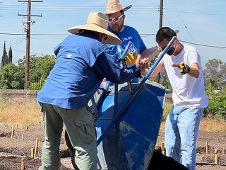
Spreading it Deep

Working on a sermon that can be seen.
[1] “Remembering Joan Davis: 50-year Member of VVAW,” The Veteran, Section C, vol. 55, number 1.
[2] Ibid.
June 1, 2025
Easter 7
Acts 16:16-34; Psalm 148;
Revelation 22:12-14, 16-17, 20-21; John 17:20-26
“Easter Blessing”
New Rules

For those who are fans of Bill Maher, his show, “Real Time,” ends with a segment called “New Rules.” This is a humorous rebuttal to the common wisdom and some of the follies of the week. Yes, I know some of Bill’s language is a bit rough, and his attack on religion gets a bit tiresome, though in many cases we have earned his scorn.
New Rule on flirting: “Humans cannot be trusted to just flirt with other attractive humans. And the MAGA crowd cannot be trusted to flirt with dictatorship. Not everyone who flirts cheats but all cheating starts with flirting. ‘I’m not in bed with Putin; he’s just my work wife.’ Okay, aren’t we kinda past the flirting stage? Sure, Trump’s love letters to Kim Jong Un, and his siding with Putin at Helsinki and the tanks in the streets on his birthday — all coquettish good fun. And the ‘lock her up’ chants, and suing the press and calling them the ‘enemy of the people,’ and saying that shoplifters should get shot on sight – innocent flirting, all of it. Except, you know, I don’t know. Now it seems a little less like just flirting and now more like we’re actually meeting every afternoon at the Motel 6.”
New Rule – no flirting with dictators and autocrats. Vladimir Putin and Victor Orban are not our friends.
The old rules on church attire were that woman wore dresses and men wore suits, white shirts and ties. I still remember the time my brother came up to Inyokern to visit. That Sunday I overheard one of our teenage boys pleading to his mother: “If the pastor’s brother can wear jeans to church, why can’t I?”
New Rules: The old dress code is out the window. Though we did have to have a dress code for our foster daughter whose motto was, if you’ve got it, flaunt it.
Jesus institutes New Rules – the hundreds of laws and customs are boiled down to one simple command in John’s gospel: “I give you a new commandment, that you love one another. Just as I have loved you.”
In the reading from Acts, we see that the Jesus Movement is expanded beyond its Jewish origins. It is open to all beyond the circumcised. Beyond those who observe the dietary laws. “No creed or race can love exclude if honored be God’s name,” as a line of the hymn goes.
Peter, honoring this love commandment, baptizes the Gentiles from Caesarea. Peter, upon his return to Jerusalem compelled to defend his decision in the Book of Acts.
“Three men, sent to me from Caesarea, arrived at the house where they were. The Holy Spirit told me to go with them and not make any distinction between them and us. These six brothers also accompanied me, and we entered the man’s house. He told us how he saw an angel standing in his house and saying, ‘Send to Joppa and bring Simon, who is called Peter; he will give you a message by which you and your entire household will be saved.’ And as I began to speak, the Holy Spirit fell upon them just as it had upon us at the beginning…If then God gave them the same gift that he gave us when we believed in the Lord Jesus Christ, who was I that I could hinder God?’” New Rules, indeed! All means all.
And so the Jesus Movement grew, energized and enriched by an expanding Love.
Our nation is sorely in need of some New Rules right now. As this shambolic administration is at one hundred days and then some, New Rules are desperately needed. Their vision of humanity is so crimped, we’re abandoning even our so-called friends. Its all about the “Art of the Deal” – old loyalties are cast aside.
Secretary of Homeland Security Kristi Noem said in a statement on Monday. “Afghanistan has had an improved security situation, and its stabilizing economy no longer prevent[s] them from returning to their home country.” There’s a reason why these refugees are here under Temporary Protected Status.
Situation improved??? Improved??? Not for these people.
How could this woman be so willfully ignorant? So devoid of any human decency? These are Afghans and their families who supported the American effort to defeat the Taliban. They steadfastly stood beside us in that twenty-year war. These are people for whom a return means a virtual death sentence. And the girls will most likely be sold into sexual slavery to the highest bidder.
Improved? You’ve got to be kidding. What happened to “Family Values?” Apparently, that was all a lie.
New Rules – Honor our commitments to those who supported us.
Abandonment will cause what’s left of America’s tattered honor to be dragged through a pit of sewage.
God help us all. New Rules —
Remember when the nation held the president to the highest standards of probity? Even old Tricky Dick ultimately respected the rule of law. He turned over the tapes.
Never in my wildest dreams would I have imagined that the holder of the highest office in the nation would have the temerity to turn the presidency into “America’s Home Shopping Network.” Here’s a man who would know the price of everything and the value of nothing, including the sacred trust connected with that office.
It’s all for sale. Grand opening. You want a Tesla? Well, just stroll down the White House driveway and pick the color you want. Oh, and did we mention the new Donald J. Trump meme coin? At just a little over $13 each. You can own your own keepsake of the ruination of this republic. Buy lots and lots and you might get a free dinner with the most ignorant, opinionated host ever. Lots and lots more gets you a visit to the White House.
I was surprised that my wife turned down a gift of a Melenia meme coin for Mother’s Day. But folks, you can phone in your order now. Operators are on standby. They’re going fast.
This goes well beyond the Teapot Dome scandal of the Harding administration in the 20s. Way beyond Nixon or Reagan’s clandestine Iran “Contragate” scandal. The only legal part of that escapade was the birthday cake Oliver North took over to the Ayatollah.
And all the money goes right into the Grifter-in-Chief’s pocket. One buyer has already purchased $148 million worth of Trump coins. Really hoping for that White House dinner. It will be the most expensive Big Mac he ever ate. And how many foreign actors are investing in this grift to curry favor and make deals? Who knows? It’s a black box.
But it looks like he might get a huge jumbo jet to tool around in and, later, for his library for his efforts. Nice to have friends in rich places. BTW, did you get a plane, or even a return call? Buy more coins. They’re the new hot item.
Meanwhile it’s slash and burn the safety net for the neediest, the least of these.
Now, where’s that Emoluments Clause?
New Rules – Thou shalt not turn the White House into a den of thieves.
Yes, New Rules – Let the Emoluments Clause of the Constitution be enforced. Excruciatingly! No meme coins or Teslas sold from the White House.
New Rules – Greed is out. Compassion is in.
New Rules — Thou shalt love the Lord your God with your heart, mind and strength. And the second commandment is like unto it. You shall love your neighbor as yourself. On these two, hangs the entire Law. This is the Love Commandment.
That means respect for the covenant of laws and norms that bind us together as a people — such things as honesty, decency and faithfulness to your office. Whether that office is an elected one or the office you hold as simply as a citizen of this republic.
It means charity to neighbor and stranger alike – even if they come from Afghanistan.
It means assuming the best of others unless evidence is to the contrary.
It means honoring the rich and diverse fabric of this nation. As I often say, “All means All.” E pluribus unum for sure.
In sum, treat others as you would like to be treated. That’s what that Lady with the Torch who stands astride that golden door in New York harbor is all about. Let us live up to our highest aspirations and ideals. In such a New Rule is our personal and our national salvation. And against such charity there is no rule.
I close with the words of James Baldwin, “In this world there may not be as much humanity as one would like to see; but there’s enough.” [1] The same must also be said of America. There’s enough to right the ship. Amen.
[1] Bruce Springsteen’s quote of Baldwin at a Manchester concert tour, May 15.2025.
Entrusted with Resurrection Power

It was most distressing for those communities ravaged by fires in Los Angeles these past months to see the baren hills and flat lands. Mile after mile of charred skeletons of houses and businesses – what many had spent a lifetime building only to see it go up in flames. Some of the many landmarks communities grieved over were the loss of many of places of worship.
These hallowed landmarks were places of deep joy and sorrow, places of desperate prayer and joyful song. Now, all gone.
The first church I served in the upper Mojave Desert had gone through a similar experience, though many years ago.
Soon after I arrived, I began visiting the three small communities, Randsburg, Johannesburg and Red Mountain that were served by this old United Methodist congregations. Since the former pastor was so shy and introverted, he hardly visited anyone. With a little effort the place began to grow. The woman next door who had been a member long ago, wrote one of the former pastors, now living in Ohio. Mother Carrie, as she was affectionately known by the other Methodist clergy, was the first woman in that conference to pastor a church.
A most amazing thing then transpired. Mother Carrie wrote me a wonderful letter concerning her time out there in the 30s through the 50s serving that congregation and another close by in Inyokern.
Her husband, John Oval had been the pastor, arriving in the late 20’s. Shortly before he died his brother had come to visit – his brother with a serious drinking problem. One night he fell asleep drunk with a cigarette still burning. A fire began in the parsonage, which was attached to the wooden church. The whole thing went up in flames. I still have a picture of that tragedy that someone had taken. Fortunately, everyone, including the brother, escaped unharmed. But the church was a total loss.
Not long after that, Pastor John died. Carrie had been going through the conference course for lay preachers, so she asked to be appointed in her husband’s place. Mother Carrie was not without her detractors; in fact there were many. Not at all used to a woman preacher.
Mother Carie soon organized a rebuilding effort while the congregation met in the VFW hall. This church would not be of wood. Mother Carrie had managed to get hold of some concrete block making machines. These were third-world devices operated by hand.
Every evening as the miners came out of the mines she had them organized to begin making concrete blocks. The women would arrive to cook dinner and they would work late into the night. After many, many months, through a joint effort of church members and many others not connected to that congregation, a Resurrected church arose.
It wasn’t long after completion that one of the usual fierce desert winds came up and tore a good chunk of the metal roof off the new church. Some of Mother Carrie’s detractors wrote the superintendant down in Pasadena, “We told you not to send this woman preacher out here. Now God has taken matters in his own hands. Soon, we will have nothing again.”
Mother Carie wrote me of that message to the superintendent with the follow up, “And I was reappointed for another year.” And many more years to follow.
Today we celebrate such mothers, whose fierce love for us has made us who we are. A blessing to ourselves and many others. And they didn’t do it all themselves. They organized the necessary resources to keep going.
When we read the Resurrection story in Acts of Tabitha (known as Dorcas in the Greek), it’s essentially a community effort. After she died, the attending widows, having washed her for burial, sent two men from Joppa to Lydda, having “heard that Peter was there with the request, ‘Please come to us without delay.’ So Peter got up and went with them; and when he arrived, they took him to the room upstairs. All the widows stood beside him, weeping and showing him all the tunics and other clothing that Dorcas had made while she was with them. Peter put all of them outside, and then knelt down and prayed. He turned to the body and said, ‘Tabitha, get up.’”
Peter, with Resurrection Power, awakened the woman. In our hyper individualistic culture, we tend to focus only on Peter – one individual. But it wasn’t just Peter. This Resurrection of their lost Dorcas was a community effort — God in them, they in God. The entire community is endowed with Resurrection Power.
The entire community, using all the spiritual resources at their command is empowered. Facing their tragedy, just like Mother Carrie, this little band of the faithful used all the resources available. They shed tears; they prayed, they hoped together. They summoned help. they waited in expectation. It took many to summon Resurrection Power.
It will take many to summon the Resurrection of the democracy of our nation. The call has gone out, in many cases led by strong women, many of whom are mothers who know what’s at stake as programs like Head Start, Women Infants and Children (WIC), Planned Parenthood, and the Departments of Education and Health and Human Services, and Medicaid are all on the chopping block to provide gigantic tax cuts for the richest ten percent. Mothers know what’s at stake.
Sarah Palin was right about one thing concerning a mother’s fierce love: “What’s the difference between a hockey mom and a pit bull – the lipstick.”
At a corner demonstration, widows in their 70s and 80s, even one in her 90s know what’s at stake when the Veteran’s Administration is eviscerated and benefits cut. Where’s the “Thank you for your service” here? Yet that small monthly survivor’s check along with SSI is the meager amount that pays the rent, provides heat, cover medical expenses and puts food on the table.
All across the country Resurrection Power is in the hands of us ordinary folk, mass gatherings in the unlikely places as Utah, Alaska – did I mention that I saw a picture of our former hometown of Petersburg – Idaho and Montana, Alabama and Mississippi. Resurrection Power amplified through our common strength. Mama pit bull love.
It was a distant relative of our family, Julia Ward Howe – Grandma’s lineage on my mother’s side), who summoned up the strength of our mothers in her first Mother’s Day Proclamation. She was a feminist, a Suffragist, an activist for the woman’s vote, an abolitionist — I close with that. Maybe that’s where I get my activist genes – a goodly heritage indeed!
Mother’s Day Proclamation – Boston, 1870
“Arise, then… women of this day!
Arise, all women who have hearts, whether our baptism be that of water or of tears! Say firmly: We will not have great questions decided by irrelevant agencies. Our husbands shall not come to us, reeking with carnage, for caresses and applause. Our sons shall not be taken from us to unlearn all that we have been able to teach them of charity, mercy and patience. We, women of one country, will be too tender of those of another country to allow our sons to be trained to injure theirs.
From the bosom of the devastated earth a voice goes up with our own. It says: Disarm, Disarm! The sword of murder is not the balance of justice. Blood does not wipe out dishonor, nor violence vindicate possession. As men have often forsaken the plough and the anvil at the summons of war, let women now leave all that may be left of home for a great and earnest day of council.
Let them meet first, as women, to bewail and commemorate the dead. Let them then solemnly take council with each other as to the means whereby the great human family can live in peace, each bearing after his own kind the sacred impress, not of Caesar,
but of God.
In the name of womanhood and of humanity, I earnestly ask
that a general congress of women, without limit of nationality,
may be appointed and held at some place deemed most convenient,
and at the earliest period consistent with its objects, to promote the alliance of the different nationalities, the amicable settlement of international questions, the great and general interests of peace.“
~ Julia Ward Howe
And I tell you what – This sure beats the hell out of the simpering Hallmark sentimentality found on our supermarket card racks. Today we celebrate the Resurrection Power inherent in all those pit bull women who have fiercely loved us and passionately cared for this nation. Yes, these women of the Spirit knew – it always takes a village. Amen.
May 11, 2025
Easter 4
Acts 9:36-43; Psalm 23;
Revelation 7:9-17; John 10:22-30
“Entrusted with Resurrection Power”
Resurrection – Present Day
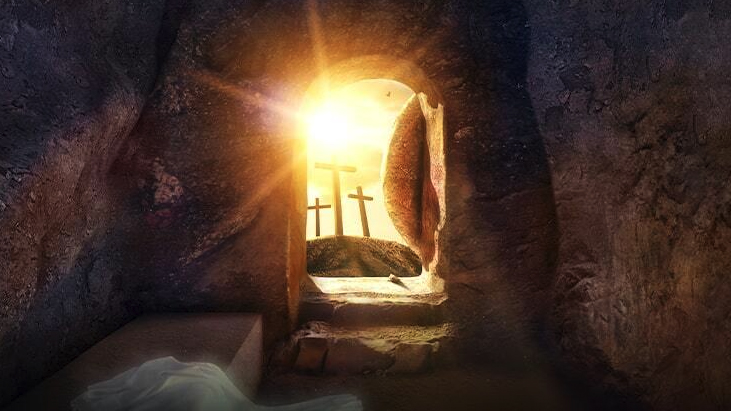
This last week, Resurrection was evident in the labor of love that put in the first of 30 vegetable beds at St. Francis. Work began early with Barbara opening the gates and unlocking the church. By 9:00 a.m. we had several members — Joseph, William, and yours truly — laying out the chicken wire to prevent gophers dining on our new plants. Miguel, our paid farmer, was also on the job.
We had approximately nine beds laid out by the time the first truck arrived from Burrtec with 30 cubic yards of mulch that Christopher had arranged for free. The aromatic odor wafting across the field of woodchips was definitely the smell of Resurrection. Wonderful to sniff.
We ended with a break for pizza that Barbara provided with some delicious root beer and Pepsi. And the satisfaction of having done a righteous deed.
As I previously mentioned. A great Anglican divine once wrote that if Resurrection was only a one-off historical curiosity, it would have been of minor significance – UNLESS it is lived as a daily reality, Christ raised in our hearts and minds. And I would add, also in our date books, wallets and credit cards. And in the voting booths. Yes, let us pray for the insight and wisdom to notice Resurrection as a daily event in our lives.
Saul, bent on destruction of the incipient Jesus Movement, breathing threats as he heads to Damascus, is struck down. “Suddenly a light from heaven flashed around him. He fell to the ground and heard a voice saying to him, ‘Saul, Saul, why do you persecute me?’” Saul, raised from the ground, welcomed into the home of some of Jesus’ followers becomes a new man, Paul. Raised from the deadened life of hatred. Resurrection to be sure!
Resurrection is vibrantly alive in the daily work of those in recovery. Arlie Hochschild, in her new book, Stolen Pride, has some marvelous stories of how some in Appalachia have discovered Resurrection in lives ruined by poverty, despair and drugs.[1]
James had just arrived in an emergency room after his fourth heroin overdose. His sister Ashley, a student at the University of Tennessee, after three calls from a hospital, dreaded that next call would be “the call – James is dead.”[2]
It wasn’t too long before James’ sister’s worst fear came true. One day she received a call from the paramedics. James had been found without a heartbeat. After some effort with CPR the paramedics brought him back.
First, Ashley just sobbed. Then she realized she had to do something. “I took a breath, got online and spoke to James: ‘James, are you ready this time?’”[3]
Yes, he was ready. Ashley had found the best recovery program in eastern Kentucky, Southgate. And while they usually only accepted clients referred through the criminal-justice system, they made an exception for James. Ashley got the costs covered by a special grant. There, James bonded with one of the counselors over their love of punk rock bands.
There, James hit rock bottom. Soon after arrival, he was sitting out in the yard feeling sorry for himself – that his life had gone nowhere, that he had lost everything, that he had messed up his family and had no self-respect left.
As he sat on a bench, he noticed at his feet a line of ants. They were scurrying along, carrying bits of food, grains of sand. He noticed one ant carrying a dead ant. The light went on. That dead ant being carried was him.
James understood in a flash that his counselor, Tom Ratliff “became the carrier ant willing to carry the dead – or nearly dead – ant, me. The man saved my life.”[4] Resurrection! Fresh from the grave.
Through this program, James became alive to his own emotions, feelings he had stuffed and buried through drugs. Shame and pride.
He inwardly made the decision to work at his recovery, no matter the pain of realizing what he had lost – because the vision of what he had to gain was so alluring, so life-giving. That is Resurrection becoming reality.
James, looking at that line of ants had made the decision to be a carrier ant. He no longer wanted to be carried as a dead, desiccated man. Resurrection!
Through the stuff of ordinary life, beautiful sunrises, gardens, family, the daily work given to our hearts and minds, lies Resurrection joy and possibility. Within our very selves we have all the makings of a miracle.
Cassie Chambers – It’s the family name of a most wonderful, extended family throughout Appalachia, one of whose shirt-tail members runs the little market in Bethany, Chambers General Store, just down the road from the Forney Family Farm we now own – and did I mention the most wonderful sandwiches Mr. Chambers makes while you wait. I even dreamed the other night of standing in front of the refrigerated case of cheeses and meats ordering my favorite bologna sandwich with lettuce, tomato, Swiss cheese, mustard and mayo. And make those slices of bologna extra thick, Bob. Total delight – a veritable taste of Resurrection.
But I digress. Cassie Chambers, in her book, Hill Women,[5] tells of one of the influencers in her life. In the midst of the poverty of Owsley County, Kentucky, in which she grew up, there was always Granny. And family.
Cassie tells the story of sitting one evening and watching TV in the living room, and the importance of family just being together.
Her father, Orlando, wanted to watch a University of Kentucky basketball game. Her mother, Wilma, not that interested in sports, tried to get Granny to go watch a movie in another room.
“Granny, a serious look in her eye, scolded her, ‘Orlando has been at work all day. I’m goin’ to sit right here and spend time with him. I reckon you best do the same.’ Granny and Wilma joined Orlando to watch the game. Granny didn’t know anything about basketball, but she cheered enthusiastically. It was a particularly physical game; at one point she jumped from her seat and shouted with venom, ‘you ain’t nothin’ but a big bully – take your tail end home.’ My parents looked at each other in shock.”[6]
The joy of family – a small moment of Resurrection. The same delight and pride I took in our son Christopher as he reported on his efforts to repair a drawer at his unit in the triplex my brother had left me in Loma Linda. A tiny spark of Resurrection joy.
With eyes to see and ears to hear, Resurrection’s all around. In the Risen Christ I continue to believe that I can make a difference. I can be a carrier ant. WE can make a difference – we ARE making a difference – carrier ants. Resurrection is awakened gratitude for the new life that blooms all about each day.
I opened the paper and noticed an article in the New York Times on the disastrous, chaotic, corrupt first 100 days of this presidency. More about that in sermons to come, in letters to the editor to come. But I had an overwhelming sense of joy for the reporters, for their truth-telling. That truth come to light is Resurrection.
As I look towards my next trip to West Virginia, I drool as I think of my bologna sandwich purchased at the counter of Chambers General Store. A small bit of Resurrection delight.
With that sort of nourishment, fueled with coffee, and in the Risen Christ, we go forth with the audacity to believe that today and tomorrow, we can make a difference – carrier ants. St. Francis folk, how does your garden grow? Wonderfully well, with peas and carrots, kale and lettuce, plums, tomatoes and peaches – wonderfully well. Let it be ever so. The smell of Resurrection. Amen.
[1] Arlie Russell Hochschild, Stolen Pride: Loss, Shame, and the Rise of the Right (New York: the New Press, 2024).
[2] Op cit., 147.
[3] Op cit., 148.
[4] Ibid.
[5] Cassie Chambers, Hill Women: Finding Family and a Way Forward in the Appalachian Mountains (New York: Ballantine Books, 2020).
[6] Op Cit., 83.
May 4, 2025
Easter 3
Acts 9:1-20; Psalm 30;
Revelation 5:11-14; John 21:1-19
“Resurrection – Present Day”
A Love that Mends the World
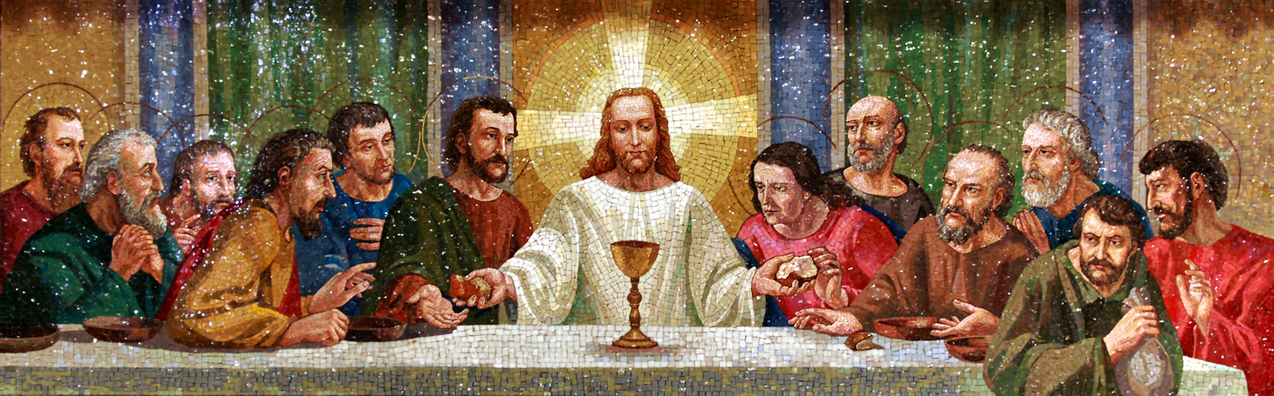
An air of gloom and anxiety pervades the room as Jesus’ friends began to situate themselves around the table. It was the Passover, the feast of liberation from slavery and oppression. Yet something more was at stake. They couldn’t quite grasp the backstory, couldn’t put their finger on the cause for dread.
It was not until Jesus said the liberating word when he explained the meaning. He was their true freedom as he offered up his physical self for the necessary healing. “This is my body. This is the cup of my blood poured out for the redemption of the world. As long as you break the bread and share this cup, remember. Remember me.” Remember what we are all about – tikkun olam, the mending of the world.
That sacrifice, that humility, opens the door to true liberation. In John’s gospel, the story gathers additional significance as Jesus gathers a sponge and kneels at a basin to wash the feet of his disciples. Of course, Peter will have none of it. He considers himself unworthy. Yet, Jesus insists, “Unless I wash you, you will have no share with me.” Such humility, such love indeed opens the door to eternity. To true liberation from all that enslaves. Especially for pompous egos and notions of self-importance, for false humility. “I am your liberation,” says the Master. Jesus, in actions proclaims, “My example is your true freedom.”
And so it is, as difficult, as impossible as it so often seems at the moment.
After the searing events that led to the Black Lives Matter in St. Louis, Missouri, the former rector of All Saints, Pasadena shares this story.
The Rev. Mike Kinman recalls entering the pain of St. Louis and being confronted by the anguish of Black Lives Matter movement. He relates an experience of five years ago, yet still as vivid in his mind as if it had happened yesterday.
“I feel you. Do you feel me?” That was the raised voice of Pastor Traci Blackmon as she grasped the shoulders of VonDerrit Meyers, Sr., the father of a young black youth who had been shot six times in the back on the streets of St. Louis on October 8, 2014. Mike continues the story:
I can still hear the Rev. Traci Blackmon’s voice ringing in my ears.
I can still see her face against his, hands on his shoulders, eyes piercing into his eyes.
It was near midnight on October 8, 2014, and a few hours before, 18-year old VonDerrit Myers, Jr. had been shot eight times – six in the back – and killed by an off-duty St. Louis City Police Officer. A crowd gathers at the scene and when they begin to move, the clergy who are there split up. Some go with the crowd. Others – Traci and I – we go with Vonderrit Myers, Sr. to the city morgue to be with him as he identifies the body of his son.
We stand outside for what seems like an eternity until the father emerges, the nightmare he had lived with since the day his son was born slowly becoming real. Head hanging to the ground, he almost whispers the words we already know:
“It’s him.”
And then… the pain begins to turn to rage. I could see it happen. He begins to fume … and tremble. What begins as a cry becomes a wail. What starts as a murmur grows into a shout as he says:
“It’s him. It’s my son. Somebody is going to pay for this. I’ve got a gun, and somebody is going to pay for him tonight!”
I am paralyzed. I cannot imagine his rage and know he has every right to it. I will not tell him to calm down. And… this is headed nowhere good. Not only do I not know what to do, I know whatever it is, I’m not the one who can do it.
And then Traci steps up to him. Traci steps up to him and grabs him by his shoulders, and puts her face right up to his face … her eyes to his eyes.
He is trembling. And she is trembling. And she holds him. And he looks at her and she says:
“I feel you. I feel you. I feel you. OK?”
He nods.
“Now I need you to feel me.”
His eyes are glued to hers.
“You have a job right now. You have to be a husband tonight. Your wife has lost her son, and she needs her husband. No one can do that but you. You have to go be with her. That’s where you have to be tonight. She needs you.”
“And tomorrow morning, I’m going to be at your house first thing. I’m going to be there and I’m going to stay there with you for as long as it takes.”
Tears fill the father’s eyes.
Tears fill Traci’s eyes.
And she says again.
“I feel you. Do you feel me?”
VonDerrit Myers, Sr. nods his head, and they embrace. And they cry. And then VonDerrit Myers, Sr. leaves the body of his son and goes to spend the longest night of his life at home with his wife.
And first thing the next morning, Traci is there. And she stays until they don’t need her to stay any more.[1]
To enter the anguish of St. Louis that night, to enter Gaza, to enter any Jerusalem on this planet is to enter into any of our distressed urban areas, and pray to God, pray, like Pastor Traci, to have the mind of Christ in you.
Such humility is the true nourishment of the meal we share this day. The liberating nourishment we share on any given Sunday. Liberation in the midst of the most excruciating pain and loss. He in us and we in him. Présenté.
In city after city, in village and in township, Christ is crucified anew. Crucified as an eighteen-year-old black kid gunned down on the streets of St. Louis, Missouri. Crucified in the deadened hopes of the homeless man who used to sleep on the back porch of our office in Claremont – or the lost hopes of those who used to sleep down the block from our church at the Del Rosa and Date Street encampment. Crucified in our hospital emergency rooms as doctors and nurses struggle to save the life of yet another overdose victim.
Yet, in the midst of such crucifying pain, in this simple meal of bread and wine, in the remembrance of a foot-washing, we have the audacity to assert that the world is mended back together. And in the participation, we also find our healing and true liberation. We are mended, knitted together in an eternal love. Amen.
[1]Mike Kinman, “The Power of Extravagant Love”, Sermon preached at All Saints, Pasadena, April 7, 2019.
April 17, 2025
Maundy Thursday
Exodus 12:1-4, 11-14; Psalm 116:1, 10-17
1 Corinthians 11:23-26; John 13:1-17, 31b-35
“A Love that Mends the World”
 Forney Charities