
Forney Charities
Improving communities by helping residents, one person at a time.
Welcome Home

Mothering Sunday is an English and Irish tradition that began in the 16th century. It was originally to honor and give thanks for the Virgin Mary — Mother Mary. It was a day for Christians to return to their “mother church,” a day of family celebration and giving thanks for our mothers.
Welcome Home is the spirit. Yes, “there’s no place like home.”
I remember a driving trip Jai and I took through Mexico. We drove down the east coast all the way to the Yucatan Peninsula, arriving in Chetumal shortly after a hurricane had torn most of the city apart. I wanted to drive to British Honduras, now known as Belize, but we didn’t have a multiple-entry permit for the car.
The guy at the border crossing said we could mail in our single-entry permit and wait for new papers. Remembering how it took a postcard four weeks to get to my mom, I decided to forego the offer.
When we finally got back to Mexico City a couple of weeks later, we were exhausted. We spied a Denny’s as we navigated our way along this huge nerve-wracking thoroughfare with seven or eight lanes in each direction. No one paying any attention to the lane markings. We were so homesick for some American food that we pulled right into that Denny’s parking lot. It was a big disappointment. Our hamburgers didn’t at all taste like what we got in Los Angeles. Definitely no place like home.
Jesus tells a parable to answer the objection of the religious authorities concerning his hobnobbing with notorious sinners. People who should be cast out of their common religious home.
You know it. About a father with two sons, one who thought life would be better on his own. So, he took his share of the inheritance and set off for a far country.
Things didn’t work out as he had hoped. Especially after he had wasted all his money on high living and loose women. He’s soon wished to be dining with the pigs, sharing their seed pods.
And you know the end of the story. As the father spies his returning, bedraggled son far down the road, he opens his arms, running to meet him. “My son was once lost but now is found!” Joy and merriment broke out that night. And of course, we remember how the elder, dutiful brother felt about this homecoming reception. But that’s another sermon.
Home, for most all of us, has special memories and significance. It’s a place of last refuge. As Robert Frost said, “Home is the place where, when you go there, they have to take you in.”
Unfortunately, many have found themselves far from home. Not of their own choice. Not due to their own wandering, but because they had never been fully admitted in the first place. Our history is replete with those locked out and shut out.
Recently, I stumbled upon a documentary of a group of people whose full personhood had never found a home in the American Dream – stewardesses. The documentary, Fly With Me, records the history of the first women cabin attendants in aviation.
This is the story of girls coming into full womanhood by dint of their own efforts. Every step a struggle against male, piggy exploitation.
It was a chronicle of the first ground-breaking women who opened the door for their sisters in aviation. It all began when Ellen Church convinced Boeing that having nurses aboard flights would put passengers at ease. As planes were not pressurized, they were limited to 10,000 feet. This resulted in a lot of turbulence, and most passengers were predisposed to be nervous about flying to begin with.
Soon, airlines began to realize that “sex sells.” Stewardesses’ uniforms became skimpier and skimpier, demeaning the women as sexpots and Barbie Dolls. Finally, degrading to “hot pants.” Really!
Glamor was the ticket. And a pleasing, compliant personality. The women must be petite – 100 to 118 pounds, max. They would be weighed at the bottom of the aircraft stairs every time they disembarked the plane. One pound over and you’re gone. You couldn’t have a waistline over 38 inches. This was just the start of the harsh employment guidelines.
You had to be 22 to 26 years-old to be considered. Couldn’t be married and must leave or be fired when you reached the age of 32, later 34. And you must be white. There were four physical exams required every year. Pregnancy was instant cause for dismissal.
Did the men have to abide by such standards? Heck, no.
Fly With Me is the film that records the struggles of a growing cadre of women in a most demanding profession to achieve, and be paid, for their invaluable contribution to the airline industry. You can see it on YouTube.
Soon, most major airlines were running training schools, lasting in the range of seven or eight weeks, sarcastically known as “Charm Farms” by the women.
Ann Hood, a stewardess – and later a writer, but more about that later – writes a wonderful memoir, Fly Girl: A Memoir[1], revealing all.
Ann notes that on her opening day at the TWA school, Breech Academy in Kansas City, they were tested mathematically, physically, mentally, given drug tests, and divided up into teams to test cooperative and personality skills.
On that first day, their instructor told the seated group, “It’s easier to get into Harvard than to sit in your seat.” Out of 14,000 applicants only 550 would be hired. Yes, they were special.
Not special enough to merit a decent salary and humane working conditions, however. As the country became socially aware in the activist 60s and 70s, these women, and soon a few men, discovered the power of unions. Through their collective organizing they finally did make a home for themselves in the American dream.
Many of the sexist standards fell by the wayside, replaced by decent pay, ability to work until retirement age, same as the pilots, and a pension. They could marry and have a family. Full womanhood in a profession most of them loved. They made a home for themselves.
Fly With Me is a heartwarming story, as is Ann’s book.
Oh yes, I mentioned “more about that later” referring to Ann Hood as a writer. Some sexist man on the board of one of these airlines expressed the sentiment of many of his colleagues when he opined, “These women have the looks but they have absolutely no brains.”
Au contraire. Many of these talented women went on to have second careers as authors, teachers, lawyers and highly-placed government workers. Many went into business or started their own businesses. No brains? Give me a break! Ann has written ten books. What? No brains?
No place like home. And that is our obligation as members of the Jesus Movement, to lay out the welcome mat of full inclusion for all. And shelter the shunned and those given no chance.
We are now told that ICE is going only after “the worst of the worst.” Not true.
In the Los Angeles Times there was an article on an Orange County couple who had been living peacefully in the U.S. for decades. They had three grown daughters, American citizens, living here.
ICE grabbed them up when they reported to their routine check- in as per their agreement to remain in the country. This happened on February 21, and within hours they were on a deportation flight to Columbia.
Yes, the couple had tried numerous times to gain citizenship, but ultimately the 9th Circuit Court denied them.
This couple was law-abiding, hard-working, raising a family and never missed a check-in appointment.
One of their daughters said that “This cruel and unjust situation has shattered our family emotionally and financially.”[2] Aren’t these exactly the sort of people we should be welcoming?
What happened to welcome the stranger, shelter the foreigner? All part of Torah Righteousness and Gospel Goodness.
By the way, how does one know when this administration is lying? Their lips are moving.
Like the Loving Father in Jesus’ story, through the prompting of the Spirit, we stretch our arms wide to welcome all home – the foreigner, the disparaged and locked out, the addicted and incarcerated, the shunned. Yes, even the sinner! And in the doing, there is more joy than in heaven. “Olly, olly oxen free, free, free.” All home.
Emma Lazarus on the Statue of Liberty nailed it — sentiments straight from this parable.
“Give me your tired, your poor, Your huddled masses yearning to breathe free, The wretched refuse of your teeming shore. Send these, the homeless, tempest-tossed to me, I lift my lamp beside the golden door!”
Can we all say a big AMEN?
[1] Ann Hood, Fly Girl: A Memoir (New York: Norton, 2022).
[2] Ruben Vives, “An O.C. Couple’s Sudden Deportation Sends Shock waves,” Los Angeles Times, March 26, 2025.
March 30, 2025
Lent 4 – Mothering Sunday
Joshua 5:9-12; Psalm 32;
2 Corinthians 5:16-21; Luke 15:1-3, 11b-32
“Welcome Home”
The Journey from Was to Is

One of my favorite passages of scripture opens with the words, “In the beginning…”
As a science major, and before that as a small boy, creation always fascinated me. Later as the astronomy coach for my physics teacher at Cerritos Community, on clear evenings I would roll out our telescope and train it on some cosmic delight, the object of that day’s lesson.
We could view Jupiter with its great red spot and the Galilean moons, the four largest moons being: Io, Europa, Ganymede, and Callisto. Later, many more would be discovered. We could easily see the rings around Saturn. Mars was a distant, fuzzy orange speck.
On trips out to the Mojave Desert, at night, the sky was spectacular with the Milky Way sparkling overhead with its millions of stars. We didn’t yet know that it was a monstrous black hole that kept it – and us – all in regular order slowly circling its gravitational pull.
Later, the James Webb Telescope would delight us with the fantastical images of far-off nebulae and pictures of millions of other galaxies in far off reaches of space. Because the light arriving from some had taken billions of years to reach us, what we were actually seeing was a glimpse into the early creation of everything. Almost all the way back in time to the Big Bang.
Just as an aside, go treat yourself to a planetarium show at the Griffith Observatory right here in Los Angeles. It is a spiritual experience.
The Creator is to be found in the splendors of the sky and the natural world. All around us — as close as that annoying mosquito keeping us awake at night, as bright as the sun and Sister Moon. It’s all dazzling to behold.
In Abram’s despair over a living inheritance, he complains to God concerning his childless existence.
The Lord God commands Abram to step outside. “Look toward heaven and count the stars, if you are able to count them…so will your descendants be.”
I can only imagine Abram staring open-mouthed, beholding the cosmic light show. Stars beyond measure.
And if he had lived in the northern reaches of Alaska and Canada, he would have beheld the Northern Lights dancing across the skies – pink, purple, magenta, dazzling white.
To seal the deal of a new beginning, God’s faithfulness is enshrined in a lasting Covenant. Abram, on his part, sacrifices a young goat, a turtledove and a young pigeon. That’s how the Art of the Deal was done back then.
After the sun had gone down and a deep sleep had fallen over Abram a “smoking fire pot and a flaming torch passed between the pieces.” God always works God’s wonders in “terrifying darkness.” The Covenant was sealed. Such a deal!
All this metaphorical language sounds very primitive and bazaar to us modern folks. Not unlike a children’s fairy tale or ghost story.
Yet, here is the truth wrapped up in this passage. However we moderns might understand this Covenant, the fact is that we are here. We live on a planet uniquely suited to our being present. The place is not only habitable (or at least it was not too long ago), but is a most delightful place.
I notice the splendor every morning as I go out to my car and see the flower stalk on the agave next to the driveway. It’s taller each day, now approaching ten feet. My neighbor Jim tells me the flowers on it should bloom sometime around April or May.
As it shoots towards the sky, I told my wife that actually that plant grew from some magic beans I bought with our life savings from a little boy out in the street.
Delightful, all of it. That is how I understand this promise from the salvation history of Deuteronomy. The hallmark of all this is the simple fact that I’m here. That we’re here.
Think of it – of all the impossible trillion possibilities of a certain egg meeting a certain sperm – well, the odds against it are astronomical. Replicated over billions of years – and here we are! Beyond quantum computation. Incomprehensible! Sheer grace. The same for the odds of you being here.
Sheer existence, messy as it is, is the primal seal of this Covenant, birds and goats aside.
In that Big Bang, was all the eventual ingredients for the “wonders of interstellar space, galaxies, suns, the planets in their courses, and this earth, our fragile home.” All released in a nanosecond of a nanosecond after the Big Bang. From aardvarks to zebras along the little creepy-crawlies we don’t like in our kitchens.
As hostile as the environment would seem at times – here we are. Alive, descendants of some Cro-Magnon Adam and Eve. Given an amazing ecosystem favorable to our continuing flourishing. Unless we totally mess it up.
This is what was, always moving towards what is and what will be. All the ingredients present.
But we haven’t been left without an instruction book and guidance. Wisdom and reason have been bequeathed us. Torah Righteousness instructed us as to our relationships with one another, as to our relationship to this our fragile “island home.”
Through the prophets, again and again, we have been given promptings on how to flourish and thrive. Jesus Christ being for us a living example, a spiritual mentor, opening the door to eternity. A vision bringing each one of us to the full Glory of God – women and men fully alive. Alive to ourselves, to one another and to the One who left us here. And, all this, too, out of the Big Bang.
We are not left adrift. The Spirit of Christ continues to move through conscience, thorough imagination, through inventiveness, through delight and creativity.
I have been fortunate to have a caregiver from the wonderfully named organization, “Motherly Comfort Care.” Most of us have been fortunate through part of our lives to have known a mother’s tender care. It is the first evidence most of us have as newborns of a hospitable universe.
Motherly comfort is a frequently used metaphor for God’s care and love.
Speaking of Jerusalem, the city that kills its prophets, the city doomed to disaster under Roman siege, Jesus laments. “Jerusalem, Jerusalem…How often have I desired to gather your children together as a hen gathers her brood under her wings…”
And yet, the universe till now has done just that, given us an out-of-the-way planet just the right distance from its sun – evolved through the eons with an atmosphere that supports life and with faithful rains providing life-giving water.
Barbara Brown Taylor, through a meditation on having an orphaned baby chick, brings flesh to this picture.
Barbara, I think, is sort of like our member Ellen who has a tender heart for all sorts of strays. The stray in this case was an orphaned guinea chick. Barbara had heard that one type of chicken tended to be good mothers, the white Silkie.
She shopped around, and through the Market Bulletin, found a person selling them over in Royston. After a bit bargaining, she had one rooster, two hens and four juveniles. As she was about to leave, she spotted a gray hen.
“What’s that one?” she asked. “A Blue Silkie,” the woman responded. “A cross between a black and a white.”
“How much for her?” For another six bucks she concluded her purchase and left for home with all her chickens.
“When the Silkies and I got home, I saved her, [the Blue Silkie], for the orphaned chick. First, I lay on the grass while she and the baby watched each other through the mesh of the cage. Then I placed her inside. Both she and the baby froze. The baby cheeped. The hen did not move a feather. The baby cheeped again. The hen stayed right where she was. The baby took a few steps toward her. I held my breath. The gray hen lifted her wings. The baby scooted right into that open door. When I checked on them an hour later, all I could see was a little guinea chick head poking out from under that gray hen’s wing. Six bucks. What a deal.”[1]
Like that Blue Silkie, you and I are meant to be the Motherly Comfort Care for one another and for this creation. And for this republic.
Here’s the altar call – a call to each of us as a citizen. How will you use your God-given “reason and skill” that we have been bequeathed in service of the covenant we share as Americans? Every day we move from what was to the “is” of our present obligation to one another and to the stranger seeking refuge here.
We are that Blue Silkie for the one another – providing tender shelter under her wing.
To begin…here is the necessary, opening question when arising from slumber, “How can I be part of the solution to the ills daily besetting our nation?” How can I fulfill my role in this covenant we have with one another? What one action can I take today? Will you take? Now, in your mind’s eye, lay it on God’s altar.
As an American and as a Citizen of our World? — how can I be God’s Motherly Comfort Care? For friend and stranger? For family and neighbor? I guarantee you this…the Spirit will answer. And you will be the better for it. Such a deal!
Every morning is the First Morning of what today is and what tomorrow will be.
“Sweet the rain’s new fall, sunlit from Heaven/Like the first dewfall on the first grass. Praise for the sweetness of the wet garden/sprung in completeness where his feet pass.”[2] Amen.
[1] Op. cit.
[2] Eleanor Farjeon, Songs of Praise, second edition, (published in 1931), to the tune “Bunessan“, composed in the Scottish Islands, 1938. Made popular by Cat Stevens and found in many hymnals.
March 16, 2025
Lent 2
Genesis 15:1-12, 17-18; Psalm 27;
Philippians 3:17-4:1; Luke 13:31-35
“The Journey from Was to Is”
Gratitude Not Attitude

We’ve all been in stores that were understaffed. Sales clerks are often undertrained, underpaid and overworked. And what you find is a number of grumpy employees. And a big dose of attitude.
When I was at the skilled nursing facility recuperating from my hospital stay at Kaiser, most of the certified nurse aides were just fine, some, in fact, outstanding. But a few – let’s just say they had few people skills. “Would you like the lights off with some attitude?” You got it! Help to the restroom with attitude? Right! You got it.
What we got as a nation with the joint session of congress last Tuesday was a lot of attitude. Attitude in abundance. The performance by the president was unparalleled in length and in vituperation and grievance.
No gratitude at all for having been handed an economy in great shape. Record low unemployment. One of the largest increases in the number of jobs in the country’s history. Inflation coming down to normal levels.
Yes, what we got was a grievance-filled tirade vilifying Joe Biden, Democrats and “unelected bureaucrats.” Packed with lie heaped upon lie. He blamed the price of eggs on Joe Biden, or was it Hillary’s emails? Not an ounce of gratitude.
Yes, life is sometimes difficult, precarious. But we in America have no cause to be down-in-the-mouth. Even our poorest live far better than many across this globe.
There is much to be grateful for. That is the sentiment expressed in our lesson from Deuteronomy. Entering the Promised Land, thankfulness is the order of the day.
“When you have come into that land the Lord your God is giving you as an inheritance to possess, and you possess it, and settle in it, you shall take some of the first of all the fruit of the ground, which you harvest…You shall go to the priest…who takes the basket from your hand and sets it down before the altar of God…you shall make this response before the Lord your God:”
“My father was a wandering Aramean; he went down into Egypt and lived there as an alien, few in number, and there he became a great nation, mighty and populous. When the Egyptians treated us harshly and afflicted us, by imposing hard labor on us, we cried to the Lord, the God of our ancestors; the Lord heard our voice and saw our affliction, our toil, and our oppression. The Lord brought us out of Egypt with a mighty hand and an outstretched arm, with a terrifying display of power, and with signs and wonders he brought us to this place…”
It’s about gratitude for a journey which is always ongoing. America has been blessed beyond measure: we are Seminole, Aleut, French, African, Russian, Chinese, Mexican, Cherokee, Tlingit, Korean, German and English. A rich Heinz 57 variety of cultures and nationalities, all now on a journey together into the Light, if we would but see it. What’s not to be grateful for?
The temptations of Satan in Luke are about an attitude of presumptiveness, of entitlement. All of which, Jesus refuses.
This idealized, romanticized version from Deuteronomy omits all the savage brutality that was involved in taking possession of that land. It justifies the present dispossession of Palestinians from their land – the wanton slaughter and destruction of Gaza. All with your tax dollars.
Just as is the case with the settlers’ conquest of America. The genocide of the “Trail of Tears” and the so-called Indian schools in the Southwest, Canada and Alaska. It omits over 300 years of slavery. Yet here we are; let’s deal with it. Despite all, we are blessed with unmeasured riches and opportunities our parents never had.
The moral arc of the universe has bent a bit more toward justice in the American story. The panoply of our history is repleat with invention, courage, renewal and correction.
My mother should have gone to college, but instead went to a business school, because that’s what a woman did back then. Or she went into nursing or teaching. Or waitressing or sales-clerking. Or caregiving. All underpaid work.
The other evening, Jai and I watched an episode of NOVA on the collapse of the Francis Scott Key Bridge in Baltimore when struck by a huge container ship the length of three football fields. I was delighted that the engineer heading up the recovery process was a young woman. In my mother’s era, never would she have been considered for or promoted to such responsibility. As she discussed the intricate physics of untangling the mess of twisted steel that had been that bridge, it warmed my heart. I became choked up. Gratitude for her success filled me in that moment.
I’ve been reading a book by a Jew who is deeply troubled by his people’s role in Gaza. Peter Beinart, in costly gratitude for the ethical heritage of his people, dares to tell truth.[1]
He writes, “Over the last year, I’ve struggled with the way many Jews—including people I cherish—have justified the destruction of an entire society. This book is about the stories Jews tell ourselves that blind us to Palestinian suffering. It’s about how we came to value a state, Israel, above the lives of all the people who live under its control.”
In his willingness to consider the plight of the Palestinians, Peter has faced ostracism by many of his own tribe. Yet, out of a generous spirit, he continues to believe in a possible future for both peoples. This book “is about why I believe that Palestinian liberation means Jewish liberation as well.” Peter’s book is written in gratitude not only for his people, but for the possibilities for reconciliation for both peoples. It’s written in his gratitude for a rich Torah and prophetic heritage of truth and justice.
As we enter these 40 days of Lent, would that Christians might have the same humility, the same willingness to dare a larger vision of America. Gratitude for a shared future is called for. Not attitude.
Gratitude for the moments of joy that pierce the darkness will get us through these evil days. We may sing the blues, but that lament carries us through the week to resolution, to possibility. To a manageable Monday.
The other day, I passed by the strawberry stand in Chino on my way back from our P.O. box there. On a lark I made a U-turn and swung into the parking area. When I arrived home, I took one of those strawberries from the basket and indulged. It was so flavorful, so delightful – it made my whole day. Self-care is now so essential.
We sometimes sing a soulful song yet find the strength to move on, doing what we can. For as long as we can. Enjoying the pleasures that unexpectantly come our way. Like our Friday afternoon gathering of friends at our house I call SUDS ON THE DECK. More self-care.
In Lent is the assurance that as we complete the journey, it is not as aliens but as beloved sons and daughters of the Most High. We are all Wandering Arameans. Brothers and sisters of one another.
By the way, a love offering to assist with the Ukrainian refugees would surely be an acceptable gift to lay at the altar of the Almighty – just sayin.’ Or a donation for the fire victims. It might now be widow’s-mite time. Let’s have an attitude of gratitude.
“If thou but trust in God to guide thee through the evil days. Who trusts in God’s unchanging love builds on a rock that nought can move.” That’s my story and I’m sticking to it. Amen.
[1] Peter Beinart, Being Jewish After the Destruction of Gaza: A Reckoning (New York: Knopf, 2925),
March 9, 2025
Lent 1
Deuteronomy 26:1-11; Psalm 91:1-2, 9-16;
Romans 10:8b-13; Luke 4:1-13
“Gratitude Not Attitude”
A Season of Lament
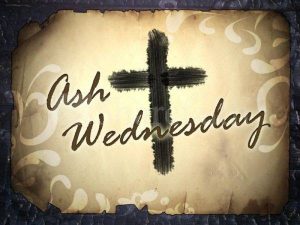
Like many of you, I watched the most recent debacle play out in the Oval Office. It was an ambush of a true and courageous ally under siege by a murderous war criminal. As more and more in that room piled on President Zelinsky I was nauseated.
Stalin had it right when he referred to such Americans as “useful idiots.” Our president repeated time and again Kremlin talking points. One lie heaped upon another. This Orange Felon must surely be leading the competition with Satan for the designation, “Father of all Lies”. And J.D. Vance would be a close runner-up. Disgusting.
We as a nation, taking the side of a murderous dictator, have much to lament. Many expressed their shame in their nation – an embarrassment to be an American.
It’s not just our allies that are we disparaging, but the least of us. As of this week orders have come down from the House of Representatives to cut billions from Medicare, Medicaid, nutrition programs for mothers and infants. Cuts to school lunch programs. The entire Department of Education fed to the wood chipper along with NOAA, the agency that warns of hurricanes, floods and tornados. Oh, did I mention FEMA, the agency that cleans up the mess after a national disaster. That too, sliced to ribbons.
Now you might not have much sympathy for a government worker if your own job history was tenuous, but these are real people with real families. The helpful response from GOP toadies? Our “thoughts and prayers.” And directions to LinkedIn and the unemployment office.
We have much to lament as we watch the social fabric of our nation, of a world order bound by rule, all ripped to shreds by the most unabashed narcissist ever to occupy the White House.
We have our own inaction to lament. The question that haunts me is, “What did you do when you witnessed the destruction and pillage of our republic?” We each have our own personal failures and shortcomings to lament – those things done and left undone.
A prayer from the Psalms brings consolation. “Create in me a clean heart and renew a right spirit within me.”
Today as we receive ashes, the reminder of our frailty and mortality, let us pray for a right spirit. Let us pray for wisdom and courage to do the little we can do.
As our team that sponsors Agenda for a Prophetic Faith gathered this past Tuesday, the agenda was short and to the point:
What is our national crisis saying to me as an individual?
What is it saying to the Church?
What is it saying to our nation and to us as citizens?
Indeed, what is this season of Lent saying to each of us deep down at soul-depth? O Lord, create in me a clean heart and renew a right spirit within me. And give us umption for our gumption – Lord, we pray. Amen
March 4, 2025
Ash Wednesday
Joel 2:1-2, 12-17; Psalm 103:8-14;
2 Corinthians 5:20b-6:10; Matthew 6:1-6, 16-21
At Our Wits’ End

We are adrift in perplexing times. My parents, stalwart Republicans to the core, would be aghast that a president of this nation would be cozying up to a former KGB killer running the Kremlin – especially a Republican! That we would take his side over that of NATO. That this president would believe the KGB guy over our own intelligence agencies. That we would be adrift at sea with a would-be king.
Yes, after the Orange Felon put the kibosh on the Manhattan congestion pricing tolls, he posted a picture of himself sporting a golden crown with the words, “Long Live the King.”[1]
To which the governor responded that New Yorkers were under a king over 250 years ago and had to kill a lot of British soldiers to get rid of him; and we will not be bending the knee to one now.
Yes, in these disturbing times, what is the way forward? Or are we just too numbed to contemplate anything more that the fetal position under the covers?
But revelation does come. Maybe not on any mountain. But if we are listening, there are moments of inspiration, especially in times of extremity – if we but wake up. When we’re at our wit’s end – revelation.
When I was adrift, an academic disaster at Cal State Long Beach, I was lying out on the grass soaking up some rays, deep in distress.
Coming across the green was an old friend, Dan, who had been a fairly close friend in junior high. We began catching up on news. He was now an American history major. I was a floundering geology major. As a new transfer I had not made any friends yet.
Out of the blue, he asked me how was my love life. “Nothing going on,” I responded. I was lonely and despondent.
He suggested that I might want to attend the Methodist campus group, Wesley Foundation. To which I replied that I had had it with the church – just a bunch of social climbing hypocrites.
He said that there were some “mighty fine-looking women” who were part of the group. “When do they meet?” I asked.
My life in those brief, shining moments was transfigured, exactly as Christ’s.
Revelation! I was at my wits’ end – then my burning bush moment. Bright and shining — transfiguration! And I never looked back.
All true, such Spirit-filled revelation and transfiguration leads to God – transforming life-enhancing Torah values and Gospel goodness. That’s certainly where mine led. That’s where Jesus will lead.
The scene on the Mountain of Transfiguration is the culmination of Luke’s Sermon on the Plain – a restatement of the Beatitudes.
This passage from Luke for the last Sunday in Epiphany, Transfiguration Sunday, is a summing up of the teaching of Jesus, placing it in the Torah and prophetic fabric of Israel. It is Moses and Elijah who join that assemblage on the Mount of Transfiguration and Revelation.
And of course, true to form, the disciples are completely dumbfounded. Peter wants to enshrine the moment.
“Peter said to Jesus, ‘Master it is good for us to be here; let us make three dwellings, one for you, one for Moses, and one for Elijah’ – not knowing what he said.”
That’s not the plan, not the point of the moment. Certainly not Jesus’ plan. As a cloud envelops them, there is that voice, the same sentiment spoken at Jesus’ baptism, “This is my Son, my Chosen,” with the add-on, “listen to him.”
Yes, Listen!
The mission is to come down off the mountain and enter the messy trials and suffering of those down below — Of us down below. It is in those struggles — our struggles — that all shall be revealed. Even on a cross.
I’ve been reading a memoir by a woman who came out of an evangelical expression of the faith. An expression she now rejects. After her experience with her diagnosis of bipolar disorder, and her suffering the effect of the condemning theology of that brand of Christianity, she broke free. It’s a marvelous story of transfiguration as she frees herself from cult-like, destructive religion.[2]
Anna Gazmarian was diagnosed with bipolar disorder in 2011. While the diagnosis provided an explanation of the mind-wrenching swings of depression and manic activity, it created real problems in her evangelical community. The stigma attached by her church, interpreted theologically, condemned her as lacking faith, or worse, demon-possessed.
If she would just pray, read the Bible more, all would be okay. The condition was her fault; the bromides of her “friends” were no better than those of Job’s “friends.”
“Always look on the bright side of life,” that was the theology of her mother and those in her church community. If one only had a sufficiently strong faith, one could will cheerfulness. To do otherwise was sin and rebellion against God. The nostrum was more Bible reading and prayer. Little thought that such severe depression was an organic disease of the brain. Nothing to do with demons or Satan.
Anna writes, “For people living with bipolar disorder, a single thought can turn into obsession. Racing thoughts become repetitive, sometimes moving from subject to subject, almost out of nowhere. What stands out for those with bipolar disorder is that these thoughts are unceasing. Every coping skill imaginable, like breathing[3] exercises or long walks, fails to provide an end. You become trapped in your own mind.”[4]
It was only later that Anna recognized that her faith rested in the decision to get the real help she needed – a compassionate psychiatrist who understood and could treat her affliction.
After Anna is sufficiently stable, she decides to try college one more time. She had already suffered through four attempts. At Hope College, a more permissive Christian environment, she ends up in a poetry class. Her guidance councilor felt this might be a good fit for Anna.
This became a moment of transfiguration for Anna. Sitting in the professor’s office, Anna announced that she wanted to become a poet. The professor, Dr. Glidsan saw through to Anna’s soul, to the true gifts in her writing.
The professor threw her hands up in the air, exclaiming, “You already are one. I think you should be a creative writing major.”[5]
Anna is not sure what the professor sees in her.
“Dr. Glidsan placed her hand on her chin. ‘You notice the small details,’ she said. ‘You notice things that a lot of people miss or ignore. Those details should be like the best whisky we keep on a shelf, only to bring out when people come over. When you write your poems, you bring out those details. That’s you. That’s your vision. I want you to write what only you can write.’”[6]
Anna sat there transfixed in a moment of pure Grace as she tried to keep the mascara from flowing down her cheeks. Transfiguration – bright shining as of the Glory of God. Right there in that professor’s office.
Days later, when Dr. Glidsan introduced the class to Elizabeth Bishop and her poem on loss, “One Art,” Anna came to another epiphany. Losing as an art, is one that could be mastered.
Memories flooded in as Anna recalled all she had lost. In her diagnosis she had lost her sense of self. She’s lost her faith. She’d lost her home. She’s lost friends. She’d lost her boyfriend Hunter. She’d lost her belief in the world as a safe place. So many losses.
She gasped as classmates turned to stare. As one girl handed her a tissue, she knew something about loss.
In retrospect, Anna could see that her time at Hope was a beautiful moment of Grace. Hope was different than what she had imagined college to be. It didn’t quite fit the slick promotional brochures she had read. Anna admits that her experience wasn’t “brochure-worthy, it was still meaningful, even beautiful.” She continues, “moments of grace can be hard to come by, and even when they do come, the feeling can be fleeting…After years of searching, I was surprised to discover, in the eyes of my teacher and in the words of those poets, that I’d already been found. That here were things only I could say. That all the little details, the things that mattered most to me, might also matter to God.’”[7]
“In reading and writing poetry, I no longer needed to think of every bad thing in life, every loss, as being part of God’s plan. Rather, I started to see my losses as things that could be named, honored, and, through art, brought into the present, transformed.”[8]
In the small poetry workshop groups of threes the professor set up, Anna found the freedom to share her struggles and hopes. And there found an acceptance she had never felt in her faith communities. Grace abounding!
She would later meet a young fellow who completely accepted her even with her mental health struggles. This, all through a madcap adventure involving a garden gnome purchased on a lark at Walmart. An improbable grace-filled journey leading to marriage and the birth of a son. Read it. It is nourishing soul food for Lent. Such is how Easter arrives.
Transfiguration can be a sudden change or it can creep up on one as if on little cat’s feet.
What we celebrate through this season of Epiphany is the transfiguration of the Church from the timidity of cowering in an upper room into a bold, prophetic expression of God’s will for us all. A kin-dom that binds us together. “In Christ there is no north or south, no east or west” – all brothers, sisters we. And in the Together is God. We, like Christ on the Mountain of Revelation, like a chance occasion on a college campus green, like an appointment at a professor’s office — Transfiguration! Amen.
[1] Benjamin Oreskes, “‘Long Live the King’: Trump Likens Himself to Royalty on Truth Social,” New York Times, February 20, 2025.
[2] Anna Gazmarian, Devout: A Memoir of Doubt (New York: Simon & Schuster, 2024).
[3] Op cit., 34.
[4] Ibid.
[5] Op cit. 82
[6] Op cit.
[7] Op cit., 83-84.
[8] Op cit., 85.
March 2, 2025
Last Sunday after Epiphany
Transfiguration Sunday
Exodus 24:29-35; Psalm 99;
2 Corinthians 3:12-4:2; Luke 9:28-36
“At Our Wits’ End”
Now Hiring

This Sunday we approach two significant events: The celebration of Dr. Martin Luther King’s birthday and the Eastern Orthodox celebration of Epiphany, as manifest by the turning of water into wine. Both, events of Epiphany. Both occasions manifest the mighty presence of the divine.
Too often, when it comes to the end result of fine wine, what we so often end up with is sour vinegar, or in the case of one story, just plain old water.
When I was priest at St. Andrew’s in Petersburg I received a call one day from my friend, Fr. Gary, priest at St. John’s in Ketchikan. A reasonably sized city down the coast of the long strip of Alaska along the west of British Columbia.
They had a seamen’s center there and the director Bob wanted to get up to Juneau. Fr. Gary’s request was, did we have any place he could stay overnight while he waited for the ferry to leave Petersburg?
I told Fr. Gary that I had a couch in my office that pulled out to be a bed – just for such occasions. He could stay there overnight. He would need to keep to himself and be quiet because that Tuesday evening we had an AA group that met in the church.
Bob responded that would be wonderful – he would be able to make his meeting for the week.
The following Sunday when one of our altar-guild women was preparing for communion, she came over to me with a puzzled look. She was perplexed that the wine didn’t look or smell like wine. Being a tea- teetotaler, she asked me to taste it.
She was right. It was water. Our guest had turned the wine into plain old water.
I told Fr. Gary that he had given this fellow poor instruction. The water supposed to be turned into wine. His seminary education was greatly lacking.
Unfortunately, we humans are very adept in turning fine wine into vinegar and worse.
This is true of our heritage found in the Declaration of Independence and in the Bill of Rights. Dr. King so eloquently urged us to live up to the promises of our founding documents in his “I Have a Dream” speech at the Poor People’s March in 1968.
Unfortunately, the remnants of prejudice and Jim Crow continue to turn the fine wine of those ideals into vinegar for far too many – the poor, people of color, those in impoverished rural America and in our inner cities.
I share the journey of Bettina Love, now a professor at Teachers’ College at Columbia University.[1]
She tells of her public-school education in Upstate New York. She writes of her experience as a young girl and that of her friend Zakia, whom everyone called Zook – both were Black.
Growing up in the eighties and nineties, they were “labeled disposable because of our zip code, test-scores, and Black skin.”
Her friend, who finally managed to transcend a troubled childhood, told Bettina this shameful thing. “She told me that through thirteen years of schooling, she could not recall a single teacher who ever took an interest in her or positively impacted her life.”[2]
But as a gifted athlete, Zook could remember numerous coaches who supported her. She could still rattle off their names.
But not one of her teachers ever took an interest in her!
The fine wine of our public education turned to vinegar, worse than just water. The American dream gone rancid. Failure is also an occasion for an Epiphany. A wake-up call.
Epiphanies can be understood as eye-opening experiences. Ah-ha moments. We have them all the time. If we’re awake to what’s going on around us. If we have a care.
In the Eastern Orthodox tradition, the Miracle of Water into Wine was the ah-ha tip-off that Jesus was not any ordinary guest at that wedding. Something much more was going on.
And why was this incident so central to the memory of the gospel writer and the early church? It was precisely because the spirit of the Risen Christ continued in their midst to turn their meager efforts into fine wine. Fine wine to the Glory of God.
We celebrate Dr. King’s birthday because he turned the rancid vinegar of failed promises and Jim Crow into the fine wine of a vision of Grace for all God’s Children.
And that’s where we come in. The Holy Spirit is NOW HIRING. Seeking recruits for the Jesus Movement to carry on the work of our Baptismal Promises – our Baptismal General Orders, if you will.
We are the making of fine wine – fulsome with a robust bouquet of rich flavor. The sort of followers Jesus needs at this moment.
All about us we see such folks in action. For the Epistle of James tells us that is where the vintage shines forth.
Like my friend who is going through his closet up in Bakersfield gathering up everything he has not worn in a while or grown out of and getting it to a church that will take it down to the Rose Bowl to be distributed to those who have lost everything. Fine wine, though he’s now a teetotaler.
The ordinary stuff of H2O turned into a delicious drink by those who every week work at our San Bernardino Food Bank, distributing the stuff of nourishing meals at St. John’s Episcopal Church. And those working our garden at St. Francis, providing the fresh vegetables from seeds now being planted this week. And water is definitely being turned into that nourishment.
It is those folks working now to elect candidates who will restore dignity and truth to our politics – working to mitigate the potential harms of this incoming administration — headed by a criminal with the morals of an alley cat. Surrounded by a bunch of incompetents and billionaires out to line their pockets at our expense.
One thing my late friend John Cobb had said of the first iteration of the Orange Felon – John mentioned what was good about his election – first, there will be no lack of work for those of us who believe in an America that works for all. Secondly, he said that a whole lot more folks will now be paying attention to what their government is doing. Yes! And to the Fox News political hacks, billionaires and incompetents running it.
This Sunday let us celebrate two occasions of Epiphany – first, that each of us is offered the opportunity to become the finest wine as we yield to the promptings of the Spirit. Secondly, for the life and ministry of Dr. King who, following Jesus, has blazed the trail.
The Spirit is now hiring. May we all have such Epiphanies and put our shoulders to the plow and don’t turn back. Don’t turn back. Amen.
[1] Bettiina L. Love, Punished for Dreaming: How School Reform Harms Black Children and How We Heal (New York: St. Martin’s Press, 2023).
[2] Ibid, 1.
January 19, 2025
2nd Sunday after Epiphany
Isaiah 62:1-5; Psalm 36:5-10;
I Corinthians 12:1-11; John 2:1-11
“Now Hiring”
General Orders

Common sense directives such as: stand my post. Secure all government property. If isolated from my unit, report to the first officer I contact. Obey any special orders given. If captured, use any means to escape. All common sense.
When we go through the waters of baptism, we all make a pledge similar to those general orders – General Orders of the Jesus Movement. We make that pledge or the sponsors on our behalf of the baptismal candidate make that pledge. As adults we accept those promises as our own upon the rite of confirmation.
What are they?
In part, they are our promises in the Baptismal Covenant. They are what we pledge or our sponsors pledge on our behalf if we are infants:
It is to resist evil, and whenever we fall into sin, repent and return to the Lord.
It is to continue in the apostles’ teaching and fellowship, in the breaking of the bread, and in the prayers.
It is to proclaim by word and example the Good News of God in Christ.
These are our General Orders for all of the Jesus Movement.
In short it is to be a living version of Gospel Goodness. As one mentor said, “You may be the only version of the Gospel that another person sees.” Be about living it!
So let me begin with the pledge to resist evil.
The devastating wildfires throughout Southern California have not only brought out the best in many of our citizens, they have also brought out the worst.
Evil is the only word I can use for those demented souls who have added to our misery by setting more fires. Arsonists are the worst of the worst in my book.
Right up there with them are looters and those who have over the years stolen hundreds of fire hydrants from the streets of Los Angeles.
Yet, the Orange Felon is now trash talking about the dry hydrants in Pacific Palisades. “Here we have a president-elect mouthing off and showing his ignorance in a barrage of vindictiveness and insensitivity as thousands of people fled their lives and hundreds of homes blazed into ashes.”[1] SHAME. SHAME. SHAME. We resist such utter nonsense and call it out.
Hoarders and price gougers rate a third place in my book of infamy.
Resist. Resist. Support those arresting these perpetrators and those who would bring them to the bar of justice. Support those who would bring therapy to these demented souls.
Resist the Orange Man, now the Orange Felon as of this Friday when Judge Merchan pronounced sentence and lowered the gavel.
And a big NO to the Orange Felon, Hezbollah did NOT cause the January 6th riots. You did!
Today, I open the Times to discover that according to the Orange Man, we have to get rid of all Mexicans because they are bringing disease into the country.[2] Surprising, that they must be the only ones. Who would’ve thunk it???
We have a far greater disease, the disease of a jaded public that has by-and-large given up on our democracy. Certainly, given up on rational thought. Our founders clearly stated that the fate of this republic was dependent upon an educated electorate.
Resist easy answers and platitudes. Resist demagogy and the blame game. No – Hilary’s emails did not cause the L.A. Inferno.
Turn to the Light. Remain constant in the Breaking of the Bread, the prayers and the fellowship with those in the Jesus Movement.
Every morning before I throw back the covers, I grab my 3 X 5 card and ask the Spirit to lead me in what I can do for the benefit of myself, for the benefit of my community, for the benefit of the greater creation.
Within minutes that card is full on one side, and often half filled on the other side. This is what I call the discipline of the 3 by 5 card. It is only possible through those few moments of prayer, what I call spiritual daydreaming.
Begin the intentional discipline of that 3 by 5 card and you will be useful to the Jesus Movement.
Support those who have engaged the battle – for, my friends, we are in deep spiritual contest. This is for all the marbles, the soul of our nation – the soul of the Jesus Movement. The call is clear: Which side are you on? Lackadaisical will not cut it. Get off the couch.
Yield to your inner yearning to be part of some cause, some duty greater than yourself. In dying to yourself you will live.
I thought of a dinner out. But now I’m sending that small amount to the Red Cross. Won’t be much, but combined with the gifts of others also moved by the Spirit, it will add up.
The Spirit shouts, “Go and do thou likewise.” Do something — anything.
As St. Augustine says, “Faithfulness in the little things is a BIG thing.”
Finally, prayfully join with others who have been moved by Gospel Goodness to be Cooperators with God for the thriving of the “Least of These” here on earth.
Here’s just one example of how these baptismal General Orders work out when put into practice. When they become a sacramental reality of a deep spirituality.
I lift up a small college in Kentucky, Berea College. Begun by folks who may be a bit more theologically conservative than me, they, in fact, are doing the Lord’s work better than I.
Their students from rural Appalachia and around the world graduate with little or no student debt. They draw from the most underserved, impoverished communities with poor schools and bleak futures, lifting these students out of poverty, out of lack of privilege, and often from families of violence and addiction – raising them out of dust – to be people of worth. God’s Grace incarnate.
These people at that institution are Gospel Goodness. They work from the beginning with applicants to make college a reality. No matter what the starting point. As their director of philanthropy puts it, when it comes to those woefully ill-prepared, those normally excluded from higher education, “For our students, it doesn’t matter where you start; it matters where you finish.”
The job of all at Berea College is to get every possible student across that graduation platform. And they do it well, better than most. Gospel Goodness, indeed. These people are definitely following their baptismal General Orders.
Some come to me wanting a small, private ceremony to ensure that through baptism preformed as if it’s some magic act, that their child will be protected from hellfire and the evil one.
Folks, that’s not how it works. Baptism is the initiation into a journey, a journey, which if taken with utmost seriousness, prayer and action, will lead to a life blessed with Gospel Goodness. In the end, wrapped up in the loving arms of their maker.
You will be led beyond your comfort and convenience zones, sometimes far, far beyond. You may end up in “good trouble, necessary trouble.” Holy trouble!
As St. Paul puts it:
“Ever dying, here we are alive. Called nobodies, yet we are ever in the public eye. Though we have nothing with which to bless ourselves, yet we bless many others with true riches. Called poor, yet we possess everything worth having.”[3]
Everything of worth – that is the Gospel Goodness to which we of the Jesus Movement are drawn. It is where the General Orders of Baptism lead. May it be found to be true for all of us. Amen.
[1] George Skelton, “Trump mouths off about fire hydrants amid L.A. inferno,” Los Angeles Times, January 11, 2025.
[2] Zolan Kanno-Youngs and Hamed Aleaziz, “Inside Trump’s Search for a Health Threat to Justify His Immigration Crackdown,” New York Times, January 6, 2025.
[3]The New Testament in Modern English, J.B Phillips 1960, 1972 J. B. Phillips. Administered by The Archbishops’ Council of the Church of England. II Cor. 6:9-10.
January 12, 2025
The Baptism of Our Lord
Isaiah 43:1-7; Psalm 29;
Acts 8:14-17; Luke 3:15-17, 21-22
“General Orders”
Star Light, Star Bright

In the bleak midwinter, as most of us are burnt out on politics and much of anything else that would rouse us from slumber and cause us to toss back the covers, life yet continues. Our duties weigh upon us. Meals are to be prepared. Dishes to be washed. Bills are to be paid. Families or employers are counting on us to make our appointed rounds and to be at our desks. Christmas was a brief respite from it all. But all too short.
Nastiness creeps through our capital hallways. Vengeance and retribution on the lips of many. And with all the worries piling up, why on earth would the incoming administration be thinking again of buying Greenland? Or annexing Canada as the next state? Let alone sending in an armed invasion to take back the Panama Canal. Nastiness as foul-smelling as anything that ever oozed out of a putrefying swamp.
What we need here is a little Light – if we’re awake enough to see it. Or, as Amanda Gorman put it, “brave enough to see it…brave enough to be it.”
As we remember the slaughter of the innocents in Gaza, we recall Jeremiah’s tragic message, reprised in Matthew.
“Thus says the Lord; A voice is heard in Ramah, lamentation and bitter weeping. Rachel is weeping for her children; she refuses to be comforted for her children, because they are no more.”[1]
The vast number of casualties from that brutal slaughter being women and children. Devastation paid for with American dollars.
Such darkness sometimes seems overpowering – surely overpowering for the victims of Gaza. Tragedy upon tragedy with every Israeli bombing. Rachel indeed weeps for her children this day.
Darkness will have its day.
Newsflash: Homelessness has increased 18% over last year. Among families it has increased by 40%.
Newsflash: Israel has loosened restrictions on bombing. It’s now permissible to kill up to 20 civilians to get one low-level Hamas target.
Newsflash: Global warming produced the hottest year on the planet ever for the last year of measurements.
Newsflash: Are we really thinking of invading Mexico to eliminate the drug cartels and fentanyl labs?
Yes, there is much to despair. We are tempted to just tune out, overwhelmed by it all, not sure our children and grandchildren will have a livable world.
In the midst of such darkness, we have the audacity to proclaim that a Light does shine. A Star has risen. We behold its beauty. We behold its challenge.
There’s a story of a policeman coming upon a drunk at 2:00 in the morning. The poor, besotted fellow is crawling around on his hands and knees obviously looking for something under a corner streetlamp.
The officer asks him what he’s hunting for. The fellow replies that he has lost his keys. “Is this where you lost them?” the officer asks.
“No,” the drunk replies, “They’re over there somewhere.”
“Well, why are you looking for them here?” the officer asks. “Because, this is where the light is,” replies the man on his hands and knees.
This is where the light is.
Maybe that’s where we need to start. Let’s start where there is light. And there is Light to behold!
Our various faith traditions burn brightly with such Light. Scripture is always a good beginning place to look for God’s Light. The Hebrew prophets proclaim illumination in the cause of Torah Righteousness – God’s will for restoration and flourishing – as impossible as that sometimes seems.
“Arise, shine; for your light has come, and the glory of the Lord has risen upon you. For darkness shall cover the earth, and thick darkness the peoples; but the Lord shall arise upon you, over you.”[2]
Originally this was a prophecy solely meant for the people of Israel, but its meaning has later been understood to include all people. Just as Rachel’s weeping was understood as a metaphor for all of Israel’s tragic history, and now for all creation.
So, this prophecy of restoration is also meant for the whole of creation. Pure, unmerited Grace for all.
Such is the Epiphany Star those wise seekers spied. As they beheld and recognized the moment of absolute Grace in the birth of a helpless infant born to parents in poverty. The Light dawned. An Epiphany.
We’ve all had moments of lesser epiphanies. When something clicked, became clear. The ah-ha moments in life. Moments of light, sometimes moments of absolute divine Light.
Yes, there is much darkness yet enshrouding our world — our days lost in confusion, hatefulness and despair.
But, I say, even on our hands and knees, let’s hunt for deliverance where there is light.
One place I sometimes find smidgens of divine light is in the writing of David Brooks.
He recently had an op-ed piece in the New York Times on his journey from atheism to faith.[3]
He talks of faith in terms of desire, holy desire.
“Sometimes I feel pulled by a goodness that seems grand and far-off, a divine luminosity that hovers over the far horizon.”
“Sometimes I feel pulled by concrete moments of holy delight that I witness right in front of my face – the sight of a rabbi laughing uproariously as his children pile over him during a Shabbat meal, the sight of a Catholic priest at a poor church looking radiantly to heaven as he holds the bread of Christ above his head…I’ve found that the most compelling proofs of God’s love come in moments of radical delight or radical goodness—in the examples of those who serve the marginalized with postures of self-emptying love.”[4]
“…if the object of your desire is generosity itself, then your desire for it will open up new dimensions of existence you had never perceived before, for example the presence in our world of an energy force called grace.”[5]
All of such existence is to live a life illuminated by shards of light from that Epiphany star. The same star that yet enlightens seekers of faith. Now burning brightly from within hearts and minds.
Sometimes it’s the beauty of connection that shows forth God’s luminosity. And that is often light enough. And, maybe, just maybe, that’s good enough. The best we can expect — a few precious slivers of Epiphany Light. We are now those ancient sages who continue the journey to the desire of our hearts to this holy moment.
I stumbled upon a book, The Amen Effect, by Rabbi Sharon Brous of Los Angeles. Just looking at the reviews on the book jacket, I sensed not only illumination, but Holy Light.[6]
She opens her book with the story of a child who goes walking in a forest. As he climbs through thickets and nimbly steps across streams, enjoys the sun filtering through tall tree branches, he delights in what he comes across. Spiderwebs, fallen leaves, mossy rocks.
As he tries to make his way out, he begins to realize that he doesn’t quite know the way. In fact, he’s thoroughly lost. Each step leads him deeper into the woods.
As the sun begins to sink below the tree line, he fears that he might not ever find his way out — wondering if he’ll ever make it home. But just then he sees another child approaching from far off.
His heart swells with hope as he cries out to her, “I’m so glad to see you. I’m lost. Can you show me the way out of here?”
“I wish I could,” she answers. “I’m lost too. But take my hand and we’ll find our way out together.”
Together is Holy Light!
When I approach the communion rail and gaze upon the uplifted faces, not knowing what fears, what hopes, what moments of joy or sorrow are brought to this holy moment at that rail, I am assured that whatever the week has brought, together we can bear it, we can share it. Light, Holy Light.
In these moments, an Epiphany takes up residence within our little group of pilgrims here at St. Francis. In that moment, whatever the darkness, a Holy Light has overcome.
In times of uncertainty, sorrow, perplexity, we reach out for another’s hand. And in that Light, we’ll find our way towards home. This is how we roll at St. Francis. Amen.
[1] Jeremiah 31:15, NRSV.
[2] Isaiah 60:1-2, NRSV.
[3] David Brooks, “My Decade-Long Journey to Belief,” New York Times, December 22, 2024.
[4] Ibid.
[5] Ibid.
[6] Sharon Brous, The Amen Effect: Ancient Wisdom to Mend our Broken Hearts and World (New York, Avery, 2024), xi.
January 5, 2025
Epiphany Sunday
Isaiah 60:1-6, 9; Psalm 72:1-2, 10-17
Ephesians 31:7-14; Matthew 2:1-12 “Star Light, Star Bright”
Jesus Was an Undocumented Immigrant
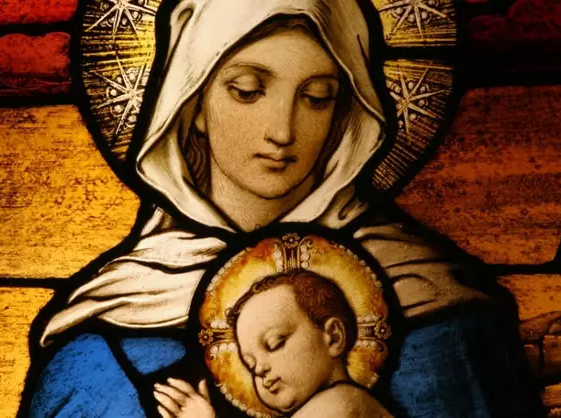
No sooner had Herod heard of a possible usurper to his power than he sent his “men of might” to take care of business.
The Holy Family, having been warned, according to tradition, set out for Egypt where they would find refuge from Herod’s wrath. Much as Haitians are presently fleeing gangs and their corrupt police collaborators.
Utterly vulnerable. Not speaking the language. No shelter. No source of income. Cold, frightened and so very much exposed.
In our country we now find ourselves at the tender mercies of oligarchs and plutocrats who will assume power in 2025. Gazillionaires who have no more concern for us than Herod most likely had for those living in far off Nazareth. Vulnerable, exposed.
Even if never having been a refugee, we’ve most likely had moments of such vulnerability.
Peter Marty recounts such moments when going to an outpatient surgical center for a minor procedure.[1]
“…a nurse hands you some nonslip socks and one of those open-in-the-back hospital gowns. They then instruct you to head to a changing room, take off your clothes, and place them in a tiny locker. The locker key you’ll be given will look about as sophisticated as a screwdriver. Once you manage to tie the neck cords of your gown into a bow, a task that always challenges me, you’ll step into a large room.
“The instant you look around that room, some version of four uncomfortable words will rattle in your psyche. I feel extremely vulnerable. Six or eight other patients, facing you from their own bays (with their privacy curtains half-drawn or not drawn at all) sit in recliners just like the one assigned to you. Aware that your own backless gown resembles your health insurance plan in a conspicuous way—every time you turn around you discover something that’s not covered—you’re eager to have a seat.
We’ve all been there. What I’ve discovered when recently in the hospital and then at our Pilgrim Place skilled nursing facility, is that any pretense to modesty is out the window. Any attempt to maintain some modicum of control over my vulnerability was futile. Utterly.
Exposed as much as undergoing a colonoscopy.
Such vulnerability is the essence of the Christmas story. God dares precisely that vulnerability.
Quoting Frederick Buechner, Peter “calls the divine descent into the ‘ludicrous depths of self-humiliation.’” This is the “nakedness of the incarnation.” God in God’s birthday suit!
The Miracle of Christmas is not about Santa, elves and reindeer, not about who gets the most goodies under the tree. Not about bloated waistlines from too much turkey, mashed potatoes and wine.
Christmas is about an invitation to join this tiny Christchild in his vulnerability, to be born anew into a new way of life. No safety net. Yes, radically outside your comfort zone.
It’s about being in solidarity with those who are homeless, stateless, cold and unsheltered — the very Christ we encounter daily on our city streets and at our food banks.
Even if the most you can do is to drop a pittance in that kettle where the volunteer rings a tinkling bell to get your attention. Or serving in the Christmas dinner line at a local shelter. Visiting a shut-in at a nursing home, or simply by acknowledging the presence of a homeless person at their tent on the sidewalk with a hello and maybe a small donation. A fiver will buy a hamburger at most fast-food joints.
Remember the Jewish proverb, “To have saved one life is to have saved all of humanity.” Maybe, beginning with the humanity in yourself.
But more than such small acts of charity and mercy, Christmas is the invitation to be in solidarity with the vulnerable, no matter how it shows itself: hunger, loneliness, sickness, political estrangement. It is developing a new mindset. It’s about “not conforming your mind to the standards of this world, but letting God transform you inwardly by a complete change of your mind.” Then you, like Dickens’ fictional Scrooge, will burst forth, Christmas incarnate. Indeed, it will be most merry. Joy to the World and the Angels from on High will sing you from slumber.
God, in all God’s nakedness will find rebirth in your heart, and may you in your being radiate Christmas blessings your whole life long. That’s the Christmas present awaiting you under the tree. Merry Christmas. And God bless us everyone! Amen.
[1] Peter Marty, “Sheer Vulnerability,” Christian Century, December 2024.
December 24, 2024
Christmas Eve
Isaiah 9:2-7; Psalm 96;
Titus 2:11-14; Luke 2:1-14
“Jesus Was an Undocumented Immigrant”
Mary’s Song

Due to our reaction against our Roman Catholic heritage, especially in the times of the Reformation, Mary has always been a problematical figure for Anglicans.
We viscerally reacted against the questionable doctrines of the Immaculate Conception and the Assumption of Mary. We frowned on the statues of her in niches or up by the altar. We were uncertain as to the efficacy of prayers directed to her. We pray straight to God or in Jesus’ name.
There’s a story told of a small middle-America town Baptist church. Like many congregations going through extensive remodel, there was much to disagree about. But the flash point came near the end of the project – what color should the new carpeting be?
Some wanted red as that seemed to be traditional and would brighten things up. Add nice color.
Another faction proposed blue. Soft pastel blue was what Mary wore. (Never mind that no one knows what Mary wore. Didn’t come up until much, much later in church tradition).
The Red-Carpet faction sarcastically asked, why are we as Baptists concerned that much about Mary. That’s a Catholic thing. We’re again’ it.
The Blue-Carpet group responded that Mary is the Mother of God. She’s somewhat important. She gave him birth and received his body from the cross.
On and on it went. Until…Until…
There at the crossroads of this small community there are now two Baptist churches on either side of the highway. One with red carpet and the other with blue.
Mary — as I’ve said before, it is important to our spirituality how we view her. Is she, shy, demure – yes, and in pastel blue – the model for proper women of faith to be submissive to the demands of society and husbands?
Or does her song, the Magnificat, give us another spirituality? When she belts this out, we see her as one tough woman, willing to bring a revolutionary message no matter the cost.
She will not be a little submissive milquetoast vessel for whatever. She tells that intrusive angel, as she takes one step back, “If this is how it’s going to be, hold my beer and watch this!” Hold my beer and watch this, indeed.
“Surely, from now on all generations will call me blessed; for the Mighty One has done great things for me, holy is his name…
“He has shown strength with his arm; he has scattered the proud in the thoughts of their hearts…
“He has brought down the powerful from their thrones, and lifted up the lowly;
“He has filled the hungry with good things and sent the rich empty away.”[1]
This is the Mary on whom nothing is wasted. This is the Mary who bears the Savior of the world; who, in the words of one great saint, is God’s gate, the mother of Heaven’s king. Her entire being swells with the blessedness of the angel’s greeting.
Mary has been described in many ways, but first of all, I think it is the fullness of the blessing she has received. God in that annunciation filled her being rim-full.
When can you remember such a spiritual fullness? Probably, as in that children’s story, The Polar Express. When we were young, we were indeed able to experience the utter joy of Christmas. It’s the story of Scrooge being reborn – living for the first time as he never lived before. Joy just exuding from his soul.
This is how Mary invites us, even us cynical adults to enter into the gift of the Nativity.
Mary has been described as many things within Scripture and in our tradition, but for me – Blessedness is the beginning.
It’s the blessedness that filled my soul when I held the hand of a young, demure woman in a lovely white wedding dress at the altar and said I do with all my heart.
It’s the blessedness that filled my soul when I asked Christopher and Alexis, “Do you take this woman to be your lawful wedded wife?” “Do you to take this man to be your lawful wedded husband,” and both came up with the correct answer: “I do.”
It’s the utter blessing I felt when a student we had sponsored called with the news, “Mr. Forney, guess what! I got a free ride into Harvard. Everything paid!” Tears welled up in my eyes.
At the moments of the birth of my boys, that I could actually be present for those incredible events – it was all blessing.
It is the blessedness that filled my soul when hands were laid on my head at the altar and the bishop pronounced, “Take thou authority.”
It is the blessedness I know each time I experience when I get on the internet machine and bring up the K.I.N.D. Fund to send desks to schools in Malawi – to provide a scholarship for a girl to attend high school in that impoverished nation. That I am able to offer such a priceless gift as education on behalf of some Christmas recipients is a moment of joy flooding my soul.
We’ve all known those fleeting moments when we were filled to the core of our being with overwhelming affirmation. You’ve known these precious moments. Just take a silent trip down memory lane.
That’s in part Mary’s song.
But this blessedness of Mary was more than an individual event. She embraces her entire community with it, embraces all creation with this rich blessing.
God is in that moment lifting us weak out of dust, is filling those in need with good things. In that moment returning creation to the lowly as the haughty are cast down.
This blessedness extends far beyond her, extends down through the ages to a community gathered beyond the limits of time and place.
Speaking of the powerful – Elon Musk comes immediately to mind.
To think that a private individual of ginormous wealth would have the ability and be in the position to overthrow the regular order of our legislative process is beyond the pale. Madison and Jefferson must be rolling over in their graves.
For now, he may be able to threaten any lawmaker with an opponent armed with millions in cash to primary them – it’s absolutely surreal. Certainly not the stuff of any viable democracy. Preposterous!
Naively, I thought that with a rocket company and car company to run, he would have had his hands full. Apparently, not so much!
And now Rand Paul is proposing him for Speaker of the House. Wow!
But Mary has proclaimed it. The days of the oligarchs and plutocrats will draw to a close. These mighty will be cast down. Ordinary citizens, you and I, will be back in charge.
She, in her song, embraces her community, especially the “least of these.” In her blessing, God’s preference is proclaimed to be for the poor, the marginalized and cast-out. The little guy or woman who will not benefit at all from this coming tax cut, or much of anything in the Project 2025 agenda coming down the pike.
Yet, in the little things let us rejoice with Mary. In her pronouncement there is much joy to embrace all. A silent, spiritual revolution!
As the French Jesuit, Pierre Teilhard de Chardin proclaimed: “By means of all created things, without exception, the Divine assails us, penetrates us and molds us.” That is the message of Mary to each of us this Advent as we would dare approach that Holy Manger with awe and trembling. Amen.
[1] Luke 1:46 ff., NRSV.
December 22, 2024
Advent 4
Micah 5:2-5a; Canticle 15 – the Magnificat (Luke 1:46-55);
Hebrews 10:5-10; Luke 1:39-45 “Mary’s Song”
 Forney Charities